Autos & Transportation
Laid Off Since 2023, Brampton's Autoworkers Wait for Answers as Stellantis Sells Their Plant to a Defense Firm
The automaker's deal with Canadian defense company Roshel has left more than 2,200 union members angry and uncertain, Ottawa says Stellantis owes hundreds of millions in subsidies, and a strike mandate hangs over stalled talks.
By FRANK KOWALSKIStaff Correspondent · ILLINOIS · Nov 15, 7:00 AM · 3 min. read
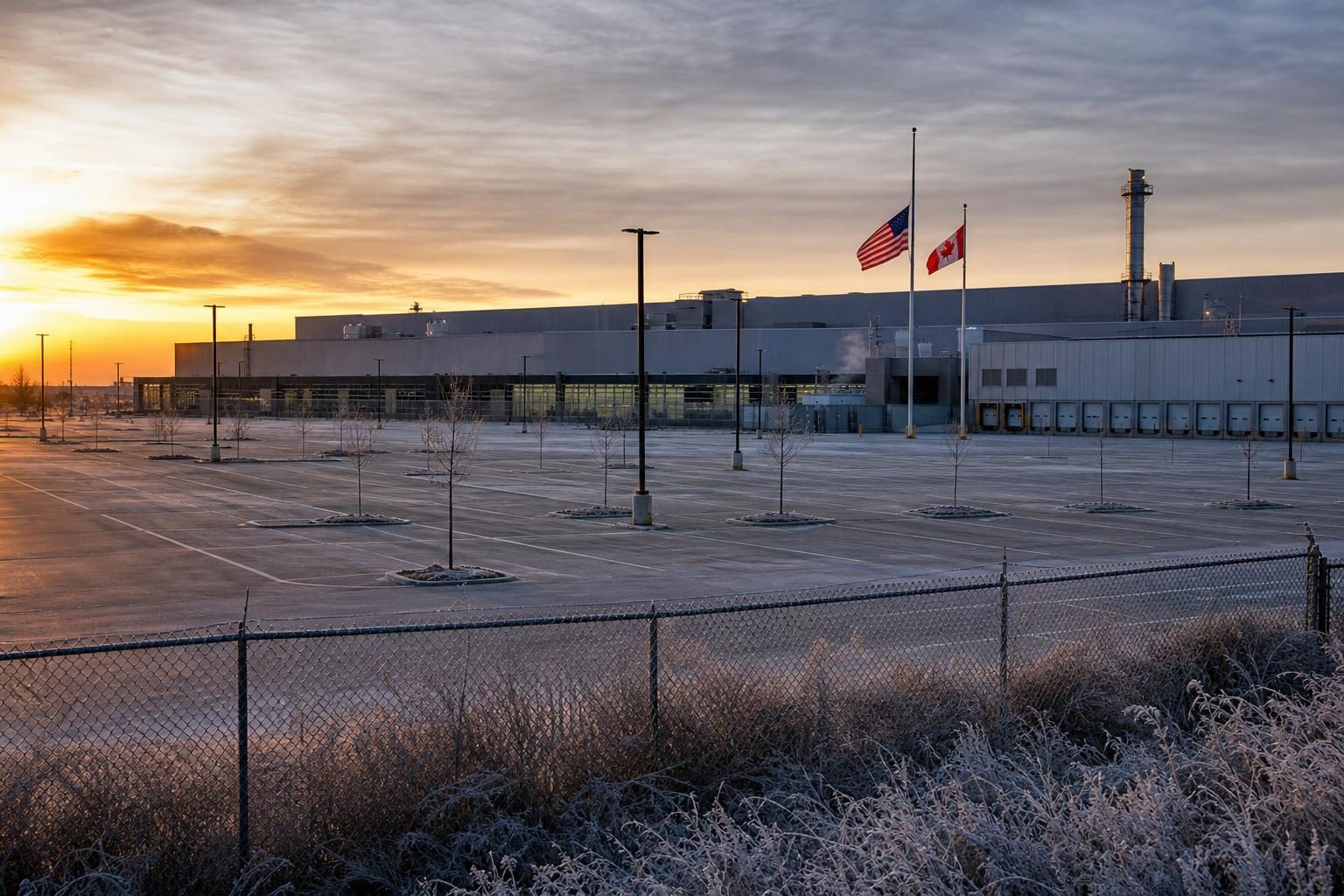
Illustration · Liberty Bell Report
Workers who once built cars at Stellantis' Brampton Assembly Plant outside Toronto say they are sad, devastated and angry after learning the idled factory is being sold, CTV News reported in a story carried by BNN Bloomberg on Sunday. Many have been waiting for years for the line to restart. Now they are waiting to learn whether they will have a place in whatever comes next.
Stellantis announced on Nov. 9 that it will sell the Brampton plant and its equipment to Roshel, a Canadian defense technology company, for an undisclosed price, The Globe and Mail reported. The two companies also said they would explore working together in the defense industry.
Three Years on Layoff
The plant has been quiet a long time. More than 2,200 workers have been on layoff since production was put on hold in December 2023, according to The Globe and Mail. BNN Bloomberg's timeline of the plant traces how Brampton went from a planned retooling to an empty building as Stellantis shifted its plans, including moving future Jeep work south of the border.
That move is what set off the fight. As this site reported earlier this week, Canada threatened to sue Stellantis as Jeep production heads to Illinois. The sale to Roshel turns that dispute into something more final for the people who worked the line.
Vito Beato, president of Unifor Local 1285, which represents the Brampton workers, is not reassured by promises that Roshel will create new jobs, The Globe and Mail reported. His questions are the ones any working family would ask: whether new jobs would pay comparable wages, whether workers would stay unionized, and what happens to the protections in their collective agreement.
The Union Calls It a Betrayal
Unifor's national president, Lana Payne, called the sale a worst-case scenario and said the company had "betrayed our members," CP24 reported. Unifor had already walked away from the bargaining table in September over the planned sale and said there would be no tentative contract without a resolution for Brampton workers, Yahoo Finance Canada reported. The union holds a 97.3 percent strike mandate covering about 9,000 Canadian autoworkers.
Stellantis, for its part, says it wants a deal. Chief Executive Antonio Filosa said that after three years of paid layoff the company remains committed to working with Unifor on a fair resolution, and the company said it is prepared to negotiate a settlement to help union-represented employees. As of the latest reports, formal bargaining had not resumed.
Ottawa Wants Its Money Back
The Canadian government is also pressing the company. Industry Minister Melanie Joly said Stellantis is on the hook for hundreds of millions of dollars in public support, CBC News reported. Ottawa has issued a notice of default on a 2022 federal funding agreement, and the company has offered $24 million, according to the CBC.
That gap, hundreds of millions demanded against $24 million offered, shows how far apart the two sides are. It also shows what happens when governments hand large subsidies to automakers in exchange for promises about where cars will be built. When the market and trade policy shift, the promises are the first thing to go.
Why American Readers Should Watch
The Brampton story is one piece of a larger shift. Under President Trump's tariff policy, automakers have been announcing new investment in American plants, and the Jeep work Brampton once expected is now headed to Illinois. For American autoworkers in places like Belvidere, Illinois, that is good news after years of plant closures and uncertainty of their own.
But the human side deserves respect on both sides of the border. The Brampton workers did nothing wrong. They showed up, built vehicles and then waited through three years of layoff. Whether Roshel's plans for the plant bring real, well-paying manufacturing jobs back to the building will decide whether this ends as a second chance or a closed chapter.
The defense angle is worth watching too. With allies across the West rebuilding their militaries, a factory turning from passenger vehicles to defense production could become an asset for North American security, if the skills of the people who built cars there are put to use.
What Comes Next
The next steps are bargaining and money. Unifor says it will not sign a new contract without a Brampton settlement, and its strike mandate gives it leverage. Ottawa's default notice puts legal pressure on the company. And the workers in Brampton are waiting to hear whether the plant's next owner will call them back.
Sources
- BNN Bloomberg: 'Sad, devastated and angry': Stellantis workers fear for their future after Ontario plant sale announcement (link)
- The Globe and Mail: Sale of Brampton auto plant from Stellantis to Roshel leaves laid-off workers in the lurch (link)
- CP24: 'Betrayed our members' Unifor President reacts to Stellantis sale of Brampton assembly plant (link)
- CBC News: Feds say Stellantis owes 'hundreds of millions' in subsidies, company offers $24M (link)
- Yahoo Finance Canada: Unifor accuses Stellantis of selling Brampton Assembly Plant to Roshel as 97% strike mandate hangs over stalled talks (link)
- BNN Bloomberg: A timeline of Stellantis' assembly plant in Brampton, Ont. (link)
— 30 —