Native America
Quinault Nation Buys 11,196 Acres Inside Its Reservation and Now Owns More Than Half the Land Within Its Borders
The roughly $60 million purchase from a Washington logging company reunites much of the Raft River watershed under tribal care, home to salmon, steelhead and elk.
By JOE REDHAWKStaff Correspondent · WASHINGTON STATE · Nov 15, 7:00 AM · 3 min. read
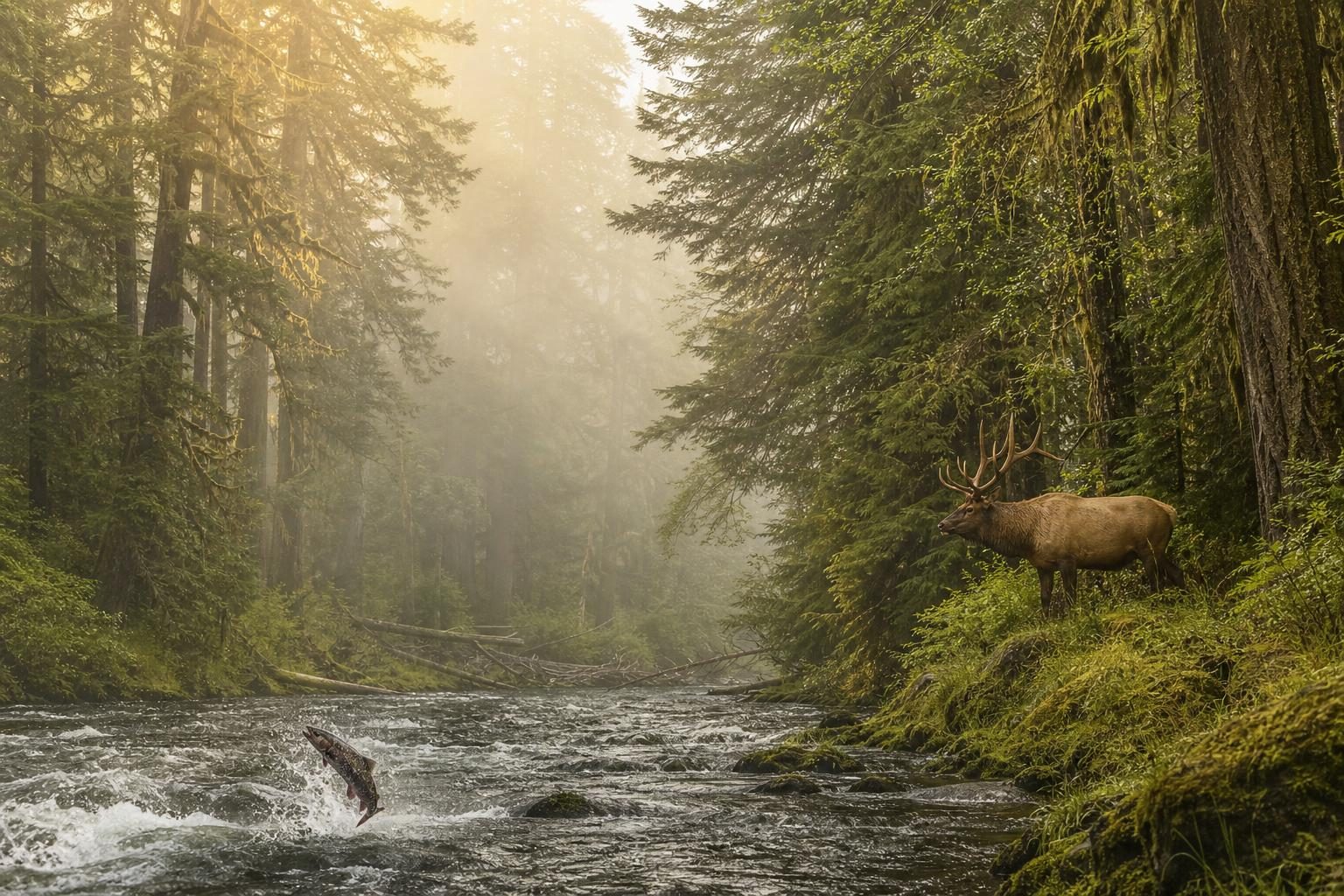
Illustration · Liberty Bell Report
On Washington's rain-soaked Olympic Peninsula, the Quinault Indian Nation has closed a major land deal. The Nation purchased 11,196 acres of forestland for about $60 million, bringing more than half of the land within its reservation under tribal ownership, Tribal Business News reported.
The seller was Anderson & Middleton Logging Co., a company based in Olympia, Wash.. The acreage represents roughly half of the privately held land that remained inside the reservation's boundaries, and the purchase lifts Quinault ownership within the reservation from about 47 percent to more than 52 percent, according to The Nature Conservancy, which helped raise money for the deal.
A Long Time Coming
For the Quinault people, this is about more than acreage. More than 150 years ago, the Quinault ceded millions of acres to the United States in exchange for a coastal reservation of roughly 200,000 acres, Native News Online reported. Over the generations that followed, much of the land inside those boundaries passed into private hands, leaving the Nation to manage its homeland as a patchwork.
Guy Capoeman, president of the Quinault Indian Nation, said the purchase represents "a vision in the making by our forebearers". He said owning the land outright allows the Nation to care for forests and rivers across a whole landscape instead of one parcel at a time.
That kind of patience across generations is something every family that has worked to buy back a farm, or keep one in the family, understands. It is a story of people saving, planning and investing to restore what their grandparents hoped for.
The Raft River Watershed
Most of the newly purchased land lies in the Raft River watershed, an area that supports salmon, steelhead trout and elk, along with gathering places that are important to Quinault culture, according to The Nature Conservancy. Reuniting ownership along the river lets the Nation manage the whole system, from the forest floor to the streams where fish return to spawn.
The Daily World, the newspaper in nearby Aberdeen, also reported the purchase on Nov. 13. Forestry has long been part of the Quinault economy, and managing the forest as one whole is central to how the Nation's leaders describe the purchase. Timber, fish and the families who depend on both all stand to benefit from a single owner planning for the long haul.
Who Paid for It
The Nation itself put up about $20 million of the roughly $60 million price, The Nature Conservancy reported. Another $25 million came from the State of Washington through the Climate Commitment Act and its Natural Climate Solutions Account, and the Conservancy raised $15 million from private donors and foundations.
That mix is worth noting. The Climate Commitment Act's cap-and-invest program has been controversial in Washington, where critics blame it for higher fuel prices. Whatever one thinks of that program, more than half of the purchase price in this deal came from the Nation and from private giving, and the land is going to the people with the deepest roots in it.
A Nation Planning Ahead
The Quinault have a record of thinking decades ahead. The Nation has been working to move its village of Taholah to higher ground away from the rising Pacific, NPR member station WFAE reported. Buying back forestland inside the reservation fits the same pattern: securing the Nation's future on its own terms, with its own resources and its own stewardship.
For Native nations across the country, the Quinault deal is a model of how tribes can rebuild their land base through ordinary purchases from willing sellers and smart partnerships. Property ownership, local control and responsible management of natural resources are principles that tribal leaders and conservatives share.
The Nation has not announced specific management plans for each parcel, but its leaders have said the goal is to manage the forests and rivers as one landscape. For the salmon of the Raft River, the elk in its valleys and the Quinault families who have waited generations for this, that is good news.
Sources
- Tribal Business News: Quinault buys 11,196 acres for $60M, expands reservation land ownership (link)
- The Nature Conservancy: Quinault Indian Nation Buys More Than 11,000 Acres Within Reservation (link)
- The Daily World: Quinault Indian Nation buys 11,196 acres (link)
- Native News Online: Quinault Nation Buys 11,000 Acres Within Its Own Reservation (link)
- WFAE: How a Northwest tribe is escaping a rising ocean (link)
— 30 —