
 Tonight on American Story with Joe Redhawk
Sirens on the Hills, Shelters for the Elders: Cherokee Nation Puts $13.1 Million Into Tornado Safety
The tribe plans warning sirens at 260 sites across its northeast Oklahoma reservation and home storm shelters for low-income elders and citizens with disabilities.
Filed November 23, 2026 · 📍 Phoenix, AZ 85003
Were you there? Share your story
Key points
- Cherokee Nation is committing $13.1 million to tornado warning sirens and storm shelters
- $10 million will build or upgrade sirens at 260 sites, backed by an $8 million FEMA grant
- An estimated 261,180 residents will fall within the new siren coverage
- $3.1 million expands home shelters for low-income elders and citizens with disabilities
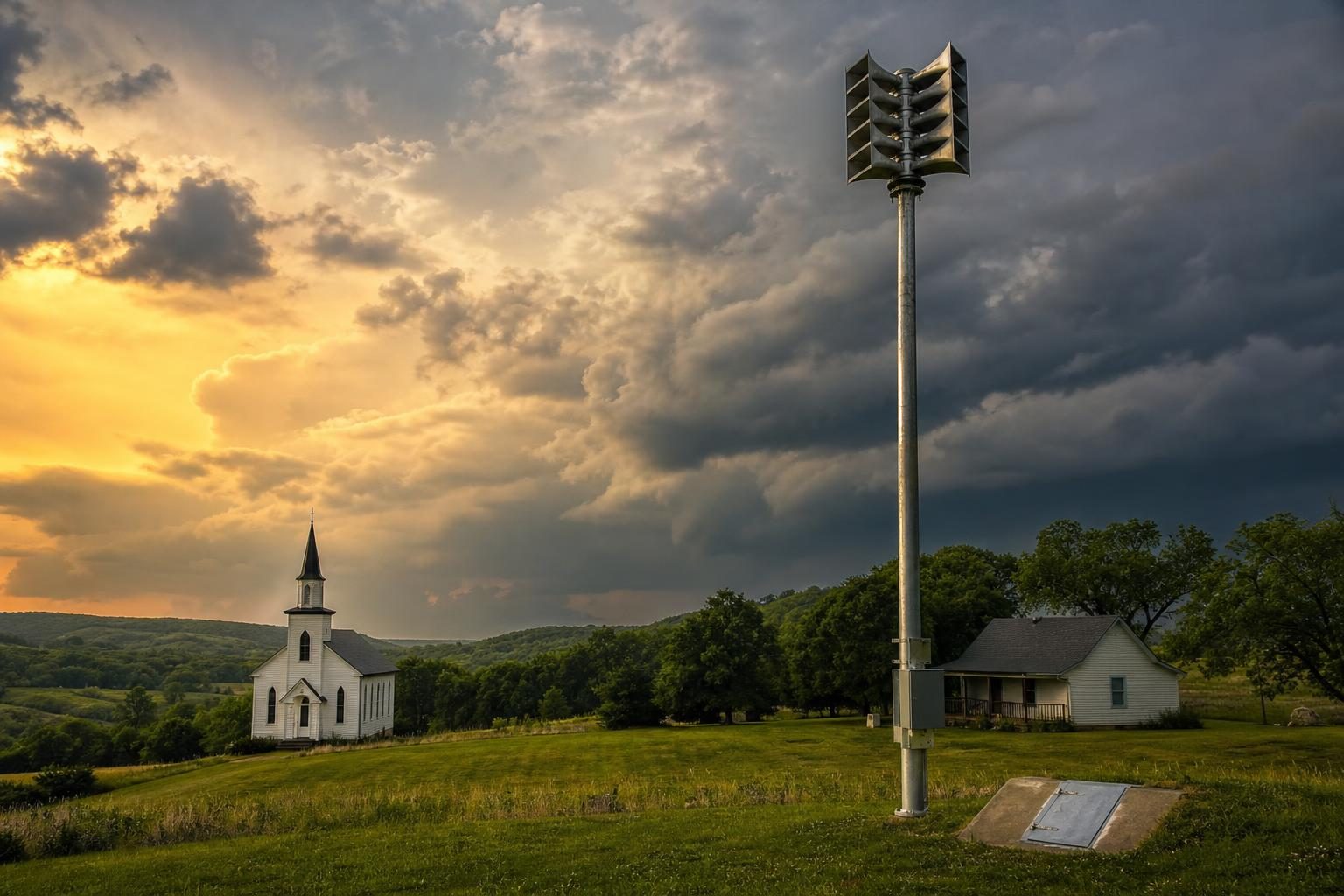
When the sky turns green over northeast Oklahoma, minutes matter. The Cherokee Nation is putting $13.1 million behind that simple truth, with a plan to build or upgrade tornado warning sirens at 260 sites across its reservation and to put storm shelters in the homes of elders and citizens with disabilities who need them most, according to the Cherokee Phoenix and FOX23 in Tulsa [1][2].
Principal Chief Chuck Hoskin Jr. announced the package, which splits into two parts: a $10 million siren network and a $3.1 million expansion of the tribe's residential storm shelter program, FOX23 reported [2].
Sirens That Reach People Without a Phone
The bigger share of the money goes to outdoor warning sirens. The tribe secured an $8 million Next Generation Early Warning Systems grant from the Federal Emergency Management Agency and will add up to $2 million of its own money through its Public Health and Wellness Fund Act, according to FOX23 and Bartlesville Radio [2][3].
Once the system is built, an estimated 261,180 people will live within range of the new or upgraded sirens, the reports said [2][3]. Officials described the sirens as a way to reach people who are outside, on the road or away from their phones when severe weather moves in [2]. Think of the rancher out in the pasture, the family on the highway, or the grandmother who does not keep a cell phone on the nightstand. Phone alerts are a good tool, but they only work if the phone is close and the signal holds.
Cherokee Nation Procurement is expected to open bidding soon for all 260 proposed sites, Bartlesville Radio reported [3].
A Safe Room for the Elders
The second piece of the plan is personal. The Housing Authority of the Cherokee Nation will put $3.1 million into its residential shelter program, which installs storm shelters for eligible low-income elders and citizens with disabilities, according to the Cherokee Phoenix [1].
Of that money, $1.6 million from the tribe's Housing, Jobs and Sustainable Communities Act will cover a bid for 200 shelters, and $1.5 million in new funding is meant to clear the program's waiting list, FOX23 reported [2].
Hoskin made the case for the investment in a column published by Native News Online, framing it as preparing today so that Cherokee communities are protected tomorrow [4].
Building on a Record of Readiness
This is not the tribe's first step. The Cherokee Nation has built community storm shelters with a mix of tribal dollars and FEMA grants, including a shelter in Hulbert that FEMA officials toured and that Hoskin called state-of-the-art, News On 6 reported [5].
In early 2025, the tribe also signed a five-year agreement with FEMA that lets its emergency management staff help federal teams during declared disasters, a first-of-its-kind arrangement in Indian Country, according to Indianz.com [6].
Why It Matters
Northeast Oklahoma sits in the heart of tornado country, and anyone who has lived there knows the drill: the sirens wail, you grab the kids and the dog, and you head for the lowest, strongest room in the house. For an elderly widow in a rural frame house, there may be no such room. For a man in a wheelchair, the trip to a community shelter may be too far to make in time. A safe room in the backyard, and a siren loud enough to hear from the porch, can be the difference between a close call and a funeral.
There is also a lesson here about self-government done well. The Cherokee Nation is using its own laws, its own funds and a federal grant it went out and won, and it is spending the money on the most basic duty any government has: protecting its people. It is the kind of practical, close-to-home work that builds trust, and it puts the most vulnerable members of the community at the front of the line rather than the back.
What Comes Next
The next milestones are bids for the siren sites and for the 200 new home shelters, according to the reports [2][3]. Once contracts are awarded and the towers go up, more than a quarter-million people across the reservation will have one more warning, and a few more minutes, when the next storm comes rolling across the plains [1][2].
Sources
Which Native success story should American Story cover more?
- Tribal businesses
- Native veterans
- Tribal colleges
- Housing and family
More in Native America
Real Food as Medicine: HHS Backs Native Food Traditions With $2 Million and a Montana 'Food Pharmacy'
Today on American Story with Joe Redhawk
Home Ground at First Encounter: A Native-Led Land Trust Takes Up Care of the Cape Cod Marsh Where the Nauset Met the Pilgrims
Yesterday on American Story with Joe Redhawk
Honoring the Code That Helped Win the Pacific: New Mexico and Navajo Prep Will Break Ground Dec. 1 on the Navajo Code Talkers Museum
On Saturday on American Story with Joe Redhawk
Were you there?
If you were at the scene, or this story touched your life, tell us what you saw and what it was like.
Discussion 0
Sign in or create a free account to join the discussion.
No comments yet. Start the discussion.