
 This morning on American Story with Joe Redhawk
Home Ground at First Encounter: A Native-Led Land Trust Takes Up Care of the Cape Cod Marsh Where the Nauset Met the Pilgrims
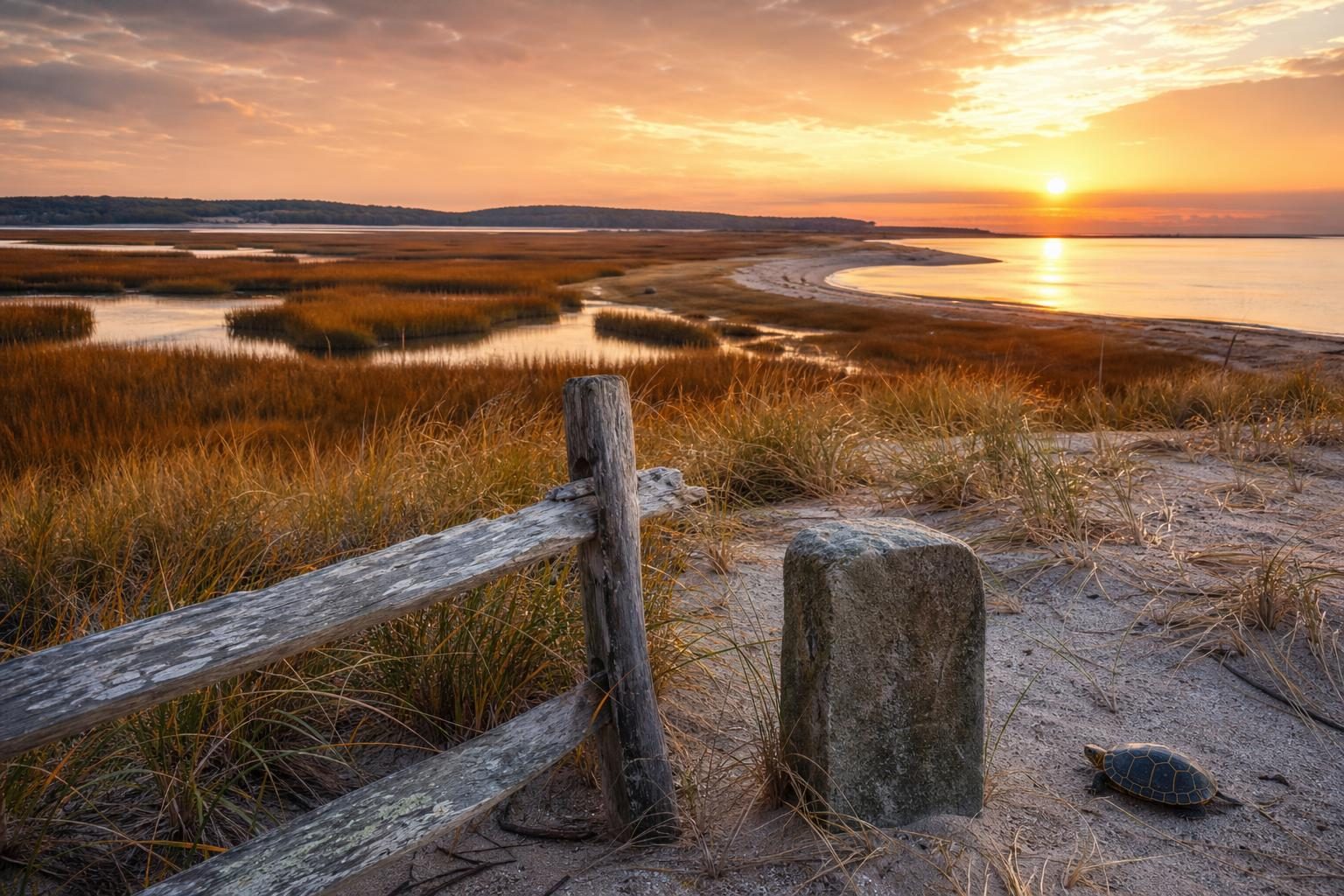
The Nature Conservancy has given roughly 120 acres overlooking Eastham's First Encounter Beach to the Mashpee-based Native Land Conservancy, which plans to protect turtle nesting grounds and tell the full story of the place this Thanksgiving week.
Filed November 22, 2026 · 📍 Boston, MA 02108
Were you there? Share your story
Key points
- The Nature Conservancy gave roughly 120 to 126 acres of marsh and upland in Eastham, Mass., to the Native Land Conservancy; the transfer closed Oct. 30.
- The land overlooks First Encounter Beach, where a Mayflower scouting party and Nauset men first met in December 1620.
- The Native-led trust, founded in 2012, plans to protect nesting habitat for diamondback terrapins and reconnect Native people with the land.
- It came by voluntary gift and private purchase, a conservation success built on cooperation rather than lawsuits or mandates.
Just in time for Thanksgiving, a piece of the Cape Cod shoreline where the story of the Pilgrims and the Wampanoag people first began is back in Native hands. The Native Land Conservancy, a Mashpee-based nonprofit led by Indigenous people, has taken ownership of land overlooking First Encounter Beach in Eastham, Massachusetts, NPR's Weekend Edition reported on Sunday [1].
The parcel, made up of salt marsh and upland on Eastham's western shore along Cape Cod Bay, was a gift. The Nature Conservancy, which had cared for the property since 1986, transferred it to the Native Land Conservancy, a deal that closed on Oct. 30, according to The Washington Post and My Modern Met [2][3]. The Post put the land at roughly 120 acres, while other accounts give about 126 acres [2][3].
Where Two Peoples First Met
Few places in America carry more history per acre. In December 1620, shortly before the Mayflower passengers settled at Plymouth, a scouting party led by Myles Standish camped near this beach and was met at dawn by Nauset men, members of the wider Wampanoag nation, according to the Eastham Historical Society [6]. Arrows and musket shots were exchanged in the brief clash, and no one was killed [6]. The spot has been known ever since as First Encounter Beach.
Less than a year later, the relationship between the newcomers and the Wampanoag had changed dramatically. Pilgrim leader Edward Winslow's letter describing the 1621 harvest celebration, preserved by Plimoth Patuxet Museums, records that the Wampanoag leader Massasoit arrived with about 90 of his men, that the gathering lasted three days, and that the Wampanoag went out and brought back five deer for the feast [5]. That shared table, with its gratitude to God for a harvest that kept the colony alive, is the root of the holiday Americans will celebrate on Thursday.
A Native-Led Land Trust Built on Patience
The Native Land Conservancy was founded in 2012 by Ramona Peters, a Mashpee Wampanoag citizen, and describes itself as the first Native-led land trust east of the Mississippi River, according to My Modern Met [3]. Rather than waiting on government, the group has steadily built its holdings through gifts and purchases, working with neighbors, conservation groups and donors.
The Eastham land is not its first step on the Outer Cape. Earlier this year the conservancy bought an adjoining parcel of about 20 acres in Eastham, its first holding in that part of the Cape, the Provincetown Independent reported [4]. Together, the two properties give the group a substantial block of protected shoreline overlooking the bay.
Paula Peters, a Mashpee Wampanoag citizen who serves as the conservancy's communications and programs coordinator, told The Washington Post that returning the land to Native care is something that cannot be measured in dollars [2]. Ramona Peters said the site holds "stories that were buried and are ready to be unearthed," My Modern Met reported [3].
Turtles, Marsh Grass and the Full Story
The conservancy's plans are modest and practical. It intends to keep protecting the marsh and upland habitat, including nesting grounds for the diamondback terrapin, a turtle that lays its eggs in sandy ground near the salt marsh [3]. The group also wants to reconnect Native families with the land and to share the history of the first encounter as the Nauset experienced it, according to the Post [2]. The Post noted that the transfer comes as development pressure squeezes Cape Cod's limited open land [2].
Why It Matters
There is a lot to like here for Americans of every background. This was not a court fight, a federal mandate or a forced taking. It was a voluntary gift from one private conservation group to another, combined with a private purchase from willing sellers, with local neighbors pitching in to keep open land from being developed [2][3][4]. Property rights were respected, a fragile marsh will stay wild, and a Native community gets to care for a place tied to its ancestors.
It is also a fitting story for Thanksgiving week. The holiday has always been about gratitude, to God first, and to the people who helped one another survive a hard season. The descendants of the people who met the Pilgrims on that beach in 1620, and who later shared the harvest table in 1621, will now tend the ground where that meeting began. That is a chapter worth giving thanks for.
Sources
- [1]Opens in a new tab ↗
- [2]The Washington PostIndigenous-led group receives Cape Cod plot taken from Native Americans centuries agoOpens in a new tab ↗
- [3]Opens in a new tab ↗
- [4]Provincetown IndependentNative Land Conservancy Buys 20 Acres in EasthamOpens in a new tab ↗
- [5]Plimoth Patuxet MuseumsEye-witness Account of the 1621 Harvest CelebrationOpens in a new tab ↗
- [6]Eastham Historical SocietySite of the First EncounterOpens in a new tab ↗
Which Native success story should American Story cover more?
- Tribal businesses
- Native veterans
- Tribal colleges
- Housing and family
More in Native America
Honoring the Code That Helped Win the Pacific: New Mexico and Navajo Prep Will Break Ground Dec. 1 on the Navajo Code Talkers Museum
Yesterday on American Story with Joe Redhawk
Sovereignty on the Line: Tribes Take On Kalshi's Sports Bets
Friday night on American Story with Joe Redhawk
Three Branches for the People: Sault Tribe Citizens Vote 2,697 to 990 to Separate Their Government's Powers
Friday night on American Story with Joe Redhawk
Were you there?
If you were at the scene, or this story touched your life, tell us what you saw and what it was like.
Discussion 0
Sign in or create a free account to join the discussion.
No comments yet. Start the discussion.