
 Overnight on American Story with Joe Redhawk
Minnesota's Peggy Flanagan Becomes First Native Woman Elected to the U.S. Senate
Lt. Gov. Peggy Flanagan, a White Earth Ojibwe citizen, won Minnesota's open Senate seat, a milestone tribal members and Native journalists marked with a victory song and tributes to generations of Native women.
Filed November 12, 2026 · 📍 Minneapolis, MN 55401
Were you there? Share your story
Key points
- The AP declared Lt. Gov. Peggy Flanagan the winner over Republican Michele Tafoya; she succeeds retiring Sen. Tina Smith.
- Flanagan, a White Earth Nation citizen, is the first Native American woman elected to the U.S. Senate.
- Four Native men have served in the Senate before her: Charles Curtis, Robert Owen, Ben Nighthorse Campbell and Markwayne Mullin.
- White Earth Chairman Michael Fairbanks brought a drum group to perform a victory song on election night.
Minnesota Lt. Gov. Peggy Flanagan, a citizen of the White Earth Nation, has become the first Native American woman elected to the United States Senate. The Associated Press declared the Democrat the winner over Republican Michele Tafoya at 12:07 a.m. Eastern the morning after Election Day, and she will succeed Sen. Tina Smith, who did not seek reelection [3].
ICT reported that Flanagan carried about 54 percent of the vote to Tafoya's 43 percent, with a late wave of Minneapolis ballots pushing her ahead on election night [1]. Native News Online put the result at 54 percent to 44 percent [2]. Tafoya, who became known nationally as a sideline reporter on NFL broadcasts before entering politics, ran as the Republican nominee for the open seat [3].
A Historic Night in Indian Country
The moment carried deep meaning for many Native Minnesotans. At Flanagan's election-night gathering, White Earth Nation Chairman Michael Fairbanks brought a drum group to perform a victory song, ICT reported [1]. Jodi Archambault, who is Hunkpapa and Oglala Lakota and a former deputy assistant secretary of the interior for Indian affairs, said Flanagan has "done a phenomenal job as lieutenant governor," according to ICT [1]. ICT also noted Flanagan's Ojibwe name, Gizhiiwewidamookwe, and that she belongs to the wolf clan [1].
Flanagan tied the victory to those who came before her. "I could not run for the U.S. Senate without Native women," she told MPR News [4]. Melanie Benjamin, former chief executive of the Mille Lacs Band of Ojibwe, said in MPR's report that Flanagan shows Native people what is possible when they hope and work for something, and Nevada Littlewolf, who leads the group Women Winning, said Flanagan will represent tribal nations across the country, not only in Minnesota [4].
Native News Online, in a report by publisher Levi Rickert, called the win a "significant milestone" for Native representation in the federal government [2].
From St. Louis Park to the Senate
Flanagan, 47, grew up in St. Louis Park, raised by a single mother who relied at times on public programs such as Section 8 housing and food assistance, MPR News reported [5]. Her father, the White Earth activist Marvin Manypenny, died in 2020 [5]. She earned a bachelor's degree in child psychology, with a minor in American Indian studies, from the University of Minnesota in 2002 [5].
She served on the Minneapolis Board of Education from 2005 to 2009, represented St. Louis Park in the Minnesota Legislature beginning in 2015, and became lieutenant governor under Gov. Tim Walz after the 2018 election, the first Native American and first woman of color elected to statewide office in Minnesota [5]. Earlier, she worked on the campaign of the late Sen. Paul Wellstone, spent nearly a decade at Wellstone Action training candidates and founding its Native American Leadership Program, and led Children's Defense Fund-Minnesota [5].
She ran as a progressive. MPR News reported her priorities include expanding Medicare to cover everyone, raising the federal minimum wage to $17 an hour, restoring nationwide abortion protections and ending the administration's mass deportations [5]. Many Republicans, and many readers of this site, disagree sharply with parts of that agenda, and those debates will play out in the new Senate. The milestone itself, however, is one every American can recognize.
A Short History, and What Comes Next
Few Native Americans have served in the Senate, and all of them have been men. According to the Senate, Charles Curtis of Kansas, a descendant of a Kansa-Kaw chief, and Robert Owen of Oklahoma, a Cherokee citizen, served in the early 1900s [4][6]; Ben Nighthorse Campbell of Colorado, a Northern Cheyenne, took office in 1993 as the third; and Oklahoma's Markwayne Mullin, an enrolled Cherokee Nation citizen, became the fourth in 2023 [6]. Curtis later became vice president, and Mullin left the Senate in March to become secretary of homeland security, MPR News noted [4][6]. ICT reported there are currently no sitting Indigenous senators [1].
That history crosses party lines: Curtis was a Republican, while Owen entered politics as a Progressive Democrat, according to the Senate [6]. ICT and Native News Online both noted that Alaska's Mary Peltola, who is Yup'ik, could join Flanagan if she wins her still-undecided race [1][2].
Smith is retiring at the end of her term, and Flanagan will succeed her [5]. Newly elected senators take the oath of office when the new Congress convenes in January. MPR News reported she may weigh in on Indian affairs, the economy and foreign policy, and that she has pointed to the federal government's treaty and trust obligations to tribal nations as a starting point [4].
The symbolism runs deep. Native Americans were not recognized as U.S. citizens until 1924, and the same chamber Flanagan is joining once ratified treaties with Ojibwe and Dakota nations and, in 1863, voted to cancel the Dakota treaties after the U.S.-Dakota War, MPR News noted [4]. A little more than a century after citizenship, a White Earth Ojibwe woman will raise her right hand in that chamber and swear to support and defend the Constitution, a reminder that the American promise of self-government belongs to all of its people.
Sources
- [1]Opens in a new tab ↗
- [2]Native News OnlinePeggy Flanagan Makes History with Senate VictoryOpens in a new tab ↗
- [3]The Associated Press (via KY3)Democrat Peggy Flanagan wins election to US Senate from MinnesotaOpens in a new tab ↗
- [4]Opens in a new tab ↗
- [5]Opens in a new tab ↗
- [6]Opens in a new tab ↗
Which Native success story should American Story cover more?
- Tribal businesses
- Native veterans
- Tribal colleges
- Housing and family
More in Native America
Tribes Honor Native Warriors on Veterans Day, Carrying On a Proud Tradition of Service
Yesterday on American Story with Joe Redhawk
Tribal Leaders Push Back as Senate Advances Permitting Overhaul
On Tuesday on American Story with Joe Redhawk
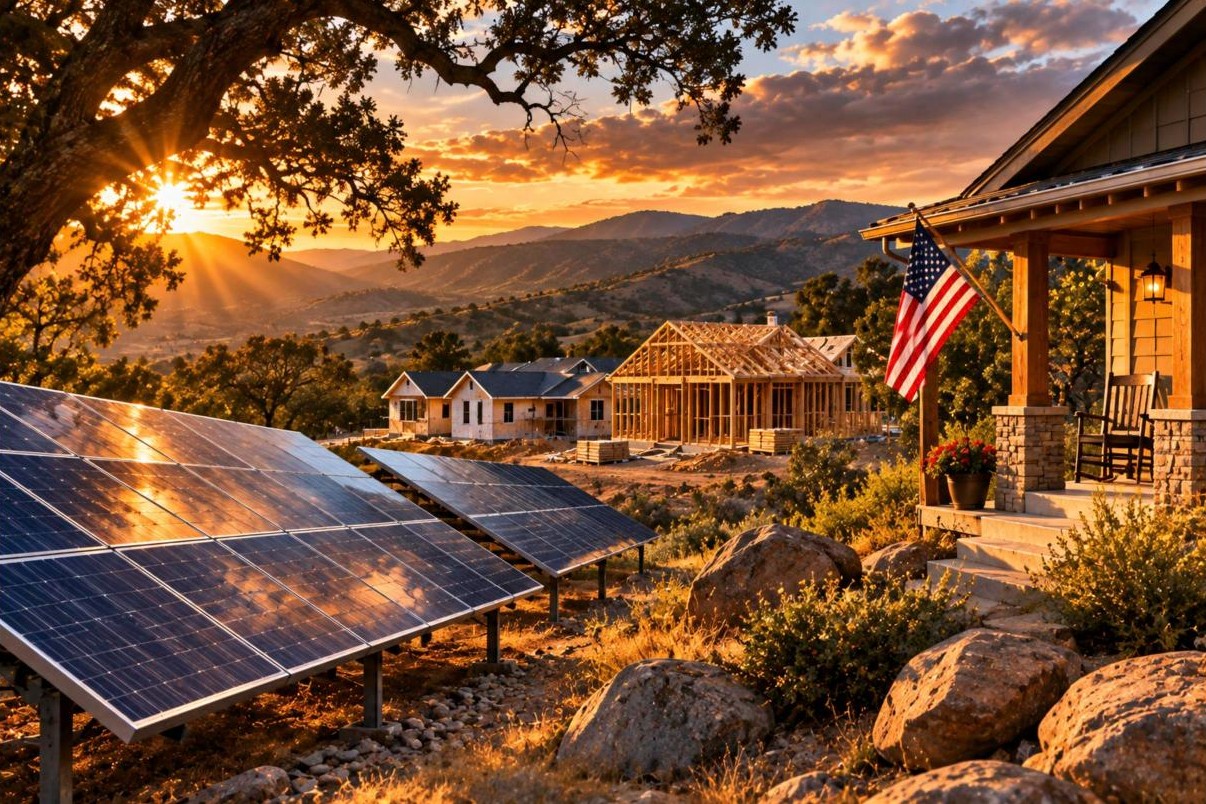
Mesa Grande Band Turns On Solar Power and Prepares Its First New Homes in Two Decades
On Tuesday on American Story with Joe Redhawk
Were you there?
If you were at the scene, or this story touched your life, tell us what you saw and what it was like.
Discussion 0
Sign in or create a free account to join the discussion.
No comments yet. Start the discussion.