
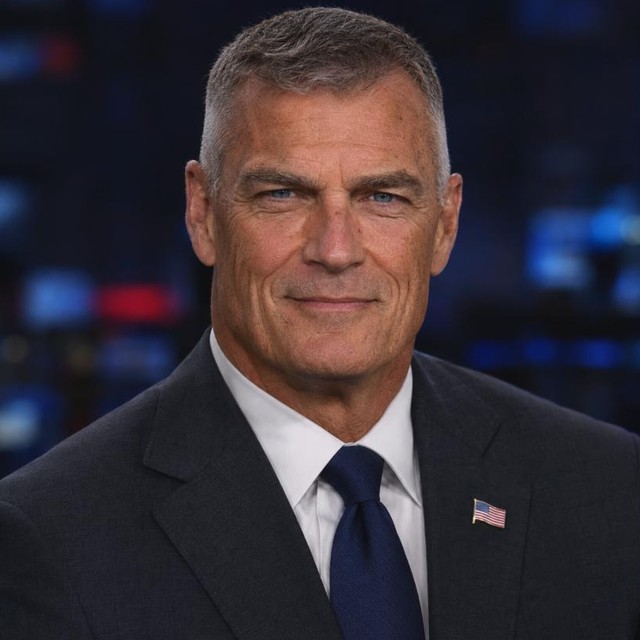
 Overnight on Command Post with Dan Whitaker
House Passes Sweeping Veterans Package on Veterans Day to Boost Pay for Combat-Wounded Retirees
The Take Care of America's Veterans Act, a Republican bill bundling more than 60 provisions, passed by voice vote Wednesday and now faces a tough Senate fight before January.
Filed November 12, 2026 · 📍 Washington, DC 20001
Were you there? Share your story

Key points
- H.R. 9237, sponsored by Rep. Mike Bost, passed by voice vote on Nov. 11 with no recorded tally.
- It would let roughly 54,000 to 60,000 combat-wounded medical retirees collect full retirement and disability pay.
- Changes to tinnitus and sleep apnea ratings help pay for it; DAV and VFW object, TAPS and others support.
- A Democratic standalone Star Act faced a final House vote Thursday; unpassed bills die in January 2027.
On Veterans Day, the House passed a sweeping package of veterans legislation that would, among many other changes, let tens of thousands of combat-wounded military retirees keep both their full retirement pay and their VA disability compensation. The Take Care of America's Veterans Act, H.R. 9237, sponsored by House Veterans' Affairs Committee Chairman Mike Bost (R-Ill.), bundles more than 60 provisions and cleared the chamber by voice vote at about 2:46 p.m. Eastern on Wednesday, Military.com reported, citing the House Clerk's floor record [3].
Under current law, medically retired service members with fewer than 20 years of service lose part of their retirement pay when they also draw VA disability compensation. The bill would end that offset for an estimated 58,000 veterans, and the Congressional Budget Office estimates the average gain at about $1,450 a month, the Associated Press reported [1]. Other estimates of the number helped run from about 54,000, cited by Military.com and The Hill, to more than 60,000, cited by the committee [2][3][5].
What the Package Does
The pay fix carries the Major Richard Star Act, named for an Army combat engineer diagnosed with cancer from toxic burn pit exposure, The Hill reported [2]. The package also includes the Love Lives On Act, which would let more than 30,000 surviving military families remarry without losing benefits, according to the Tragedy Assistance Program for Survivors (TAPS), and the Sharri Briley and Eric Edmundson Veterans Benefits Expansion Act, which would raise certain special monthly compensation for severely disabled veterans, Military.com reported [3]. The Hill reported the bill also expands eligibility for a spouse's memorial headstone or marker, sets a standard screening process for admission to some mental health programs and addresses VA hiring and infrastructure [2].
To help pay for it, Section 108 would change how the VA rates tinnitus and obstructive sleep apnea. Existing awards would generally be protected, but veterans filing new claims or undergoing certain reevaluations could receive less, Military.com reported [3]. Disabled American Veterans (DAV) cites a VA analysis estimating that up to 1.5 million veterans could be affected, with compensation reduced by up to $57 billion over 10 years [3]. Speaker Mike Johnson (R-La.) pulled the bill from the floor in July when it lacked enough Republican support, The Hill reported [2].
A Floor Fight and Divided Reactions
With Rep. Addison McDowell (R-N.C.) presiding, no member asked for a recorded vote, so the bill passed on the voice vote, the AP reported [1]. Democrats said Republicans drew the committee's ranking Democrat, Rep. Mark Takano (D-Calif.), away from the podium to discuss changes and then called the vote; a Republican aide countered that Democrats simply had no one at the microphone and that technical corrections are routinely made after passage, The Hill reported [2]. Takano said no Democrat requested a tally "because of the treachery and trickery of the majority," RedState reported [6]. Majority Leader Steve Scalise (R-La.) answered plainly: "If nobody calls for the vote, it's passed, which is a good thing" [1]. Bost faulted Democrats for not paying attention [1].
Rep. Raul Ruiz (D-Calif.) argued the bill takes from veterans rather than caring for them, and Cory Geisler, commander-in-chief of the Veterans of Foreign Wars (VFW), condemned the voice vote as cowardly and dishonorable, according to the AP [1]. The VFW and DAV both oppose the rating changes [3].
The bill's backers are numerous too. The committee says more than 30 veterans organizations support the package, including the American Legion, the Military Officers Association of America, Wounded Warrior Project, TAPS and AMVETS [5]. Concerned Veterans for America also backs it, The Hill reported [2]. TAPS President Bonnie Carroll welcomed the vote and urged the Senate to "get the bill to the President's desk before the end of the year" [3].
The Senate and the Clock
Democrats are pressing their own route. A discharge petition led by Takano gathered 218 signatures, 213 Democrats and five Republicans, with Rep. Nancy Mace (R-S.C.) adding the final name in September, Stars and Stripes reported [4]. The standalone Star Act has 341 House cosponsors and 80 in the Senate, where Sen. Richard Blumenthal (D-Conn.) sponsors it [4]. The House approved the motion to discharge 245-175 on Wednesday [3], and a final vote on the Democratic bill, which has no offsetting cuts, was expected Thursday, the AP reported [1].
In the Senate, Veterans' Affairs Committee Chairman Jerry Moran (R-Kan.) said he looks forward to seeing the package become law, but The Hill reported it faces an uphill climb with Senate Democrats opposed [2]. Takano predicted it would go nowhere there [1]. The Senate could take up either bill or neither, leaving the issue to the next Congress, which Democrats will control [1]. Any Senate changes would send the bill back to the House [3], and bills that have not passed both chambers when the 119th Congress adjourns in January 2027 die automatically [4]. Bost said he will work with the Senate to put the bill on the president's desk before the end of 2026 [5].
For those sent home early by wounds suffered in combat, both parties now promise full pay for full sacrifice. The open question is how to pay for it, and whether Congress can agree before the clock runs out.
Sources
- [1]The Associated Press (via NTD)House Approves Bill to Boost Compensation for Many Veterans, With Some Floor DramaOpens in a new tab ↗
- [2]The Hill (via Yahoo News)Democrats cry foul after Republicans fast-track partisan veterans bill: 'Dirty tricks'Opens in a new tab ↗
- [3]Opens in a new tab ↗
- [4]Opens in a new tab ↗
- [5]House Committee on Veterans' AffairsPromises Made, Promises Kept: House Republicans Deliver Historic Healthcare and Benefits Expansion to Millions of Veterans and American Families on Veterans DayOpens in a new tab ↗
- [6]Opens in a new tab ↗
Should U.S. military aid to Israel end early?
- Yes, Israel can afford its own weapons
- Phase it out slowly
- No, keep it while Iran is a threat
More in Military & Defense

Recruits Are Lining Up Again: Hegseth's Record for the Troops on Veterans Day
Yesterday on Command Post with Dan Whitaker

Where the Iran War Stands: Tehran Won't Budge on Uranium as Rubio Bets on Pressure Over Bombs
Yesterday on Command Post with Dan Whitaker

Iran Brands Argentina's Navy and Air Force 'Terrorist Organizations' in Tit-for-Tat Move
Yesterday on Command Post with Dan Whitaker
Were you there?
If you were at the scene, or this story touched your life, tell us what you saw and what it was like.
Discussion 0
Sign in or create a free account to join the discussion.
No comments yet. Start the discussion.