
 On Monday on The Hart of the Economy with Evelyn Hart
Warsh Sees Faster Growth From AI as Fed Staff Game Out Its Impact Ahead of a December Hike
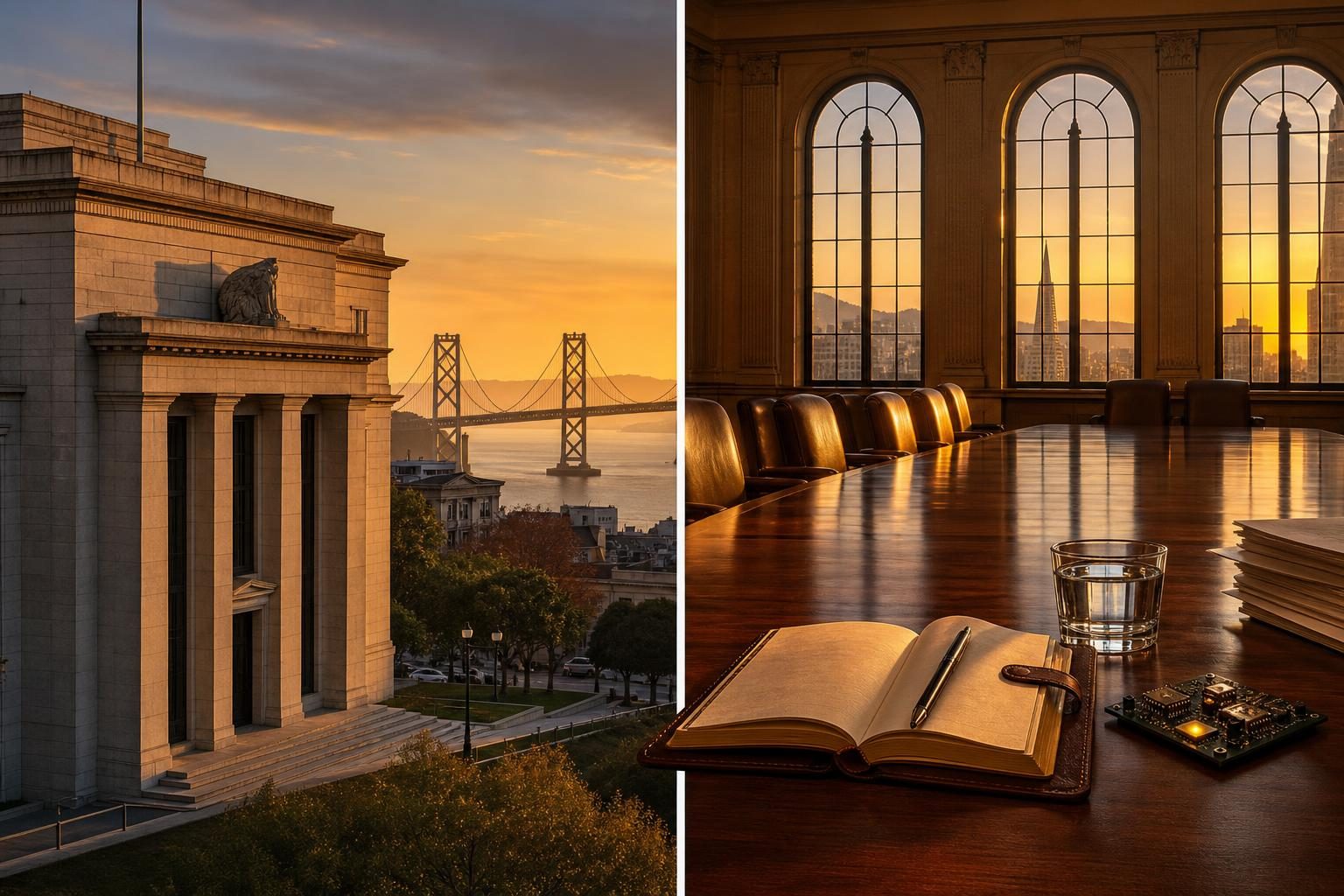
Speaking in San Francisco, the Fed chair laid out an optimistic view of the technology and its risks but stayed away from the inflation worries many colleagues have raised.
Filed November 16, 2026 · 📍 San Francisco, CA 94102
Were you there? Share your story
Key points
- Warsh said AI could speed innovation and usher in an era of faster economic growth.
- Fed staff are modeling AI's effect on jobs, scenarios he stressed are not forecasts.
- He steered clear of AI's inflation risk, a worry a growing number of colleagues share.
- The Fed is widely expected to raise rates a quarter point at its Dec. 8-9 meeting.
Federal Reserve Chairman Kevin Warsh said Monday that artificial intelligence could speed up innovation and open an era of faster economic growth, remarks that underscored his generally upbeat view of the technology and set him apart from many of his colleagues, the Associated Press reported [1].
Speaking at the Productivity and Jobs Task Force Conference in San Francisco, Warsh said the central bank is building models of how the technology could reshape the labor market in the coming years and is studying a wide range of possible outcomes, the Washington Examiner reported [3]. Bloomberg reported that he described Fed staff as gaming out contingencies for its impact on the economy [2].
What he did not do was address the risk that the technology could add to inflation, the AP reported [1], a concern that a growing number of his colleagues have raised [5]. With the central bank's final meeting of the year about three weeks away, that silence was notable in its own right.
Optimism, With Guardrails
Warsh laid out a best-case scenario for what the technology could do for the economy while also warning that its risks could prove costly, the New York Post reported [4]. The Post noted that he referred to the technology as super intelligence, the term President Trump prefers [4].
He was careful about how the staff work should be read. Bloomberg reported that Warsh made clear the Fed's scenarios are not forecasts, and that he cast the central bank's role in gauging the technology's impact as something other than advocacy [2].
That discipline is welcome. The Fed's job under the law is to keep prices stable and employment high, not to cheer on any one industry, however promising. Families who have watched their grocery, rent and insurance bills climb deserve a central bank that treats rosy scenarios as possibilities to be tested against the data, not promises to bank on.
A Split Inside the Fed
Warsh's view puts him on one side of a debate running through the central bank. A growing number of Fed officials have said the AI boom could mean interest rates stay higher for longer, while Warsh has been slower to agree and has argued that the technology would help bring prices down, the Washington Post reported last week [5].
The case for Warsh's optimism is a familiar one to conservatives who have long argued that growth is not the enemy of stable prices. When workers and businesses produce more with the same resources, an economy can expand faster without overheating. The opposing concern is about timing: a wave of spending on data centers, power plants and equipment can push up demand for energy, materials and skilled labor well before any productivity payoff shows up in the numbers.
For now, the committee Warsh leads is leaning toward the cautious side. The Fed last raised rates in September and is widely expected to lift its 3.75% to 4% target range by a quarter percentage point at its Dec. 8-9 meeting, with another increase anticipated in January, Reuters reported [6]. Governor Christopher Waller has opened the door to a larger move, and Dallas Fed President Lorie Logan has called for at least two more hikes, according to Reuters [6].
What Comes Next
Monday's remarks offered no fresh signal on that path, since Warsh steered clear of the inflation question [1]. The next real test comes when the committee gathers Dec. 8-9 [6].
For households, the practical takeaway is that the Fed chair is hopeful about the long run while his committee stays focused on the prices in front of it. Another rate increase would ripple into credit card rates, auto loans and home equity lines, while savers would keep earning more on their deposits.
If Warsh turns out to be right that the technology can raise productivity and help tame prices [5], that would be good news for working families and for retirees living on fixed incomes. Until the numbers bear that out, the Fed's first duty is to the dollar in Americans' pockets, and the December meeting will show how the chairman balances his long-run hopes against the inflation his colleagues still see today.
Sources
- [1]The Independent (Associated Press)Warsh grapples with AI's potential economic impact, steers clear of its inflation riskOpens in a new tab ↗
- [2]Opens in a new tab ↗
- [3]Washington ExaminerFed is modeling how the AI boom could change the economyOpens in a new tab ↗
- [4]New York PostFed Chair Kevin Warsh lays out best-case scenario from AI, while also warning about 'costly' risksOpens in a new tab ↗
- [5]Opens in a new tab ↗
- [6]Business Recorder (Reuters)Fed's Collins says gradual rate hikes best to manage economic risksOpens in a new tab ↗
Are AI stocks in a bubble?
- Yes, and it's popping
- Some are, some aren't
- No, AI is the real deal
- Not sure
More in Markets & Investing
Fed Minutes Point to a December Rate Hike, and a Couple of Officials Floated a Bigger One: What It Means for Your Wallet
Tonight on The Hart of the Economy with Evelyn Hart
Musalem Sees Up to Four More Increases and Daly Urges Care as Waller Warns the Fed May Have to 'Shock' Inflation: What It Means for Your Wallet
Today on The Hart of the Economy with Evelyn Hart
Nvidia Tops Forecasts With $115.8 Billion in Sales and Guides to $130 Billion as Interim CEO Colette Kress Reports Her First Quarter
Last night on Money Wire with Victoria Chen
Were you there?
If you were at the scene, or this story touched your life, tell us what you saw and what it was like.
Discussion 0
Sign in or create a free account to join the discussion.
No comments yet. Start the discussion.