
 This morning on Mother & Child with Elena Vasquez
England Begins the World's Largest Test of AI in Breast Cancer Screening, With Nearly 700,000 Women Invited
The three-year EDITH trial will measure whether software working alongside a radiologist can catch more cancers without more false alarms. American women have a stake in the answer.
Filed November 23, 2026 · 📍 Washington, DC 20001
Were you there? Share your story
Key points
- England's NHS launched a three-year trial of AI-assisted breast screening on Monday.
- About 700,000 women at roughly 30 screening centers are expected to take part, and any woman can opt out.
- Today two experts read each mammogram; the trial tests AI as a partner to the human readers.
- Results will track recall rates, missed 'interval' cancers and how AI performs for different groups of women.
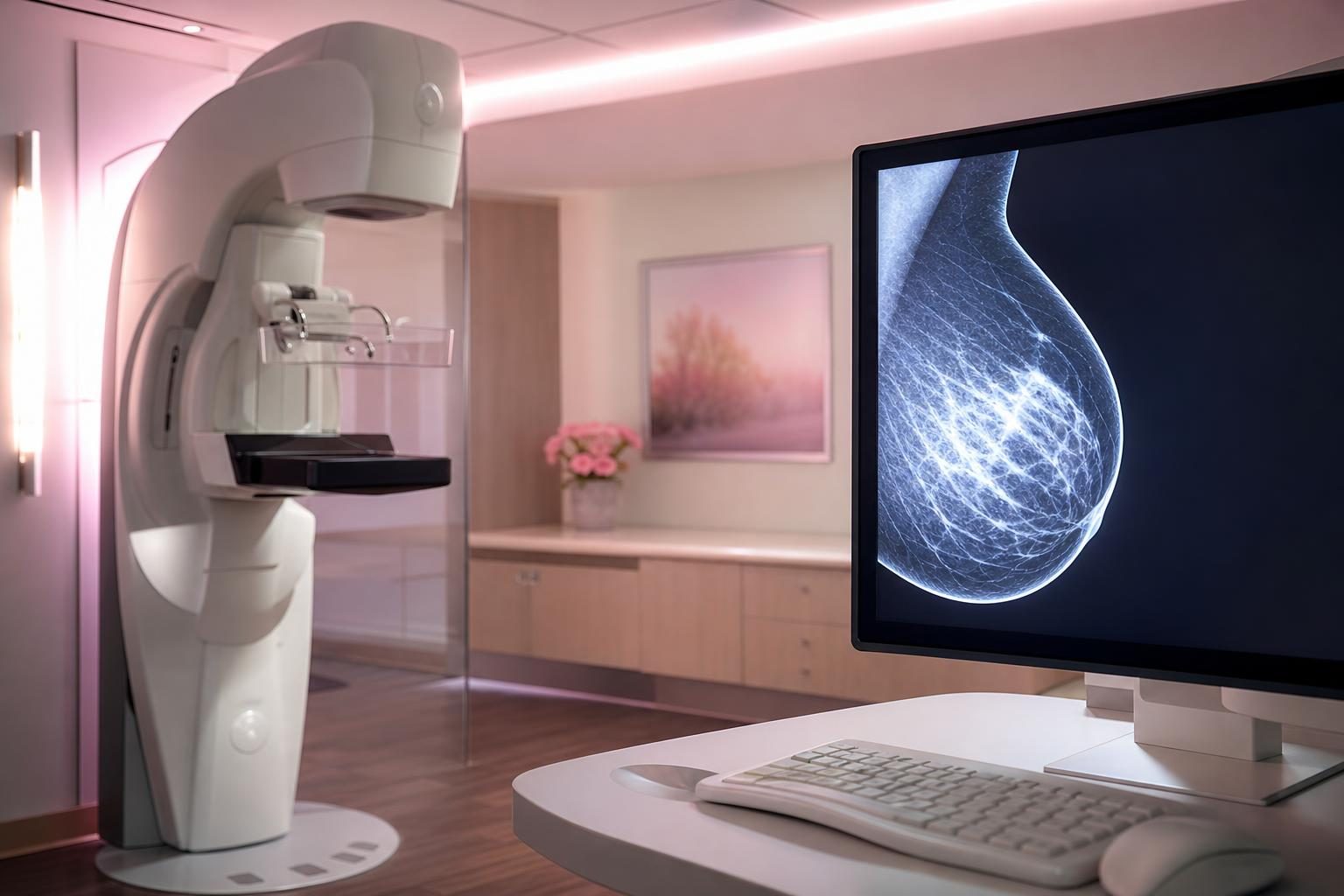
England's National Health Service on Monday launched what it calls the world's largest trial of artificial intelligence in breast cancer screening, a three-year study expected to involve nearly 700,000 women at about 30 screening sites [1][2]. The goal is simple to state and hard to prove: find out whether computer software working alongside trained specialists can spot cancers earlier, safely, while easing pressure on a stretched workforce.
The study, known as EDITH, is led by the University of Warwick with Cambridge University Hospitals and is funded through the government's National Institute for Health and Care Research [3][4]. Women ages 50 to 71, who are already invited for a routine mammogram every three years, will find details of the trial in their appointment letters [2].
How the trial works
Under England's current system, two experts independently read every set of breast X-rays, looking for signs of cancer [2][3]. The trial compares that standard against AI-assisted reading. According to the trial's public information, some women will receive standard screening by two experts, while others will have images read by at least one expert working with an AI system [3].
The researchers are testing two ways of using the software. In one, the AI reviews images after the human reader to look for cancers that may have been missed. In the other, the AI goes first and sorts cases into higher or lower likelihood of cancer, helping specialists focus their attention [3]. Systems from several AI companies are taking part, according to reporting on the launch [2].
The trial will measure how many women are called back for more tests, how well each system performs for different groups of women, and how many "interval cancers" turn up between screening rounds, a key sign of what screening misses [3]. Women who prefer not to take part can opt out, and their images will be read by two experts without AI and left out of the results [3].
Why it matters to American women
Breast cancer remains one of the most common cancers among women. The American Cancer Society estimates that about one in eight women in the United States will develop invasive breast cancer during her lifetime [5]. In 2024, the U.S. Preventive Services Task Force updated its guidance to recommend that women get a mammogram every other year starting at age 40, ten years earlier than its previous general recommendation [6]. That change means more scans to read, and the same shortage of radiologists that England faces is a concern in many American communities.
Reporting on the launch describes the aim as replacing one of the two human readers with an AI system [2]. The trial is designed to test that promise, not to assume it, and that distinction matters. A tool that flags too many harmless spots can send healthy women into weeks of worry and extra procedures. A tool that misses cancers is worse. Only a large, carefully controlled study can show which way the balance falls.
Technology as a servant, not a substitute
There is wisdom in moving deliberately. Medicine is at its best when new tools strengthen the judgment and care of the people who treat patients, rather than replacing the human relationship at the heart of it. A woman waiting on a screening result deserves accuracy, speed and a real person who will explain what comes next.
A study this large will take years to deliver its answers, and that patience has a cost. But the size of EDITH, with hundreds of thousands of women across dozens of centers, is precisely what should give doctors and patients confidence in whatever it finds.
What comes next
The trial's planned run extends through mid-2029, with results expected after women have been followed across screening rounds [4]. For now, women in England will see the trial mentioned in their invitations, and American health systems will be watching closely. If the software helps specialists find more cancers early without raising false alarms, the lessons could reach clinics on this side of the Atlantic as well.
Sources
- [1]Opens in a new tab ↗
- [2]Opens in a new tab ↗
- [3]University of WarwickEDITH trial: Information for the publicOpens in a new tab ↗
- [4]ISRCTN RegistryArtificial intelligence to help healthcare professionals detect cancer in the UK breast screening programmeOpens in a new tab ↗
- [5]American Cancer SocietyKey Statistics for Breast CancerOpens in a new tab ↗
- [6]U.S. Preventive Services Task ForceBreast Cancer: ScreeningOpens in a new tab ↗
What worries you most about health care?
- Cost
- Getting an appointment
- Quality of care
- Government getting more involved
More in Health & Medicine

Trapped in a Maternity Ward for a Day: Fighting Near Congo's Ebola Epicenter Pins Down Health Workers as the WHO Pleads for Peace
Last night on Health Check with Samuel Adeyemi

Federal Scientists Reopen the Roundup Question: What NIH's New Glyphosate Reviews Found, and Why the EPA Still Has the Final Word
Last night on Health Check with Samuel Adeyemi

Kennedy to El-Sayed on Medicare for All: 'The Numbers Don't Work'
Last night on Health Check with Samuel Adeyemi
Were you there?
If you were at the scene, or this story touched your life, tell us what you saw and what it was like.
Discussion 0
Sign in or create a free account to join the discussion.
No comments yet. Start the discussion.