
 This morning on Sunshine State Report with Tomás Ortega
Still Rising Before Thanksgiving: The St. Johns River Breaks Records From Cocoa to Lake Harney as Volusia Braces for Its Turn
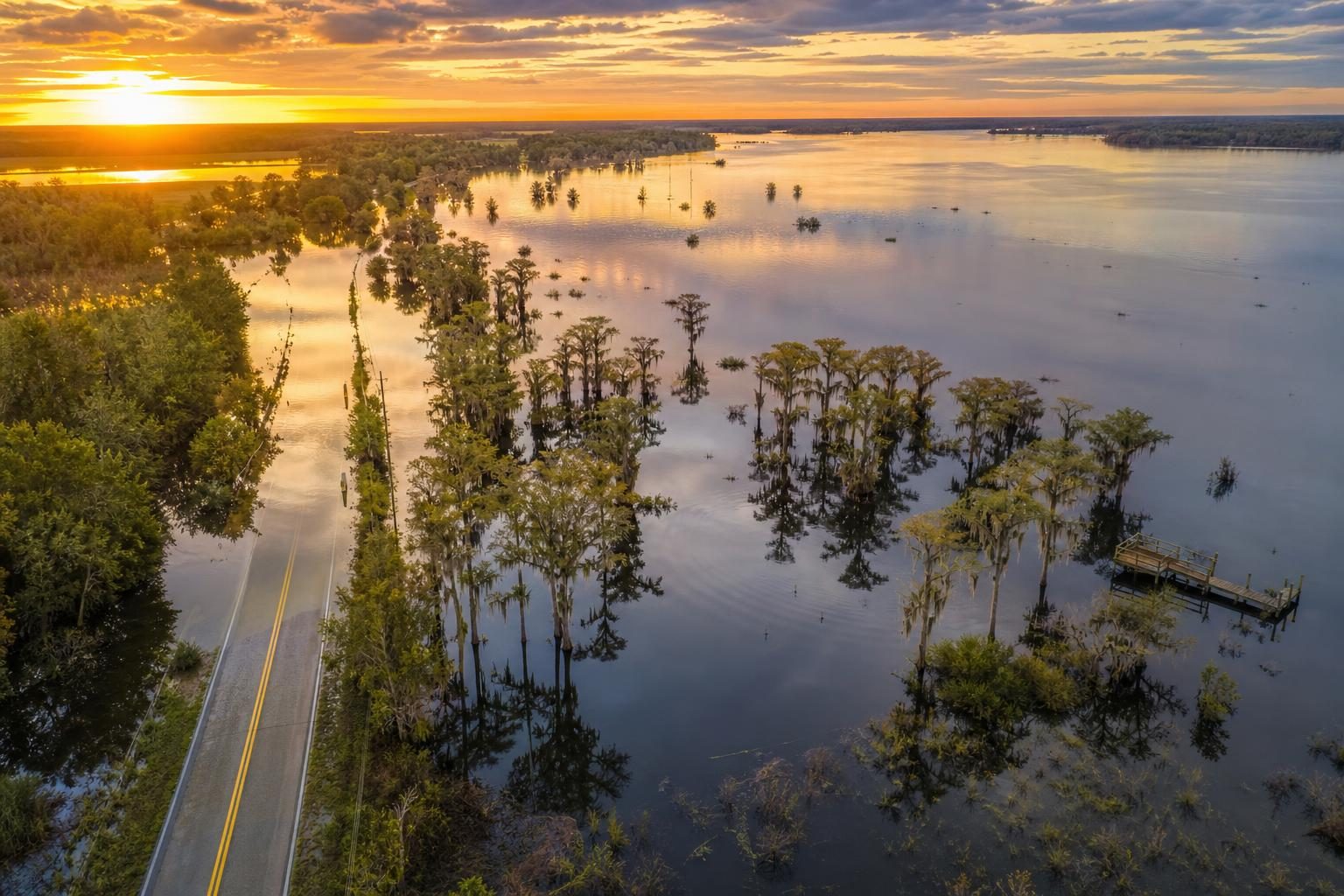
Hundreds were stranded over the weekend as Central Florida's slow-moving flood crept north. Forecasters expect major to near-record levels around Sanford and DeLand by midweek.
Filed November 23, 2026 · 📍 Tallahassee, FL 32301
Were you there? Share your story
Part of our continuing coverage: Record River Flood Swamps Space Coast, Heads North
Key points
- The St. Johns River crested at a record 18.77 feet at Cocoa on Saturday and broke the record at Lake Harney on Sunday.
- Forecasters expect major flooding near Sanford and major to near-record levels near DeLand by midweek.
- Floods stranded hundreds of Central Floridians over the weekend; no deaths have been attributed to the flooding in Brevard.
- Gov. DeSantis scheduled a Monday morning briefing in Melbourne; a federal major disaster declaration is still pending.
Florida's longest river is still climbing. The St. Johns River set new records over the weekend from Brevard County north to Lake Harney, and forecasters warn that communities downstream in Seminole and Volusia counties will see major to near-record flooding by midweek, just as families prepare for Thanksgiving [1][2][3].
At Cocoa, the river crested at 18.77 feet on Saturday, surpassing its previous record of 17.6 feet, according to WESH [2]. Upstream of Lake Harney near Geneva, it reached 12.82 feet on Sunday, breaking the 12.7-foot record, with a crest near 13 feet forecast, Weatherboy reported [4].
Where the water goes next
The St. Johns flows north, and so does its flood. At Sanford, the river was in moderate flood stage and was expected to reach major stage, about 8 feet, around Wednesday, according to local forecasts [2][3]. Volusia County officials warned Monday that levels near DeLand are expected to approach records, with the river forecast to reach about 6 feet on Wednesday [3]. The U.S. Geological Survey projects water levels along the river to keep rising over the coming week [2].
The slow pace is what makes a river flood like this so punishing. Unlike a storm surge that comes and goes in hours, the St. Johns drains a vast, flat basin, and water that fell during this month's torrential rains is still working its way downstream. Neighborhoods that dried out after the rain can find the river at their doorsteps days later.
The human toll
Floods stranded hundreds of people across Central Florida over the weekend, Central Florida Public Media reported [5]. Brevard County Sheriff Wayne Ivey has said no deaths have been attributed to the flooding [2]. Two shelters opened in Brevard for people displaced by last week's historic flooding were set to close Monday as water receded in some neighborhoods, according to News 6's running coverage [1].
Gov. Ron DeSantis declared a state of emergency on Nov. 2 and has since expanded it to 21 counties [1][6]. He wrote to President Trump on Nov. 9 asking him to expedite a major disaster declaration, which would open the door to federal individual assistance for families; as of the weekend, that declaration had not been issued [1]. The governor scheduled a news conference for 10 a.m. Monday at the Veterans Memorial Complex in Melbourne [1].
What families should know
Officials urge residents near the river to heed evacuation guidance, avoid driving through standing water, and keep children and pets away from floodwaters, which can carry sewage, debris and wildlife. Residents who suffered damage should photograph it and keep receipts for cleanup and repairs, which will matter if federal assistance is approved.
The flood is also a reminder of what Floridians do best in hard times. Churches, neighbors and volunteers have turned out across Brevard and Volusia with boats, sandbags and hot meals, the kind of help no government program can replace.
Thanksgiving week adds a complication. AAA expects millions of Floridians and visitors on the roads, and several low-lying routes near the river have seen standing water. Drivers should never try to cross a flooded road; just a foot of moving water can float a car.
What comes next
Watch Sanford and DeLand on Tuesday and Wednesday, when the crest is expected to arrive there. Anyone planning Thanksgiving travel through the region should check road closures before setting out, and residents along the river should be ready to move valuables and vehicles to higher ground.
Sources
- [1]News 6 ClickOrlandoLIVE UPDATES: Here's the latest information about the Central Florida floodsOpens in a new tab ↗
- [2]WESHLevels, timing: St. Johns River to reach record or major crest from Cocoa to Astor in coming daysOpens in a new tab ↗
- [3]News 6 ClickOrlandoSt. Johns River flooding: Volusia County warns of major to record levelsOpens in a new tab ↗
- [4]Opens in a new tab ↗
- [5]Central Florida Public MediaFloods strand hundreds in Central Florida over weekend following heavy rainsOpens in a new tab ↗
- [6]Opens in a new tab ↗
Should Florida ban new data centers until it studies power and water use?
- Yes
- No, bring the jobs
- Only near neighborhoods
More in Florida & Southeast News

DeSantis Writing Third Book as 2028 Talk Grows
This morning on Sunshine State Report with Tomás Ortega

Deltona Cancels Its Christmas Parade, Citing Amendment 3, as Supporters Say Cities Can Cut Elsewhere
Overnight on Home Front with Carlos Mendoza
'Sounded Like a Train': Weather Service Confirms an EF-1 Tornado Carved a 7.5-Mile Path Through Southern Palm Beach County
Last night on Sunshine State Report with Tomás Ortega
Were you there?
If you were at the scene, or this story touched your life, tell us what you saw and what it was like.
Discussion 0
Sign in or create a free account to join the discussion.
No comments yet. Start the discussion.