
 Overnight on Home Front with Carlos Mendoza
Deltona Cancels Its Christmas Parade, Citing Amendment 3, as Supporters Say Cities Can Cut Elsewhere
A Central Florida city blames the voter-approved property tax relief for scrapping its holiday parade, while Gov. DeSantis and other supporters argue local governments have room to trim spending first.
Filed November 23, 2026 · 📍 Miami, FL 33130
Were you there? Share your story
Key points
- Deltona canceled its Christmas parade and most city events, citing budget cuts tied to Amendment 3.
- The city manager says Deltona must cut about $12 million next year and $5 million the year after.
- Amendment 3 raises the non-school homestead exemption to $150,000 in 2027 and $250,000 in 2028.
- DeSantis notes local property tax revenue rose from $33 billion in 2019 to $62 billion this year.
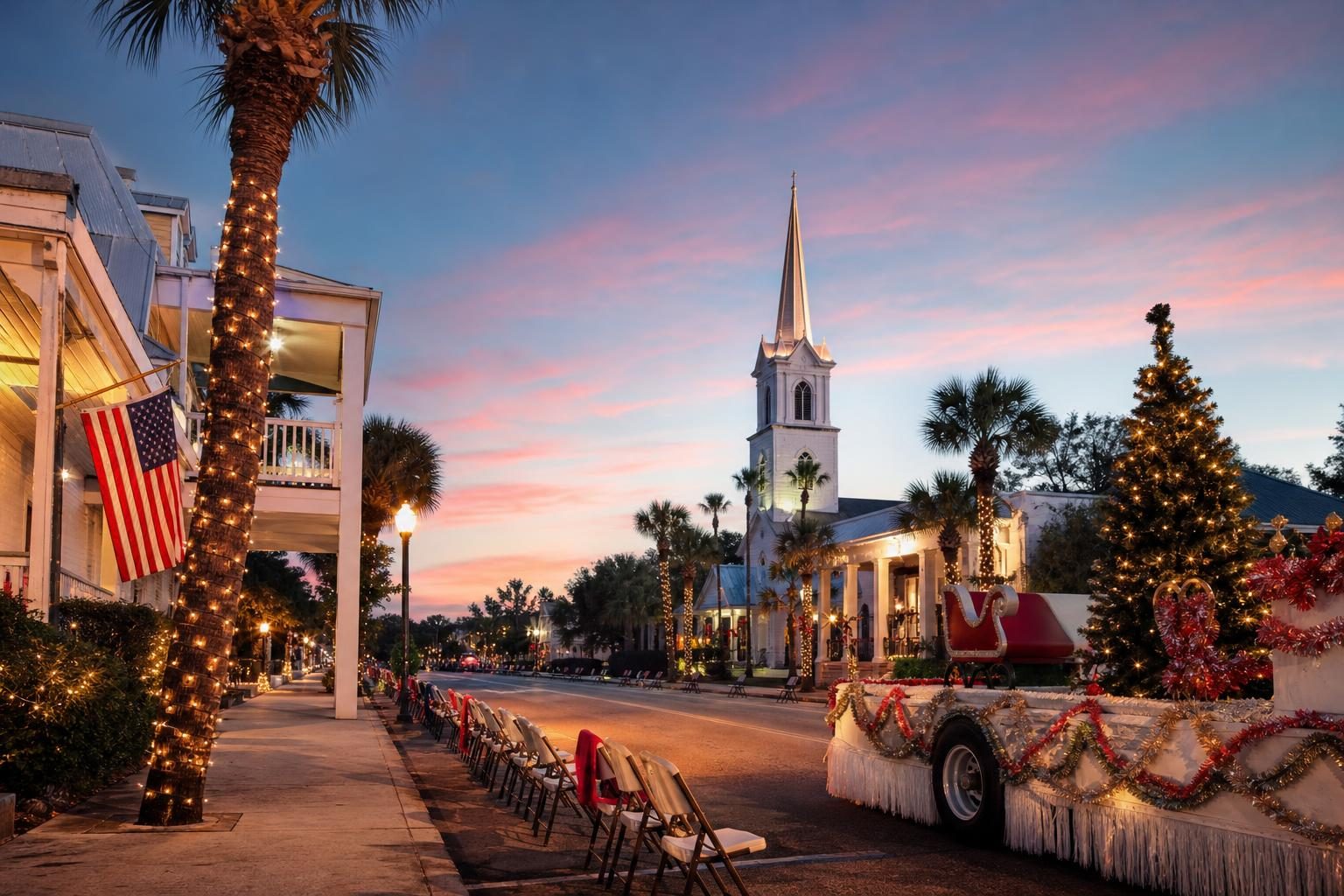
The Central Florida city of Deltona has called off its annual Christmas parade, and city leaders say the state's voter-approved property tax overhaul, Amendment 3, is the reason, NBC News reported [1]. The decision puts a cherished holiday tradition at the center of the debate over the tax relief Florida homeowners approved at the ballot box this month [1].
City Manager Doc Dougherty announced the cancellation in a letter to residents, saying Deltona must trim about $12 million from its budget next year and another $5 million the year after to absorb the amendment's effects, Florida Politics reported [2]. He projected the total reduction would climb to roughly $23 million by 2030, according to the outlet [2].
What the City Says It Is Cutting
The parade is not the only casualty. Nearly all city-run events are effectively canceled so the money can go toward more essential services, with the exception of two upcoming 5K runs that pay for themselves, Florida Politics reported [2].
Fortune reported that Deltona is also pulling back vehicle orders, ending construction contracts and canceling professional services as it reworks its spending [3]. The magazine highlighted the city's warning that "this is only the beginning of the vast reduction" [3].
City officials have a real budget to balance, and they deserve to be heard on the numbers. Residents also deserve to know why a parade, rather than other line items, was among the first things to go. Those are fair questions for the city commission as it writes its next budget.
What Voters Approved, and What It Saves
Amendment 3 raises the homestead exemption on non-school property taxes to $150,000 in 2027 and $250,000 in 2028, Bay News 9 reported [4]. One estimate cited by the station projected that eligible homeowners would save roughly $1,300 on their tax bills in 2027, rising to about $2,700 a year in 2028 and beyond [4]. Actual savings will vary with each home's value and the local tax rate.
For a working family or a retiree on a fixed income, that is real money: a car payment, a few months of groceries, or a winter of utility bills. Floridians voted for that relief knowing it would require local governments to make choices.
Supporters argue those choices are manageable. Gov. Ron DeSantis has pointed out that property tax revenue flowing to local governments grew from $33 billion in 2019 to $62 billion this year, WUSF reported [5]. In the governor's view, cities and counties that nearly doubled their collections in a few years can find savings without punishing homeowners [5]. At an October event promoting the measure, DeSantis was joined by U.S. Sen. Ashley Moody, Agriculture Commissioner Wilton Simpson and state Rep. Berny Jacques, and supporters argued the change would push local governments to run more efficiently, WUSF reported [5].
DeSantis and Miami-Dade officials have also accused local governments of fear-mongering over the amendment's effects, Florida Voice reported [6]. Supporters' point is simple: when a government has to tighten its belt, it can start with administration and nonessential projects before it turns off the Christmas lights on Main Street.
Who Can Keep the Tradition Alive
The cancellation comes as other Florida governments sort through the same math, and as critics of the amendment use cases like Deltona's to argue the relief went too far [1][3]. Supporters counter that every city sets its own priorities, and that a parade can survive a smaller city budget if leaders want it to [5][6].
There may be another way forward. Whether Deltona's churches, civic clubs, businesses or volunteers will step in to organize a community celebration this December remains an open question.
What comes next is a budget fight. Deltona's leaders will have to show residents how they plan to absorb the reductions, and Amendment 3's backers will keep pressing local governments to cut waste before they cut services residents value [2][5]. In the meantime, the true meaning of the season does not depend on a city permit. Families will still gather, churches will still proclaim the birth of Christ, and neighbors will still find ways to celebrate together.
Sources
- [1]Opens in a new tab ↗
- [2]Opens in a new tab ↗
- [3]FortuneFlorida slashed property taxes. Now cities must cut services and 'niceties' like Christmas paradesOpens in a new tab ↗
- [4]Opens in a new tab ↗
- [5]Opens in a new tab ↗
- [6]Florida VoiceDeSantis, Miami-Dade officials accuse local governments of 'fear-mongering' over Amendment 3 property tax cutsOpens in a new tab ↗
Should Florida ban new data centers until it studies power and water use?
- Yes
- No, bring the jobs
- Only near neighborhoods
More in Florida & Southeast News
'Sounded Like a Train': Weather Service Confirms an EF-1 Tornado Carved a 7.5-Mile Path Through Southern Palm Beach County
Last night on Sunshine State Report with Tomás Ortega

Police: Man Spiked Waffle House Tea, and a Child Drank It
Yesterday on Sunshine State Report with Tomás Ortega

Florida Raids an Orlando Slaughterhouse Over Alleged Animal Cruelty as Uthmeier Promises Aggravated Abuse Charges
Saturday night on Sunshine State Report with Tomás Ortega
Were you there?
If you were at the scene, or this story touched your life, tell us what you saw and what it was like.
Discussion 0
Sign in or create a free account to join the discussion.
No comments yet. Start the discussion.