
 This morning on Launch Pad with Hannah Lindgren
Florida's Pythons Are Moving North: Brevard and Charlotte Sightings Push the Fight Beyond the Everglades
Hunters and researchers say Burmese pythons are turning up well outside their South Florida stronghold, riding out cold nights in tortoise and armadillo burrows.
Filed November 25, 2026 · 📍 Charlotte, NC 28202
Were you there? Share your story
Key points
- Burmese pythons are being reported in Brevard and Charlotte counties, far north of their Everglades core.
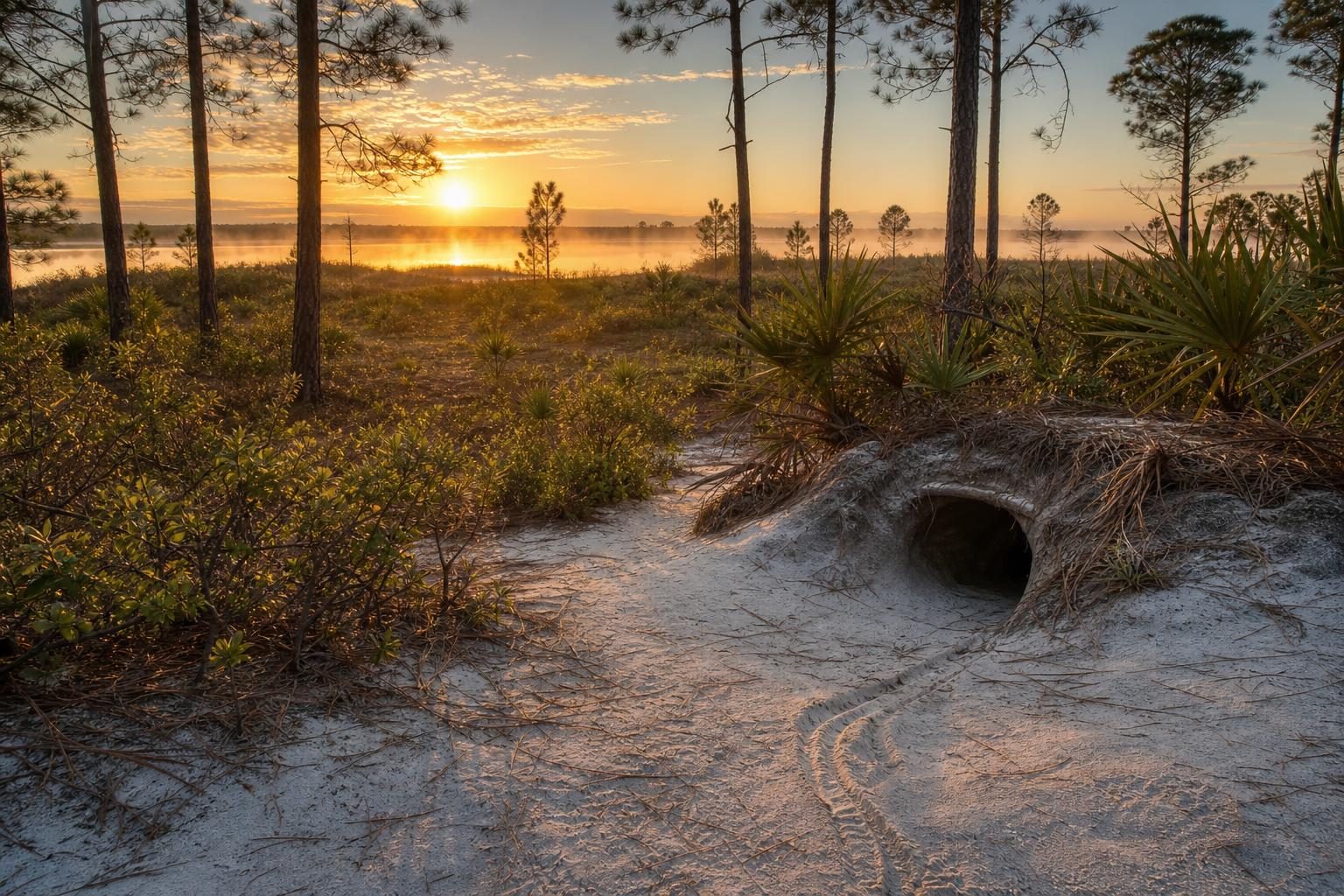
- Researchers have documented pythons sheltering and nesting in gopher tortoise and armadillo burrows.
- State officials have confirmed an established python population in western Charlotte County.
- Residents can report sightings to the state's exotic species hotline, 888-483-4681, or IveGot1.org.
Burmese pythons, the giant invasive snakes that have spent decades devouring wildlife in the Everglades, are turning up farther north in Florida, and the people who hunt them say the state's colder nights are no longer the barrier many once assumed, Fox News reported Wednesday [1].
Fox reported python sightings in Brevard County on the Space Coast and in Charlotte County on the Gulf Coast, both well north of the snakes' core range [1]. Hunters told the outlet the snakes are getting through cold snaps by moving into burrows dug by gopher tortoises and armadillos [1]. A University of Florida researcher told Fox he believes a major driver of the spread is a shortage of prey in South Florida, where pythons have sharply reduced mammal populations [1].
A Population Now Established on the Gulf Coast
The northward push is more than a handful of stories from the field. State wildlife officials have confirmed that part of western Charlotte County, north of Naples and Fort Myers, now has an established python population, Good Morning America reported [6]. In July, Sarasota's WWSB reported that the Florida Fish and Wildlife Conservation Commission had found established colonies moving north into Charlotte County, beyond the swamps of the Everglades [2].
The burrow behavior hunters describe has also been documented by scientists. A study in the Journal of Herpetology that radio-tracked pythons in Collier County found the snakes used gopher tortoise and nine-banded armadillo burrows as refuges [3]. Seventy-one percent of the python nests found during that study were laid and brooded inside those burrows [3]. In other words, the snakes are borrowing the homes of one of Florida's signature native reptiles to shelter, survive and reproduce.
How Many Pythons, and How Many Removed
Nobody knows exactly how many pythons live in Florida. The U.S. Fish and Wildlife Service, which works with state and federal partners on python control, notes that the snakes are extremely hard to spot in the wild, which makes them difficult to count [5]. Fox reported that the state has removed more than 23,000 pythons, and that conservative estimates put the population of the Greater Everglades in the tens of thousands [1].
Removal teams are getting smarter. A University of Florida analysis of contractor data found that nighttime surveys generally produce better results than daytime searches, except during extreme cold, when mean daily air temperatures fall to about 50 degrees or lower [4]. That finding matters more as the snakes move into parts of the state where cold nights come more often.
Why It Matters
For Florida families, this is not an abstract ecology lesson. The counties where the snakes are now being reported are full of neighborhoods, ranches and conservation land [1][2]. The Everglades offers a warning of what an unchecked python population can do to native mammals, and the researchers quoted by Fox say that loss of prey is part of what is driving the snakes outward [1].
Scripture gives mankind a charge to work the garden and keep it (Genesis 2:15). Florida's python hunters, removal contractors and wildlife officers are doing exactly that, and they deserve the support of the communities they are protecting. The state's model of paying trained contractors and inviting the public into removal efforts has put real numbers on the board [1][2][4], and the spread north is a reason to strengthen it, not to give up.
What Residents Should Do
Wildlife officials ask anyone who sees a python to report it to the state's exotic species hotline at 888-483-4681 or online at IveGot1.org, WWSB reported [2]. A photograph and a precise location help removal teams respond. Residents should not try to handle a large snake themselves; keep children and pets away and let trained responders do the work.
The fight against the python has always been a long one. What is new is the map. If the snakes are learning to survive farther north, Florida's response will have to move north with them [1][2][6].
Sources
- [1]Opens in a new tab ↗
- [2]WWSB ABC7 SarasotaBurmese pythons spreading north into Charlotte County, state hunt wraps with no winner announcedOpens in a new tab ↗
- [3]Journal of HerpetologySubterranean Refuge Use by Burmese Pythons (Python bivittatus) in Southwestern FloridaOpens in a new tab ↗
- [4]Opens in a new tab ↗
- [5]U.S. Fish and Wildlife ServiceManaging Burmese Pythons in FloridaOpens in a new tab ↗
- [6]Good Morning AmericaInvasive Burmese pythons established new hot spot in FloridaOpens in a new tab ↗
Should Florida ban new data centers until it studies power and water use?
- Yes
- No, bring the jobs
- Only near neighborhoods
More in Florida & Southeast News

Uthmeier Moves to Strip a North Miami Beach Doctor's License Over 149 Alleged Illegal Abortions
Overnight on Sunshine State Report with Tomás Ortega

Deltona's Christmas Parade Is Back On as Community Groups Step In
Last night on Sunshine State Report with Tomás Ortega

Florida Gets $400 Million for Past Storms as Flood Families Await Trump's Call
Yesterday on Sunshine State Report with Tomás Ortega
Were you there?
If you were at the scene, or this story touched your life, tell us what you saw and what it was like.
Discussion 0
Sign in or create a free account to join the discussion.
No comments yet. Start the discussion.