
 Tonight on Spotlight with Chloe Bennett
A $190.4 Million Van Gogh Sets a Record After a Last-Minute Settlement With the Heirs of a Jewish Family
'Chestnut Trees in Blossom' became the most expensive Van Gogh ever sold at auction, days after its owners reached a deal with descendants who say the painting was sold under Nazi-era duress.
Filed November 18, 2026 · 📍 NY 12207
Were you there? Share your story
Key points
- Van Gogh's 'Chestnut Trees in Blossom' sold for $190.4 million at Sotheby's, a record for the artist.
- The previous Van Gogh auction record was $117.2 million in 2022.
- Heirs of Samuel and Hedwig Fischer said the family sold it in 1936 under Nazi persecution; Sotheby's had found the sale voluntary.
- The owners and heirs settled days before the sale; terms were not disclosed.
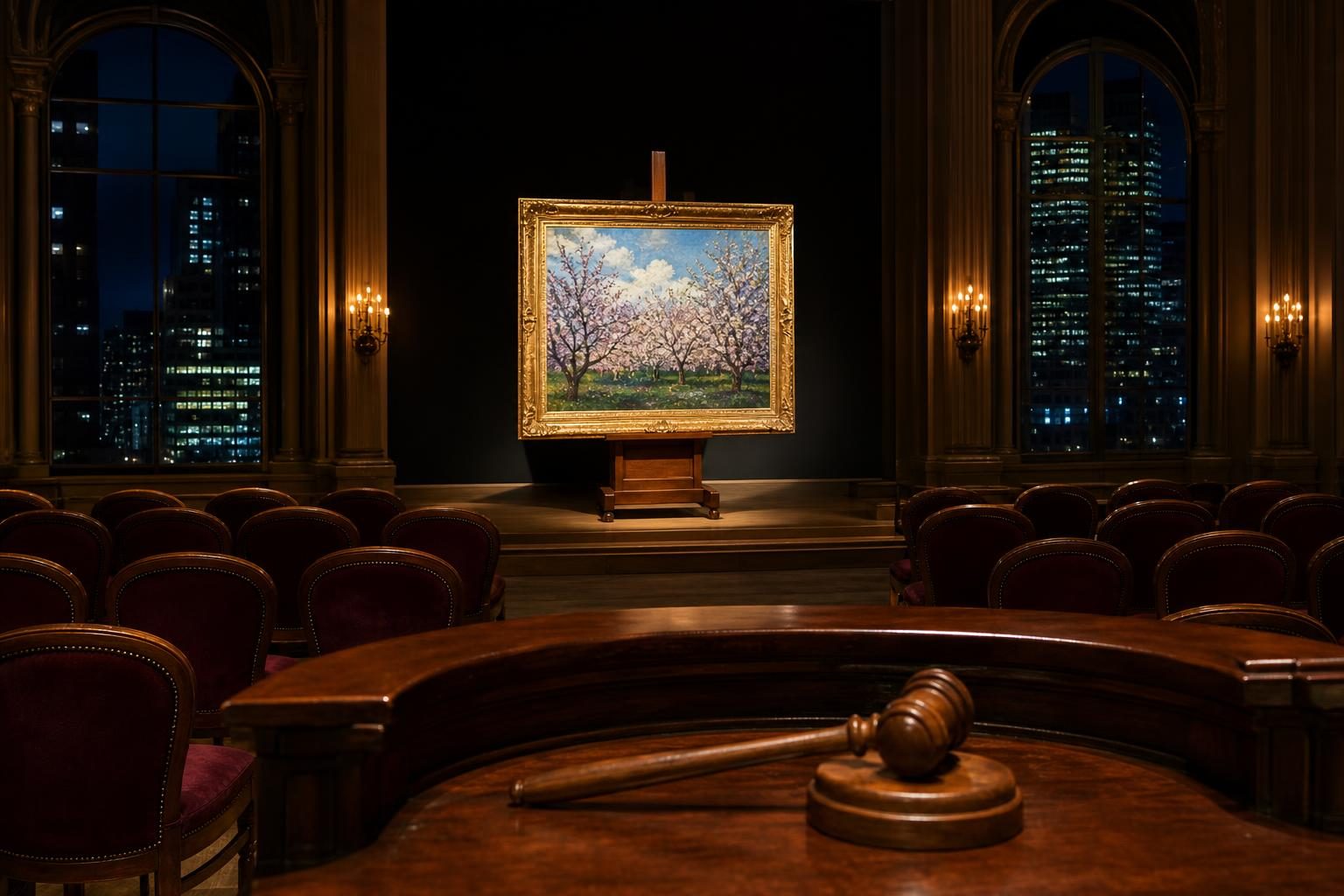
A painting of chestnut trees in spring bloom became the most expensive Vincent van Gogh ever sold at auction on Wednesday night, fetching $190.4 million at Sotheby's in New York [1][2]. But the bigger story is how it got to the auction block at all: a last-minute settlement with the heirs of a Jewish family who say they lost the painting under the shadow of Nazi persecution [1][3].
A Record Night in New York
The canvas, known as "Chestnut Trees in Blossom," dates from 1890, the final year of the artist's life, France 24 reported [2]. Its price shattered the previous auction record for a Van Gogh, the $117.2 million paid for "Orchard With Cypresses" at Christie's in November 2022, according to the same report [2]. Sotheby's had put the value of the work at about $180 million going into the sale, and it carried a guarantee from the auction house, NPR reported [4].
The New York Times described a whirlwind week in which the sale of the season's star painting was thrown into doubt, then rescued by a settlement reached days before the gavel fell [1].
The Family Behind the Claim
The dispute centers on what happened in 1936. Samuel and Hedwig Fischer, a German Jewish couple, bought the painting in Berlin in 1909, NPR reported [4]. In 1936, three years into Hitler's rule, the family sold it through a gallery in Amsterdam [4].
Shortly before this week's auction, a lawyer for the Fischers' heirs wrote to Sotheby's asking it to stop the sale, arguing that the family had been forced to give up the painting under the duress of Nazi-era persecution, according to NPR and the Jewish News Syndicate [4][6]. Sotheby's had concluded otherwise, finding that the painting was sold voluntarily, NPR reported [4].
The current owners, the Blaquier family of Argentina, bought the painting in 1975, according to The Art Newspaper [5]. Rather than fight it out in court, the two sides reached an agreement just before the sale. Sotheby's called it a mutually satisfactory resolution but declined to disclose the terms, citing confidentiality [5][6]. Le Monde reported that the sale went ahead after the agreement between the owners and the heirs [3].
Why It Matters
There is a lesson here that goes beyond the art world. The crimes of the Nazi era did not end with murder and war. They included the systematic stripping of Jewish families of their homes, businesses and treasured possessions, sometimes through outright theft and sometimes through "sales" made under unbearable pressure. More than eighty years after the war ended, families are still trying to recover what was taken, and every honest reckoning with that history is a small act of justice.
That is why this outcome deserves credit. Both sides had arguments, and the auction house had reached its own conclusion. Instead of years of litigation, the owners and the heirs found an agreement both could accept, and the painting went to market with a cloud lifted [1][5]. That is the kind of good-faith resolution that honors the memory of the victims without punishing a family that bought the work decades later.
For believers, the story also carries a quieter note. Scripture calls on us to "do justly, and to love mercy" (Micah 6:8), and the long work of restitution asks for both: justice for those who were wronged, and grace in how the wrong is set right.
What Comes Next
Early reports of the sale did not name the buyer. The painting has been in one family's hands since 1975 [5], and art lovers will be watching to see whether its new owner chooses to share it with the public.
For the art market, a $190 million result is a sign that collectors still have a powerful appetite for masterpieces. For the families of those persecuted in the Nazi era, it is another reminder that history's wrongs can still be addressed, one case at a time.
Sources
Which do you watch more these days?
- Streaming services
- Cable or network TV
- YouTube and online video
- Movies in theaters
More in Entertainment & Celebrity

Critics Crown GTA VI a Masterpiece Before Thursday's Launch. Parents, the Rating Box Still Tells the Real Story
This morning on Spotlight with Chloe Bennett

Country's Big Night at 60: Ella Langley Leads the CMA Awards Tonight in Nashville as Taylor Swift Returns to the Stage
Overnight on Spotlight with Chloe Bennett

Bezos Says He Was Closely Involved in Picking Robert Pattinson as 007, and the Final Call Came Just Three Days Before the Reveal
Last night on Spotlight with Chloe Bennett
Were you there?
If you were at the scene, or this story touched your life, tell us what you saw and what it was like.
Discussion 0
Sign in or create a free account to join the discussion.
No comments yet. Start the discussion.