
Tonight on Power Play with Connor Maguire
'On That We Will Not Compromise': Manfred Plants the Owners' Flag on a Salary Cap as Baseball Heads Toward a Dec. 2 Lockout
The commissioner says owners won't ratify a deal without a cap and floor; the players union, led by interim chief Bruce Meyer, still calls a cap a nonstarter.
Filed November 18, 2026 · 📍 Boston, MA 02108
Were you there? Share your story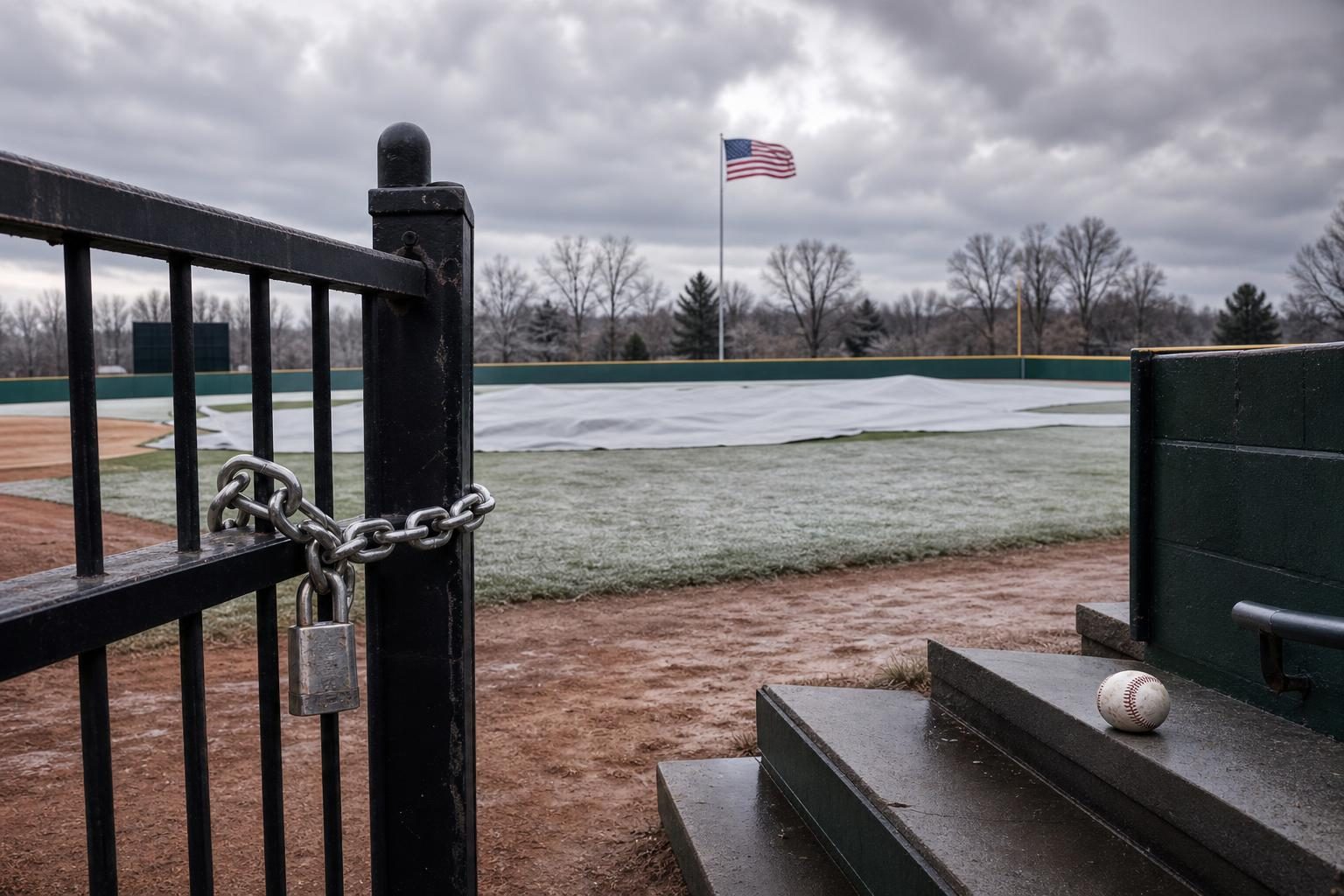
Part of our continuing coverage: 'This Is Going to Be Ugly': Blue Jays Pitcher Jameson Taillon Pushes Back on MLB's Salary-Cap Pitch as the Lockout Clock Runs Down
Key points
- Rob Manfred said owners will not drop their demand for a salary cap and floor, leaving baseball on track for a Dec. 2 lockout.
- The current labor agreement expires Dec. 1; Manfred said a lockout decision will come at the last possible moment.
- Union interim executive director Bruce Meyer said the owners mainly want to boost profits by holding down salaries.
- MLB's latest offer: a $258.2 million cap and $180.2 million floor starting in 2028.
Baseball's owners left their meetings on Wednesday with one message for the players, and Commissioner Rob Manfred delivered it without any hedging: there will be no new labor deal without a salary cap.
Manfred said owners will not move off their demand for a salary cap and a salary floor, leaving the sport on track for a lockout starting Dec. 2 that could threaten the 2027 season, The Associated Press reported [2]. He said there is plenty of room for compromise on other issues, but that fans want a cap and floor, "and on that we will not compromise" [1]. Manfred added that he could not picture owners ratifying any agreement without both [1].
The current collective bargaining agreement expires Dec. 1 [4]. Manfred said a decision on whether to lock the players out would come at the last possible moment [2].
Two Sides, No Middle
The players are not budging either. The MLB Players Association, led by interim executive director Bruce Meyer, has called a salary cap a nonstarter [2]. A couple of hours after Manfred spoke, Meyer issued a statement challenging the league's account and arguing that the owners' hard line shows they mainly want to boost profits by holding down player salaries, according to the AP and The Boston Globe [2][3]. Earlier this month, the union said the push for a cap was "designed to line their pockets and increase their franchise values" rather than to level the playing field [2].
Manfred pushed back on that framing. He argued that hearing "nonstarter" for months amounts to a refusal to bargain, according to reports from the Globe and the New York Post [3][4]. He also called the union's proposals untenable, saying they would make the sport's competitive problems worse [2]. Those proposals include a higher luxury tax threshold, a near doubling of the minimum salary and expanded salary arbitration rights; the union last made an economic proposal in May, the AP reported [2].
What the Owners Are Offering
The league's latest offer, made earlier this month, pushed the start of the cap system back to 2028 instead of 2027 [5]. It set a cap of $258.2 million and a floor of $180.2 million, up from $245.3 million and $171.2 million in the league's June proposal, according to MLB.com [5]. Both figures would be measured using luxury tax payrolls and reflect a 50-50 split of revenue between owners and players, the league said [5].
Supporters of the cap point to the gap between the sport's biggest spenders and its smaller markets, where many fans feel their teams start every season behind. The union answers that a cap is simply a limit on what players can earn, and that the real fix is better revenue sharing among the owners themselves.
Fans in the Middle
Here is where I come down. Both sides have a point, and both sides have plenty of money. The people who don't are the families who save up for a summer weekend at the ballpark, the kids who learn the game from the bleachers and the workers in concessions and parking lots who need those 81 home dates.
Baseball has walked this road before. The last lockout began on Dec. 2, 2021, the day after the previous agreement expired, and dragged on for 99 days into March 2022, delaying the start of that season [6]. The game survived, but it paid a price in good will, and it cannot afford to keep spending that.
The honorable path is the old one: sit down, bargain in good faith and keep your word to the fans who pay the bills. Saying "never" from both podiums is not bargaining. With less than two weeks before the agreement runs out, the commissioner and the union have drawn their lines in permanent ink. The question now is whether anyone in the room is willing to pick up an eraser before the gates close for the winter and stay closed into the spring.
For now, the hot stove keeps burning. But the clock on the wall reads Dec. 1, and every free agent, front office and fan is watching it.
Sources
- [1]Opens in a new tab ↗
- [2]The Washington Times (AP)Manfred says MLB owners won't compromise on a salary cap, leaving sport headed to a lockoutOpens in a new tab ↗
- [3]The Boston GlobeRob Manfred ends MLB owners meeting with ultimatum to union: We're not compromising on salary cap systemOpens in a new tab ↗
- [4]Opens in a new tab ↗
- [5]Opens in a new tab ↗
- [6]Opens in a new tab ↗
Should athletes keep politics out of the game?
- Yes, just play
- They can speak off the field
- They have every right to speak out
More in Sports

A Family Legacy Courtside: Pau Gasol and Vanessa Bryant Reportedly Team Up in a Bid to Buy the Los Angeles Sparks
Tonight on Fourth Quarter with Andre Coleman

Paint, Free Throws and No Mistakes: Dedan Thomas Jr.'s 30 Lift No. 8 Houston Past No. 1 Florida, 86-76, in a Title-Game Rematch
Tonight on Full Court with Bianca Torres

Week 11 in Kansas City: Abby's Fantasy Plan for Chiefs-Cardinals, From a Rookie's 171-Yard Breakout to Kelce's Ankle and Arizona's Young Quarterback
Tonight on Fantasy Huddle with Abby Lawson
Were you there?
If you were at the scene, or this story touched your life, tell us what you saw and what it was like.
Discussion 0
Sign in or create a free account to join the discussion.
No comments yet. Start the discussion.