
 Today on The Power Grid with Priya Desai
UAE Runs Oil Past Iran's Blockade as Two Tankers Are Hit
A U.S.-backed Emirati shuttle is keeping crude moving out of the Gulf, the Wall Street Journal reports, even as projectiles struck tankers near Oman's Khasab on Saturday morning.
Filed November 21, 2026 · 📍 Wall Street, NY 10005
Were you there? Share your story
Part of our continuing coverage: Predator Down? Tehran's Latest Drone Claim and an Underground Missile Show Come as Shipping Strikes Hit a Wartime High
Key points
- The Wall Street Journal reported the UAE is shuttling oil past Iran's grip on Hormuz with U.S. military help.
- UKMTO reported two tanker strikes near Oman's Khasab on Saturday; no injuries were reported.
- Iran has signaled it will target the convoys, and attacks at sea are at a wartime high, NPR reported.
- Every barrel that gets through helps steady fuel prices for American families.
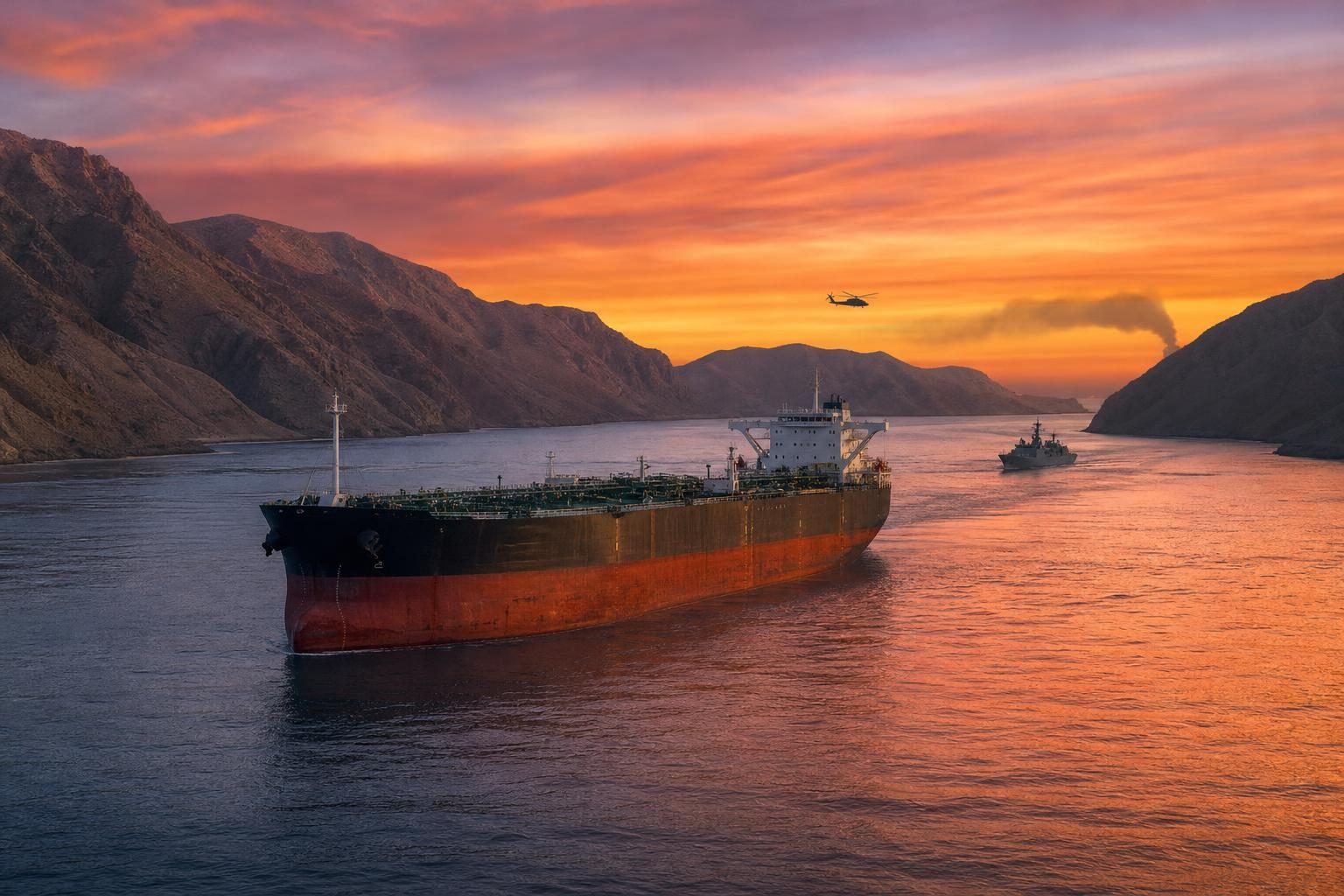
The United Arab Emirates is running a high-stakes shuttle to move its oil past Iran's chokehold on the Strait of Hormuz, with help from the U.S. military, the Wall Street Journal reported Saturday, describing the operation as crucial to breaking Tehran's grip on the waterway [1].
The report landed hours after two more tanker strikes near the strait. Britain's UKMTO maritime agency said an outbound tanker was hit on its stern by an unidentified projectile about 11 nautical miles north of Oman's Khasab at around 0500 GMT, and that roughly 50 minutes later a tanker was struck in its engine room about 17 nautical miles east of the port, Reuters reported [2]. UKMTO said it was not immediately clear whether both reports involved the same ship, and no injuries were reported, according to Reuters [2].
How the Shuttle Works
Earlier reporting has sketched the outlines. U.S. forces have overseen ship-to-ship transfers, using drones and helicopters to guide vessels to waiting tankers, with transfer points off Fujairah in the UAE and off Oman's port of Sohar, the Times of Israel reported, citing people familiar with the operation [5]. A U.S. defense official denied that Central Command forces take part in the offshore transfers themselves, according to the same report [5]. The method borrows from a playbook Iran itself has long used to move its own crude, the paper noted [5].
Tehran has made clear it sees the convoys as targets. Iranian authorities signaled in October that they intend to disrupt what they described as an Arab-operated, U.S.-assisted shuttle, and the Revolutionary Guard has struck ships it accused of taking part, Al Jazeera reported [4].
A Wartime High at Sea
The danger is climbing. October brought far more attacks on ships in the strait than any month since the war began, and November is on pace to top it, NPR reported [6]. Saturday's two incidents add to that count [2].
The risk to the crews is real. Earlier this week, a vessel operated by ADNOC L&S, the shipping arm of the UAE's state oil company, was attacked in the strait, leaving one crew member missing and 11 injured, The National reported [3].
Why It Matters at Home
For American families, every barrel that slips past Iran's gauntlet helps keep pressure off fuel prices heading into the holidays. The shuttle is also a picture of what steady partnership looks like: a Gulf ally willing to take real risks to keep its exports moving, and American forces helping make sure the world's most important oil lane does not become Tehran's toll road.
The open question is how long the convoys can keep running under fire. Iran has signaled it will keep going after them [4], and each new strike near Khasab tests the nerve of the crews, the shippers and the governments behind them [2][3][6].
Sources
- [1]The Wall Street JournalThe U.A.E. Is Shuttling Oil Past Iran in Risky Hormuz OperationOpens in a new tab ↗
- [2]Opens in a new tab ↗
- [3]Opens in a new tab ↗
- [4]Opens in a new tab ↗
- [5]The Times of IsraelUS has been using Iranian smuggling tactics to sneak Gulf oil past Hormuz blockadeOpens in a new tab ↗
- [6]Opens in a new tab ↗
Should Congress speed up permits for pipelines and power plants?
- Yes, build more American energy
- Yes, but respect tribal and local input
- No, keep environmental reviews
More in Energy & Environment
Down 18 Cents in a Week: Why Gas Is Falling Fast Before Thanksgiving, and What Could Stop the Slide
This morning on The Power Grid with Priya Desai

U.S. Sells First Deep-Sea Mineral Leases Off American Samoa in Push to Counter China
Thursday night on The Power Grid with Priya Desai
From Drilling Platform to Fishing Hot Spot: Washington Moves to Let About 300 Retired Offshore Rigs Stay Put as Reefs
On Thursday on The Power Grid with Priya Desai
Were you there?
If you were at the scene, or this story touched your life, tell us what you saw and what it was like.
Discussion 0
Sign in or create a free account to join the discussion.
No comments yet. Start the discussion.