
 This morning on Command Post with Dan Whitaker
Predator Down? Tehran's Latest Drone Claim and an Underground Missile Show Come as Shipping Strikes Hit a Wartime High
The Revolutionary Guard says it brought down an American MQ-1 Predator and shows off an underground missile base, while Washington tightens the squeeze on Tehran's oil money.
Filed November 21, 2026 · 📍 Washington, DC 20001
Were you there? Share your story
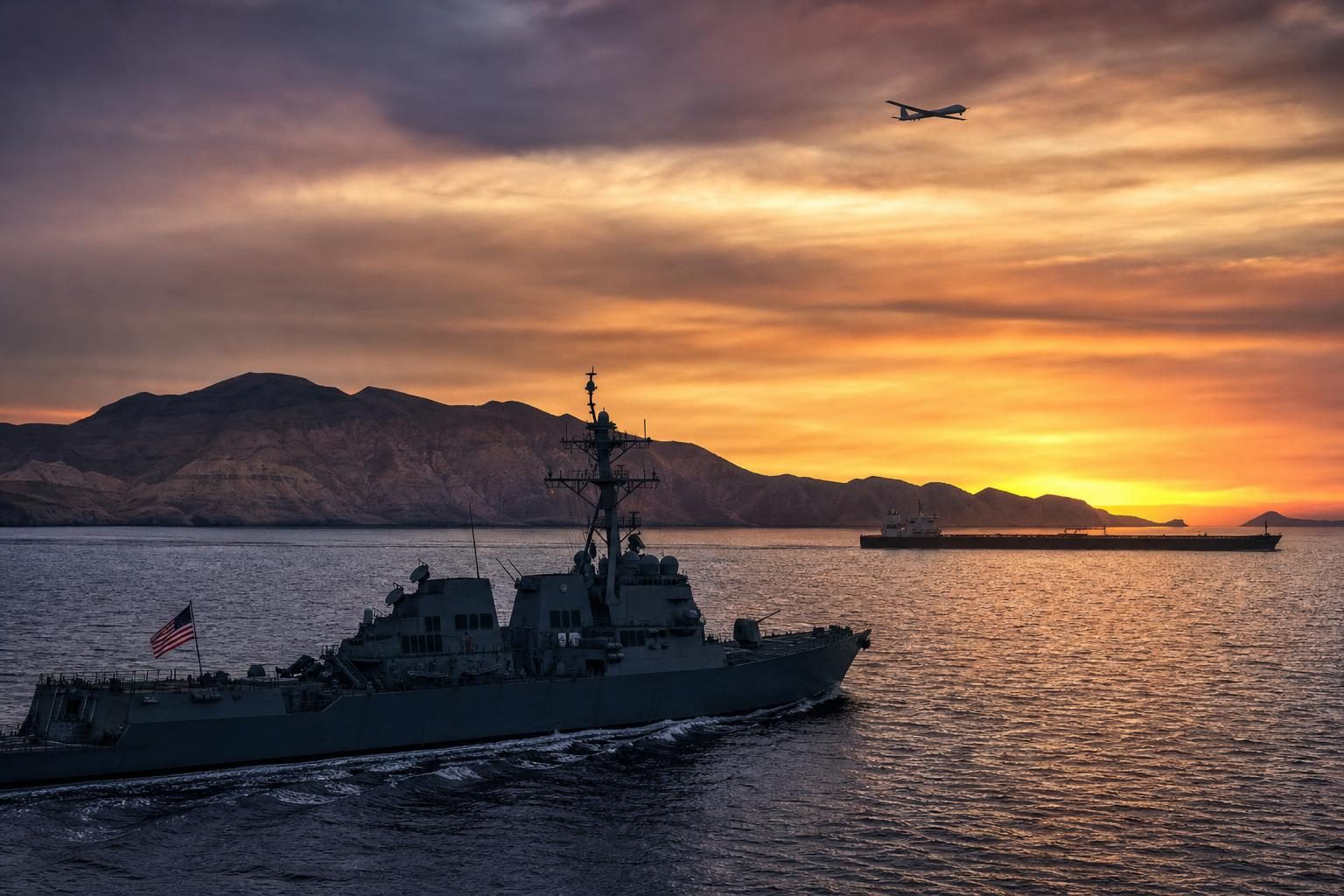
Part of our continuing coverage: Iran Claims Strike on Oman's Hormuz Lighthouse Island as Tanker Attacks Mount
Story tracker
- Dan Whitaker
Iran's army said Friday evening that an air defense missile exploded near a U.S. F-16 over the Gulf and claimed the jet was damaged and forced into an emergency landing, Al Jazeera reported [1]. U.S. Central Command flatly rejected the claim on Saturday, saying all American fighter aircraft in the region are safe and accounted for, Anadolu Agency reported [2]. CENTCOM's statement said Iran "did not attack a US F-16 fighter aircraft yesterday — at all," and Hindustan Times likewise reported the U.S. denial [2][3].
Key points
- Iran's Revolutionary Guard says it shot down a U.S. MQ-1 Predator over Qeshm Island; the claim was not confirmed by U.S. Central Command
- ABC News data shows Hormuz attacks in October and November were the highest of the war
- Guard commander Ahmad Vahidi toured an underground 'missile city,' Mehr reported
- The U.S. sanctioned four Iranians it says acted as 'oil trustees' for the regime
Iran's Islamic Revolutionary Guard Corps said Saturday that it shot down an American MQ-1 Predator drone over Qeshm Island, the Iranian island that sits at the narrow mouth of the Strait of Hormuz, Al Jazeera and Middle East Eye reported [1][2]. The claim landed as new data showed that reported attacks on ships in the strait were higher in October and November than in any other months since the war between the United States, Israel and Iran began, ABC News reported [3].
The Guard's account had not been confirmed by U.S. Central Command in those reports, and it could not be independently verified [1][2]. Until the U.S. military speaks, Americans should treat it as what it is: a claim from a regime at war.
What Tehran Is Claiming
According to the reports, the Guard said the drone was destroyed over Qeshm, an island that has been at the center of the fighting in recent days [1][2]. Al Jazeera reported that the announcement came as efforts to end the war remain stalled, and that Iran restated the conditions it has set for reopening the strait to normal traffic [1].
Iran's navy also said an oil tanker caught fire after striking a naval mine east of the Strait of Hormuz, China's state broadcaster CGTN reported [6]. That account came from Iranian officials as well and had not been independently confirmed in the report [6].
At the same time, the Guard put its missile force on display. The Guard's commander-in-chief, Ahmad Vahidi, toured an underground "missile city" for the first time, joined by Aerospace Force commander Majid Mousavi, Iran's Mehr News Agency reported [5]. Mehr said Vahidi was briefed on the readiness of the Guard's missile units, that a new dual-missile launcher was unveiled, and that he predicted the defeat of Iran's enemies [5].
A Busier, More Dangerous Strait
The ABC News review of attack data found October and November to be the worst stretch of the war for ships moving through the strait [3]. The National, the Abu Dhabi newspaper, reported at the end of October that attacks on vessels transiting Hormuz that month were the highest since the war started [4].
That matters far beyond the Gulf. The strait is the doorway for tankers carrying oil and gas from the Gulf states to the rest of the world, and every mine, missile and drone launched near it raises the risk for merchant sailors and the cost of shipping.
Washington is answering on the economic front as well as the military one. The United States placed sanctions on four Iranians it says acted as "oil trustees" for the regime, Al Jazeera reported [1]. The point of that pressure is simple: the oil money that reaches Tehran's hands pays for the missiles, mines and drones now aimed at the shipping lanes.
The View From Here
American drones over the Gulf are the eyes that protect sailors, merchant crews and partner nations. If a Predator was lost, it is hardware that can be replaced; the men and women who fly these aircraft do so from a distance precisely so that a lost aircraft does not mean a lost life. What cannot be replaced is the freedom of the seas, and that is what the regime is trying to wear down with its campaign of claims, mines and attacks on tankers.
The regime's decision to show off an underground missile base on the same day it claims a drone kill is also worth noting. It is a message aimed as much at Iranians at home as at Washington: a show of strength from a government under heavy pressure from sanctions and a war it chose to escalate at sea.
What Comes Next
Three things are worth watching in the days ahead. First, whether Central Command addresses the drone claim. Second, whether the latest sanctions reach deeper into the network that moves Iranian oil, which is Tehran's lifeline. Third, whether mediators can restart talks that Al Jazeera described as stalled [1].
Until then, the pattern holds: Iran claims victories it cannot prove, and the sea lanes stay dangerous for the crews who keep the world's economy moving. The American answer, steady pressure on the regime's money and a strong naval presence alongside our partners, is the right one, and it deserves the country's patience and support.
Sources
Should U.S. military aid to Israel end early?
- Yes, Israel can afford its own weapons
- Phase it out slowly
- No, keep it while Iran is a threat
More in Military & Defense

Fallujah Hero Kasal Under NCIS Investigation
This morning on Command Post with Dan Whitaker
Court-Martial Looms for Air Force Major Who Urged Trump's Impeachment
This morning on Command Post with Dan Whitaker
Appeals Court Pauses the Permit for the Army's Planned Lead Azide Blast in Iowa as the EPA Signals the Disposal Could Still Go Forward
Overnight on Command Post with Dan Whitaker
Were you there?
If you were at the scene, or this story touched your life, tell us what you saw and what it was like.
Discussion 0
Sign in or create a free account to join the discussion.
No comments yet. Start the discussion.