
 This morning on World Watch with Grace Whitfield
Phumzile Mlambo-Ngcuka, South Africa's First Woman Deputy President and Former U.N. Women Chief, Dies at 71
A teacher who rose through the anti-apartheid struggle to the second-highest office in her country, she later spent eight years leading the United Nations agency for women.
Filed November 21, 2026 · 📍 Washington, DC 20001
Were you there? Share your story
Key points
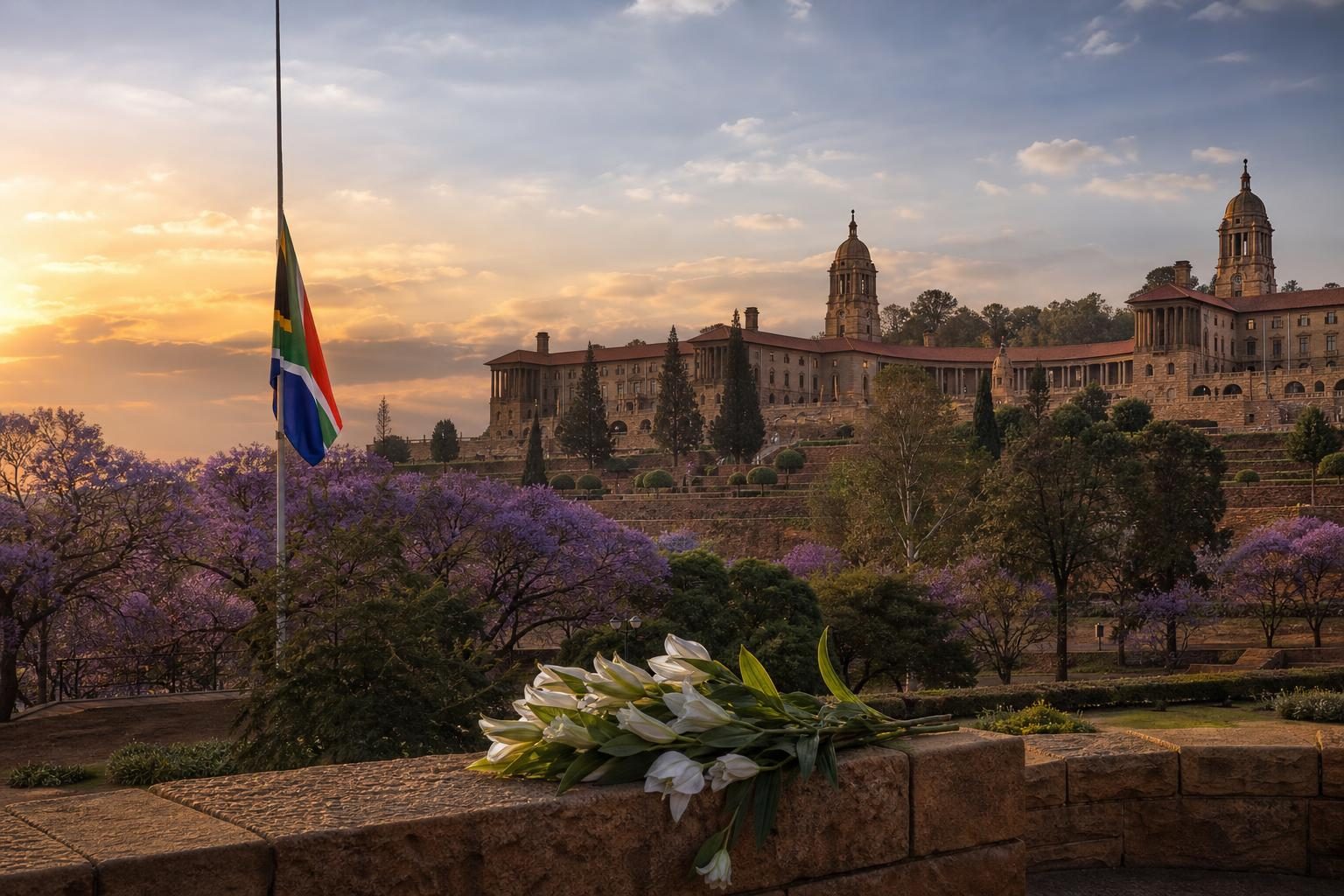
- Phumzile Mlambo-Ngcuka, South Africa's first woman deputy president, has died at 71
- She served as deputy president under Thabo Mbeki from 2005 to 2008
- She led U.N. Women as executive director from 2013 to 2021
- U.N. Secretary-General Guterres called her a lifelong champion of women and girls
Phumzile Mlambo-Ngcuka, who became South Africa's first female deputy president and later led the United Nations agency for women, has died at 71, the Associated Press reported in a story carried by ABC News [1]. South Africa's presidency announced her death on Nov. 20, SABC News reported [3].
Deputy President Paul Mashatile, serving as acting president, expressed shock and sadness at the news, according to SABC News [3]. The presidency did not give a cause of death in the initial reports [1][3].
A Groundbreaking Political Career
Mlambo-Ngcuka served as South Africa's deputy president from June 22, 2005, to Sept. 23, 2008, after President Thabo Mbeki appointed her to the post, SABC News reported [3]. She was the first woman to hold the office, the AP reported [1]. Before that, she had served in Mbeki's cabinet as minister of minerals and energy, the Washington Post reported [2].
Her term as deputy president ended in September 2008 [3]. She stepped down along with other members of Mbeki's government after the governing African National Congress recalled him from office, a turbulent moment in the young democracy's history, the Washington Post reported [2].
Before politics, she trained and worked as a teacher, and her early life was shaped by the struggle against apartheid, according to a profile in Open magazine [5]. She came of age at a time when South Africa's laws kept black citizens from full participation in their own country, and she went on to serve in the government that replaced that system, the profile said [5].
Eight Years at U.N. Women
In 2013 she was named under-secretary-general of the United Nations and executive director of U.N. Women, the agency created to promote women's rights and opportunity around the world, a post she held until 2021, the Washington Post reported [2]. In an interview with Al Jazeera when she took the job, she described her goals for the agency and the challenges facing women in poor countries [6].
Under her leadership, U.N. Women opened its Tokyo liaison office, the agency's first liaison office in Asia, according to ECR News [4].
United Nations Secretary-General António Guterres praised her as a lifelong champion of the rights and empowerment of women and girls, the AP reported [1]. South Africa's Parliament and other groups also paid tribute to her role in building the country's democracy, according to the reports [3][4].
A Life Remembered
Mlambo-Ngcuka is survived by her husband and their five children, the AP reported [1].
Her life spanned the full arc of modern South Africa, from the injustice of apartheid to the peaceful transition of 1994 and the long, difficult work of building a free country afterward. Americans who believe in equal dignity for every person, a conviction rooted in the biblical truth that every human being is made in the image of God, can recognize what it meant for a teacher born under that system to rise to her nation's second-highest office.
That does not mean every policy she championed at the United Nations was beyond debate. U.N. Women, like many U.N. agencies, has drawn criticism over its priorities and spending, and conservatives have long argued that the best path out of poverty for women runs through strong families, free markets, safe streets and religious liberty rather than through ever-larger international bureaucracies. Those debates will continue.
But a life of public service deserves to be honored on its own terms, and hers was a remarkable one. South Africa is mourning a pioneer, and many around the world who worked with her are mourning a colleague.
What Comes Next
South African officials are expected to announce funeral arrangements in the coming days. Tributes from African leaders, U.N. officials and former colleagues are likely to continue as the country remembers one of the women who helped shape its first decades of democracy.
Sources
- [1]ABC News (AP)Phumzile Mlambo-Ngcuka, former South Africa deputy president and UN Women chief, dies at 71Opens in a new tab ↗
- [2]The Washington PostPhumzile Mlambo-Ngcuka, former South Africa deputy president and UN Women chief, dies at 71Opens in a new tab ↗
- [3]Opens in a new tab ↗
- [4]Opens in a new tab ↗
- [5]Opens in a new tab ↗
- [6]Al JazeeraNew head of UN Women discusses roleOpens in a new tab ↗
Israel's new parliament is sworn in. Who would you rather see lead Israel?
- Benjamin Netanyahu
- Gadi Eisenkot
- Someone new
- That's for Israelis to decide
More in World News

Carney's World Tour Can't Replace America
This morning on World Watch with Grace Whitfield
Bukele Files for Third Term That Could Run to 2033
This morning on Border Watch with Cole Brennan

Drone Strike Sets Russian Military Cargo Ship Ablaze Off Finland
This morning on World Watch with Grace Whitfield
Were you there?
If you were at the scene, or this story touched your life, tell us what you saw and what it was like.
Discussion 0
Sign in or create a free account to join the discussion.
No comments yet. Start the discussion.