
 Tonight on The Power Grid with Priya Desai
U.S. Sells First Deep-Sea Mineral Leases Off American Samoa in Push to Counter China
A New York startup won both tracts at the $3 million minimum in a historic auction that went ahead despite a court ruling, three lawsuits and deep unease in the territory. Officials stress the leases allow exploration, not mining.
Filed November 19, 2026 · 📍 White House, DC 20500
Were you there? Share your story
Key points
- Wetstone U.S. Ventures won two 20-year leases covering more than 31 million acres off American Samoa for $6 million, the first sale of its kind.
- The administration ties the sale to securing nickel, cobalt and other critical minerals and competing with China; officials say a lease is not permission to mine.
- The auction proceeded days after a judge found the fisheries agency violated the Endangered Species Act; three lawsuits are pending.
- American Samoa's governor welcomed the sale after earlier opposition, while many residents, chiefs and fisheries officials remain wary.
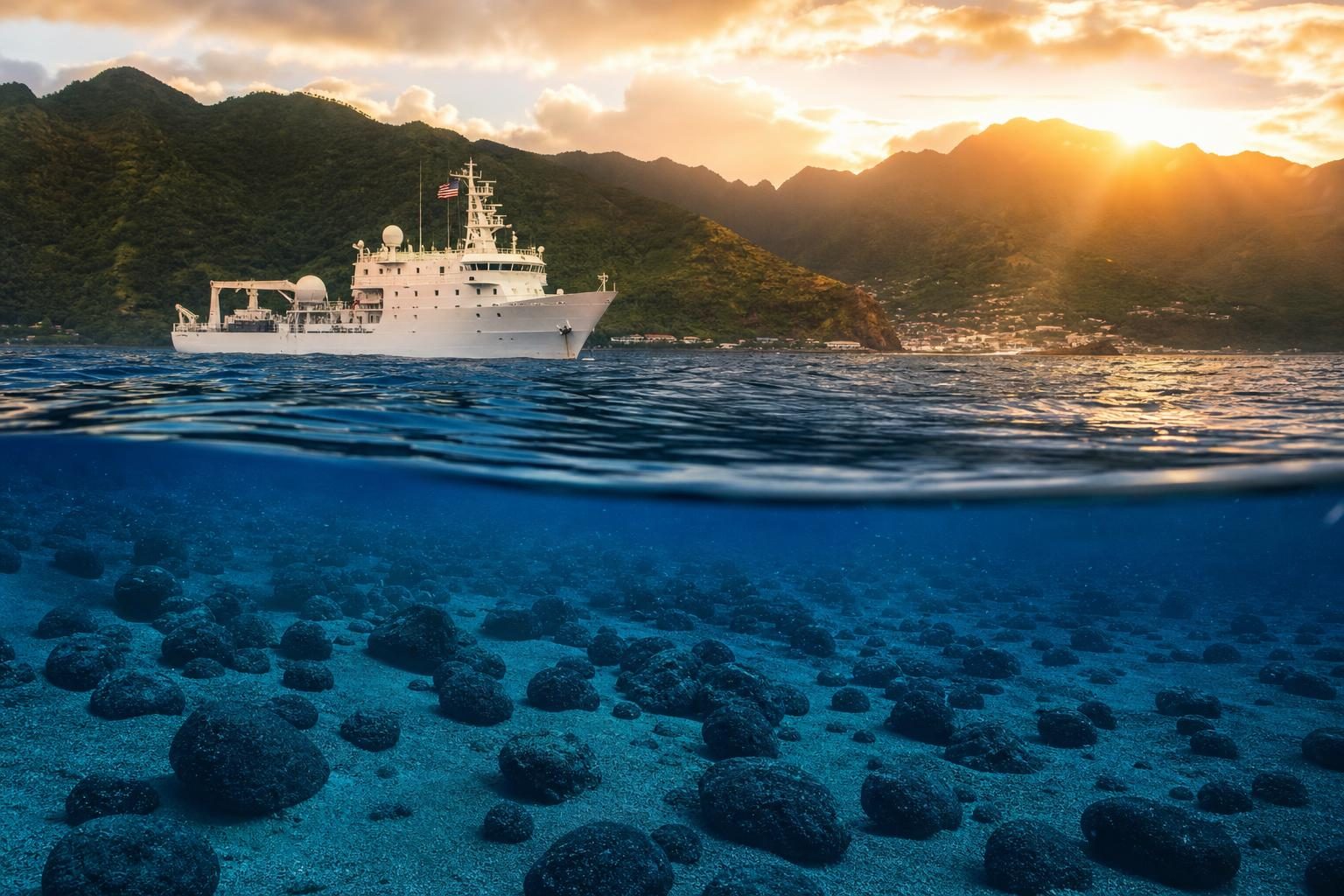
The United States took its first concrete step toward mining its own deep seabed on Thursday, auctioning two leases covering more than 31 million acres of federal waters off American Samoa as part of the Trump administration's drive to secure critical minerals and compete with China [1][2].
Both tracts went to Wetstone U.S. Ventures at the $3 million minimum bid apiece, for a total of $6 million, according to the Interior Department's new Marine Minerals Administration [1]. Two companies took part, but only Wetstone placed bids, the Associated Press reported [1]. The Washington Post described Wetstone as a New York-based startup and its winning offers as provisional [2].
Interior Secretary Doug Burgum called the first such sale in the Pacific "a historic step for America's energy and mineral security," gCaptain reported [3]. The two areas lie roughly 150 to 240 miles east of Pago Pago, in water about 4,630 to 20,100 feet deep [3].
What the leases allow, and what they do not
Winning a lease does not start mining. The 20-year leases let the holder survey the seafloor and prepare plans for testing or extraction, and they grant an exclusive right to mine commercially only if further environmental reviews approve it, the AP reported [1]. Royalties would begin at 2 percent of production value for the first five years of commercial output and then rise to 5 percent, according to gCaptain [3]. A White House spokesperson told the AP plainly: "A lease sale is not a mandate to mine." [1]
The prize is polymetallic nodules, mineral lumps on the ocean floor that the AP reported carry high grades of manganese, copper, nickel and cobalt, metals used in batteries and electronics, plus some rare earth elements [5]. The AP cautioned that no one yet knows how abundant the deposits near American Samoa are [5].
The sale grew out of a request from Impossible Metals, a deep-sea mining startup, and an April 2025 executive order in which President Trump described American leadership in seabed science and technology as vital to national security and the economy, Agence France-Presse reported [4]. The AP tied the auction to the president's directive to use deep-ocean minerals to counter growing competition from China [1].
A court ruling, three lawsuits and a divided territory
The auction went forward three days after a federal judge in Hawaii sided with community and conservation groups, finding that the National Marine Fisheries Service violated the Endangered Species Act when it cleared the sale [4]. The judge wrote that the agency had not even attempted to weigh the effects on protected species, AFP reported [4]. The Marine Minerals Administration said it responded by opening consultation on a new environmental assessment, but it did not cancel or delay the auction [1].
Three lawsuits target the sale, according to the AP [1]. Earthjustice represents Fa'asao Amerika Samoa, a cultural group, and the Conservation Council for Hawai'i; the Natural Resources Defense Council and a group called Finafinau argue the review was rushed; and a council of local chiefs, the Faleula o le Manu'atele, challenges Washington's authority to lease waters near their islands [1].
Earthjustice attorney Chris Eaton called the sale "a renegade, unlawful act" and vowed to seek to have the leases voided, AFP reported [4]. Oceana warned of lasting harm [4] and noted that most of the more than 76,000 public comments filed earlier opposed mining, gCaptain reported [3].
American Samoa banned seabed mining in its own waters, which reach three miles from shore, in 2024, but the federal government controls the waters beyond that line [1]. Gov. Pulaali'i Nikolao Pula earlier told federal regulators that he, every chamber of the local government and most residents opposed deep-sea mining, the AP reported [5]. Yet in a Monday statement, Pula welcomed the auction as "a historic moment for American Samoa and for our nation," according to the AP [5]. Local fisheries officials want a fuller review, including whether sediment plumes could shift tuna migration [5]. Unlike with offshore oil and gas, no law requires sharing deep-sea mining revenue with territories, though the Marine Minerals Administration says it supports doing so [5].
Why it matters, and what comes next
These tracts sit in U.S. federal waters [1], not on the international seabed overseen by the International Seabed Authority, which the United States never joined [6]. Still, that body's August session launched efforts to challenge Washington's go-it-alone approach to deep-sea mining, and China suggested asking whether unilateral action by non-member states breaks international law, Climate Home News reported [6].
Next, any testing or commercial mining plan would face more public comment and a more intensive environmental review, the AP reported [5]. The administration has proposed a December auction of five parcels near the Northern Mariana Islands, where Gov. David Apatang has asked regulators to consider pausing until the lawsuits are decided, and it is weighing sales off Virginia and Alaska [1][5].
A nation that must lean on a rival for the metals in its batteries and electronics is not fully independent, and Thursday's sale is a serious step toward changing that. But stewardship of creation is a duty, not a slogan. Getting this right means the honest species review the court demanded, a fair share for American Samoa, and real respect for the islanders whose ocean this is.
Sources
- [1]CTV News (AP)Trump administration auctions deep-sea mining leases near American Samoa in first sale of its kindOpens in a new tab ↗
- [2]The Washington PostU.S. sells first-ever leases to mine the deep seaOpens in a new tab ↗
- [3]Opens in a new tab ↗
- [4]Opens in a new tab ↗
- [5]U.S. News & World Report (AP)Deep-Sea Mining Auctions Spark Environmental Concerns in American Samoa and Northern Mariana IslandsOpens in a new tab ↗
- [6]Climate Home NewsGovernments weigh response to US on deep sea miningOpens in a new tab ↗
Should Congress speed up permits for pipelines and power plants?
- Yes, build more American energy
- Yes, but respect tribal and local input
- No, keep environmental reviews
More in Energy & Environment
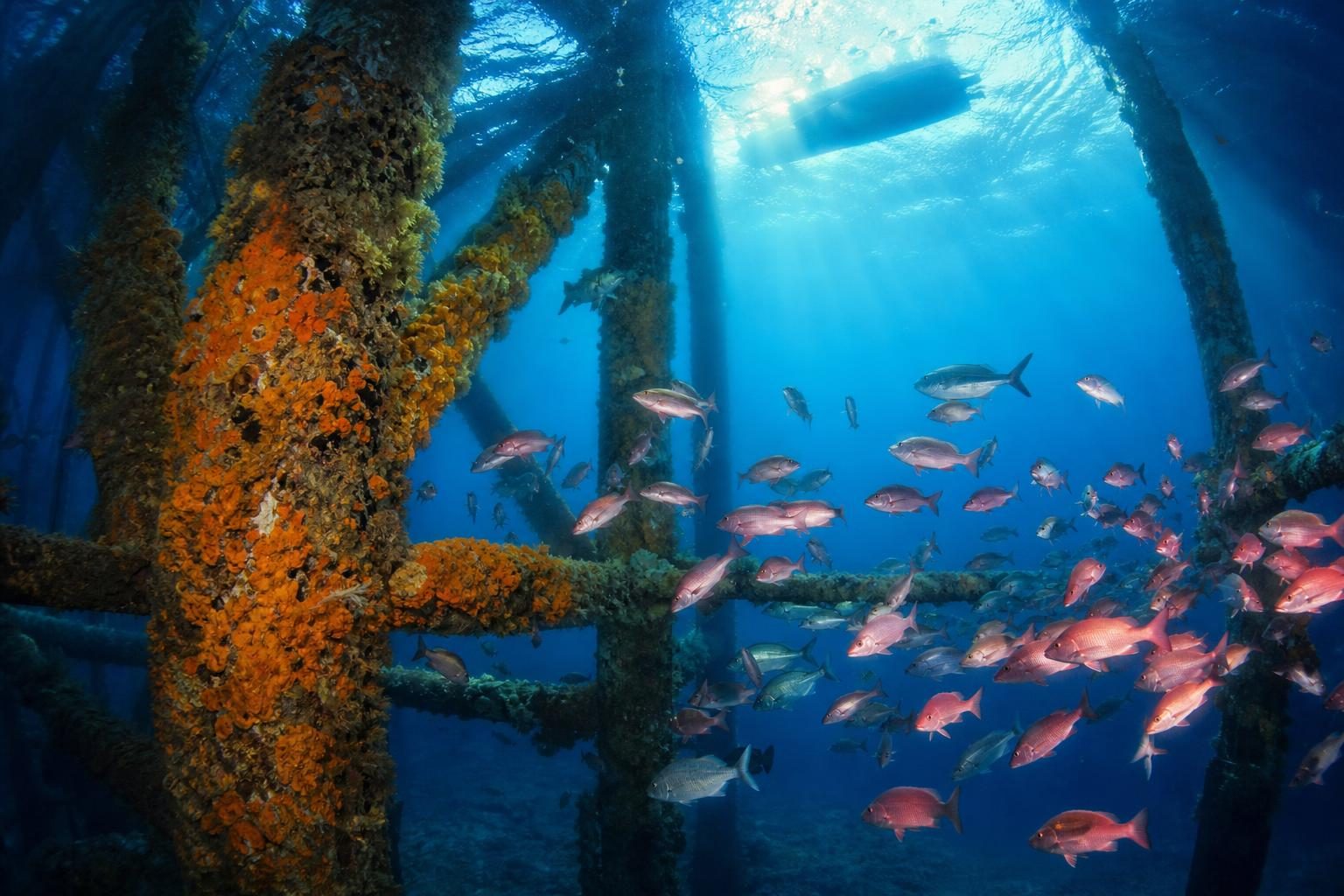
From Drilling Platform to Fishing Hot Spot: Washington Moves to Let About 300 Retired Offshore Rigs Stay Put as Reefs
This morning on The Power Grid with Priya Desai
Senate Clears Last Procedural Hurdle on Bipartisan Permitting Overhaul, Setting Up Final Vote on Faster Energy Projects
Overnight on The Power Grid with Priya Desai

Germany Finally Cuts the Power Tax for Families as the Iran War Drives Up Energy Bills: A Lesson in What Energy Abundance Is Worth
Yesterday on The Power Grid with Priya Desai
Were you there?
If you were at the scene, or this story touched your life, tell us what you saw and what it was like.
Discussion 0
Sign in or create a free account to join the discussion.
No comments yet. Start the discussion.