
 Overnight on The Power Grid with Priya Desai
Senate Clears Last Procedural Hurdle on Bipartisan Permitting Overhaul, Setting Up Final Vote on Faster Energy Projects
A 65-31 cloture vote Wednesday tees up final Senate passage of a bill to speed pipelines and power lines, but its fate rests with a House about to change hands.
Filed November 19, 2026 · 📍 Washington, DC 20001
Were you there? Share your story
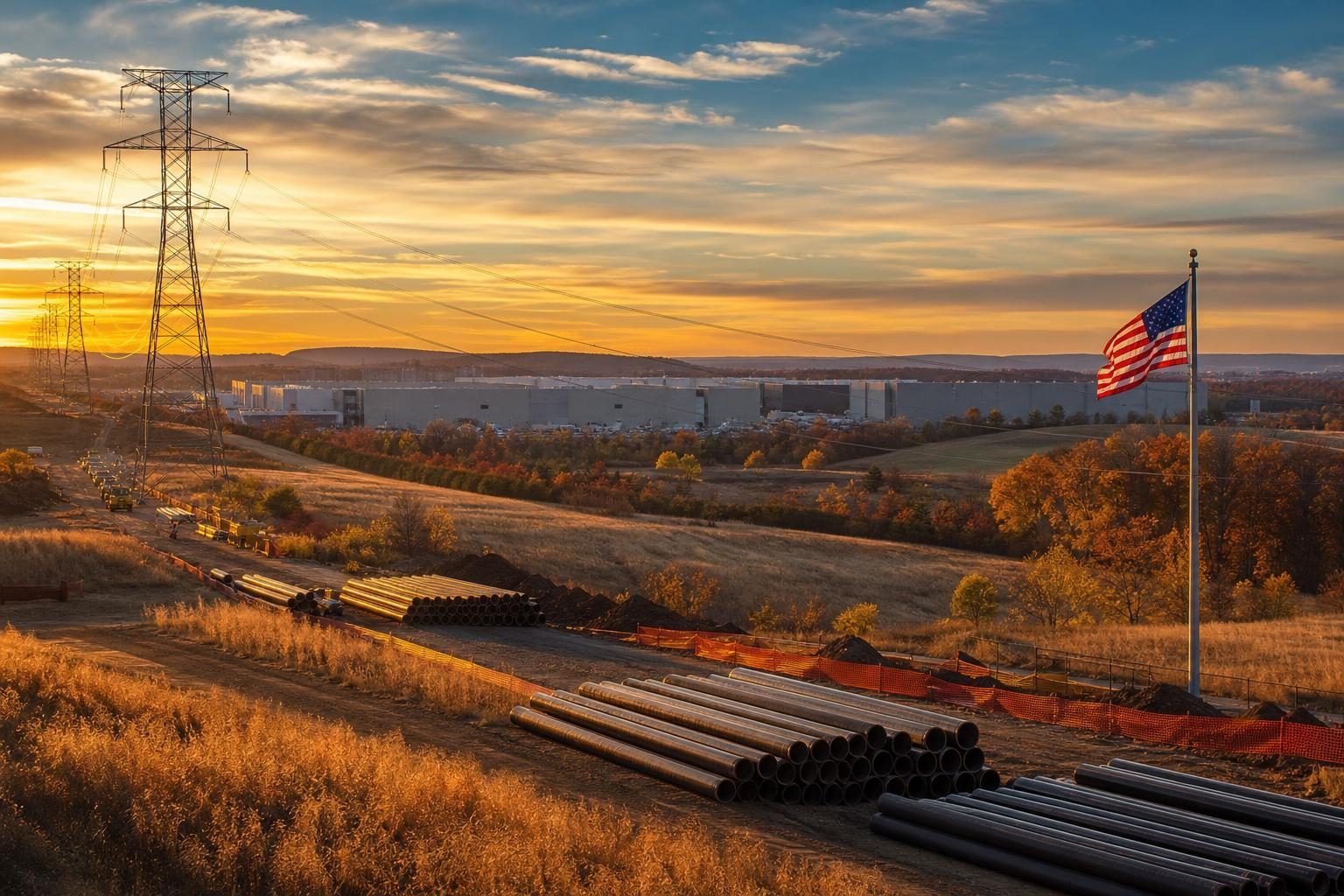
Part of our continuing coverage: Inside the Senate's Permitting Deal: What the Bipartisan Energy Bill Would Change, and Why the Clock Is Ticking
Key points
- The Senate voted 65-31 Wednesday to end debate, setting up a final vote as early as Thursday.
- Hawley and Rounds were the only Republicans voting no; some Democratic support has slipped.
- The bill sets a 150-day limit on NEPA lawsuits and makes big data centers pay for grid upgrades.
- House prospects are uncertain before the new Democratic majority takes over in January.
The Senate on Wednesday voted 65-31 to cut off debate on the Bipartisan American Affordability and Jobs Act, a sweeping overhaul of how Washington approves energy and infrastructure projects, clearing the 60-vote threshold and moving the bill toward final passage, The Hill reported [1]. Unless senators agree to a different schedule, the final vote comes 30 hours after cloture is invoked, according to The Hill, which puts it on track for as early as Thursday [1].
Sens. Josh Hawley of Missouri and Mike Rounds of South Dakota were the only Republicans to vote no [1]. The margin was narrower than in earlier tests. The Senate first advanced the bill 73-25 and later voted 70-27 to end debate on an amended version, Reuters reported [3]. The Hill noted that while there still appear to be enough votes to pass the bill, some support has been dropping off [1].
The measure was negotiated by Republican Sens. Shelley Moore Capito of West Virginia, who chairs the Environment and Public Works Committee, and Mike Lee of Utah, who chairs the Energy and Natural Resources Committee, together with the top Democrats on those panels, Sheldon Whitehouse of Rhode Island and Martin Heinrich of New Mexico, the Associated Press reported [2].
What the Bill Would Change
The roughly 400-page bill would speed federal approvals for energy and infrastructure projects, including pipelines and transmission lines, Reuters reported [3]. It sets deadlines for many federal reviews, requires agencies to coordinate their permitting decisions and creates a federal permitting tracker [3]. It also includes provisions meant to speed the planning, siting and construction of new transmission lines and upgrades to existing infrastructure [3].
Some of the most consequential changes are aimed at the courtroom. Lawsuits challenging projects under the National Environmental Policy Act would have to be filed within 150 days, down from the six-year default that applies under the Administrative Procedure Act, according to the Bipartisan Policy Center [4]. The bill would also cut the statute of limitations for projects on the federal FAST-41 permitting dashboard from two years to 150 days [4].
For builders, that is the heart of the matter. A long window for lawsuits lets opponents hold a pipeline or power line in limbo for years after the permits are granted, and every year of delay adds cost and risk that families ultimately pay for.
Data Centers and Power Bills
One of the most closely watched provisions would make large data centers carry more of the cost of the transmission and infrastructure tied to their electricity demand, Reuters reported [3]. According to the Bipartisan Policy Center, new data centers and other high-density computing facilities of 20 megawatts or more would pay the entire incremental cost of the generation, storage, transmission and distribution built to serve them, and facilities that accept flexible or interruptible service would pay less [4]. The bill would also direct the Federal Energy Regulatory Commission to revise an out-of-date pricing policy within 90 days [4].
For transmission more broadly, the bill ties cost allocation to benefits, so customers would pay in proportion to the improved reliability, reduced congestion and access to cheaper power they receive, BPC said [4]. The principle is fair: those driving new demand should pay for the wires built to serve them, not households and small businesses.
Supporters, Critics and the House Clock
The White House supports the bipartisan Senate deal and wants permitting reform finished now, an administration official told Axios [6].
Critics come from several directions. Environmental groups including the Sierra Club and the Natural Resources Defense Council support the bill's transmission and clean-energy provisions but argue it would also speed fossil-fuel development and weaken protections for public lands, water, wildlife and communities, Reuters reported [3]. Sen. Catherine Cortez Masto, D-Nev., has said she will oppose final passage unless changes to the National Historic Preservation Act are dropped, citing concerns raised by tribes, according to Axios [5].
The House is the steeper climb. The Hill described the bill as highly likely to clear the Senate but said its path in the House is less certain [1]. House Democratic Leader Hakeem Jeffries came out against the bill after this month's elections, though several House Democrats are on board, and Republicans could pass it without Democratic votes if lame-duck absences do not get in the way, Axios reported [5]. House Energy and Commerce Chairman Brett Guthrie, R-Ky., has called for changes to address grid reliability, according to Reuters [3].
The calendar adds pressure. Democrats' big midterm win has clouded the bill's prospects, Axios reported, with the advisory firm Capstone saying the party's looming control of Congress worsens the outlook for passage this year [6]. Rapidan Energy Group put the odds of lame-duck passage at 20% to 25%, down from 30% before the election, and TD Cowen cut its estimate to 25% from 40% [6]. Among Democrats, the central debate is whether to take the bipartisan deal now or hold out for a stronger version next year, Reuters reported [3].
If the Senate completes its work as expected, the decision will fall to a House with only weeks left before the new Democratic majority takes over in January [6]. For Americans facing higher power bills and a grid straining to keep up, the choice is whether to lock in a hard-won bipartisan deal to build or start the fight over again.
Sources
- [1]Opens in a new tab ↗
- [2]Associated Press (via ABC News)Senate reaches bipartisan deal on permitting bill to speed approvals of new energy projectsOpens in a new tab ↗
- [3]Reuters (via Yahoo News)Explainer-What to know about the energy permitting overhaul bill before US CongressOpens in a new tab ↗
- [4]Bipartisan Policy CenterExplaining the Senate Permitting Bill, the Bipartisan American Affordability and Jobs ActOpens in a new tab ↗
- [5]Opens in a new tab ↗
- [6]Opens in a new tab ↗
Should Congress speed up permits for pipelines and power plants?
- Yes, build more American energy
- Yes, but respect tribal and local input
- No, keep environmental reviews
More in Energy & Environment

Germany Finally Cuts the Power Tax for Families as the Iran War Drives Up Energy Bills: A Lesson in What Energy Abundance Is Worth
Yesterday on The Power Grid with Priya Desai

Mines, Fires and a Missing Sailor: Iran Takes Its War to the Tanker Lanes of Hormuz, and Oil Markets Hold Steady
Tuesday night on The Power Grid with Priya Desai

Japan Pitches an 'Asian IEA' in Manila: A Shared Oil Safety Net as the Iran War Keeps Tankers Under Threat
On Tuesday on The Power Grid with Priya Desai
Were you there?
If you were at the scene, or this story touched your life, tell us what you saw and what it was like.
Discussion 0
Sign in or create a free account to join the discussion.
No comments yet. Start the discussion.