
 Yesterday on The Power Grid with Priya Desai
Democrats Promise Clean Energy Will Shrink Power Bills. The Numbers Point to Poles, Wires and Reliability Instead
As incoming Democratic majorities prepare to challenge President Trump's energy agenda, federal data and grid watchdogs show that delivery costs and reliability risks, not a shortage of subsidies, are driving what families pay.
Filed November 17, 2026 · 📍 Berkeley, CA 94704
Were you there? Share your story
Key points
- Incoming Democratic majorities plan to push clean energy and challenge Trump's fossil fuel agenda as a way to cut bills, AP reported.
- Berkeley Lab found transmission, distribution and wildfire costs are major drivers of rising rates, and demand growth often lowered prices.
- NERC warns 13 of 23 grid areas face resource-adequacy challenges over the next five years.
- EIA projects record U.S. gas output and winter Henry Hub prices 36% below last winter.
Democrats who will take control of Congress in January say they have found an answer to Americans' rising electric bills: more wind, more solar and a fight with President Trump over fossil fuels. The Associated Press, in a report published by PBS NewsHour, said Democrats plan to push clean energy as a way to lower costs and to challenge the administration's support for oil, gas and coal [1].
The argument deserves a fair hearing. Democrats contend that the administration's moves against clean energy, including the rollback of Biden-era tax credits and hostility to offshore wind, have raised costs for families, and the AP noted that the war with Iran and other policies pushed up prices for gasoline, diesel and electricity [1]. Sen. Sheldon Whitehouse of Rhode Island, the top Democrat on the Senate Environment and Public Works Committee, pledged to "work every angle to lower consumers' energy costs" [1].
The same report included an important caveat: lower bills are not guaranteed, because prices also depend on fuel costs, demand and the expense of maintaining the grid [1]. That caveat is where the real debate should begin.
What Is Actually Driving Your Bill
No one disputes that power is getting more expensive. The Energy Information Administration projected this spring that residential electricity prices would rise about 5% in 2026, with the steepest increases along the East Coast [5]. Lawrence Berkeley National Laboratory found that residential prices rose roughly 33% in nominal terms from 2019 to 2025 [2].
But the lab's research points to the delivery system as a leading culprit. Its 2026 study identified spending on transmission and distribution, much of it tied to wildfire mitigation in California, as a significant driver of rising rates, and found that transmission spending added to increases in New England, New York, California and the PJM region [2]. Higher natural gas prices added roughly half a cent per kilowatt-hour in 2025 [2]. State regulators approved about 64% of the dollar value of rate increases utilities requested from 2021 to 2025, which the lab said points to more near-term increases absent policy changes [2].
The lab also found something that cuts against the scarcity mindset: in most states, growth in electricity demand from 2019 to 2025 was linked to declining average prices, as more sales spread the fixed costs of the grid across more customers [2].
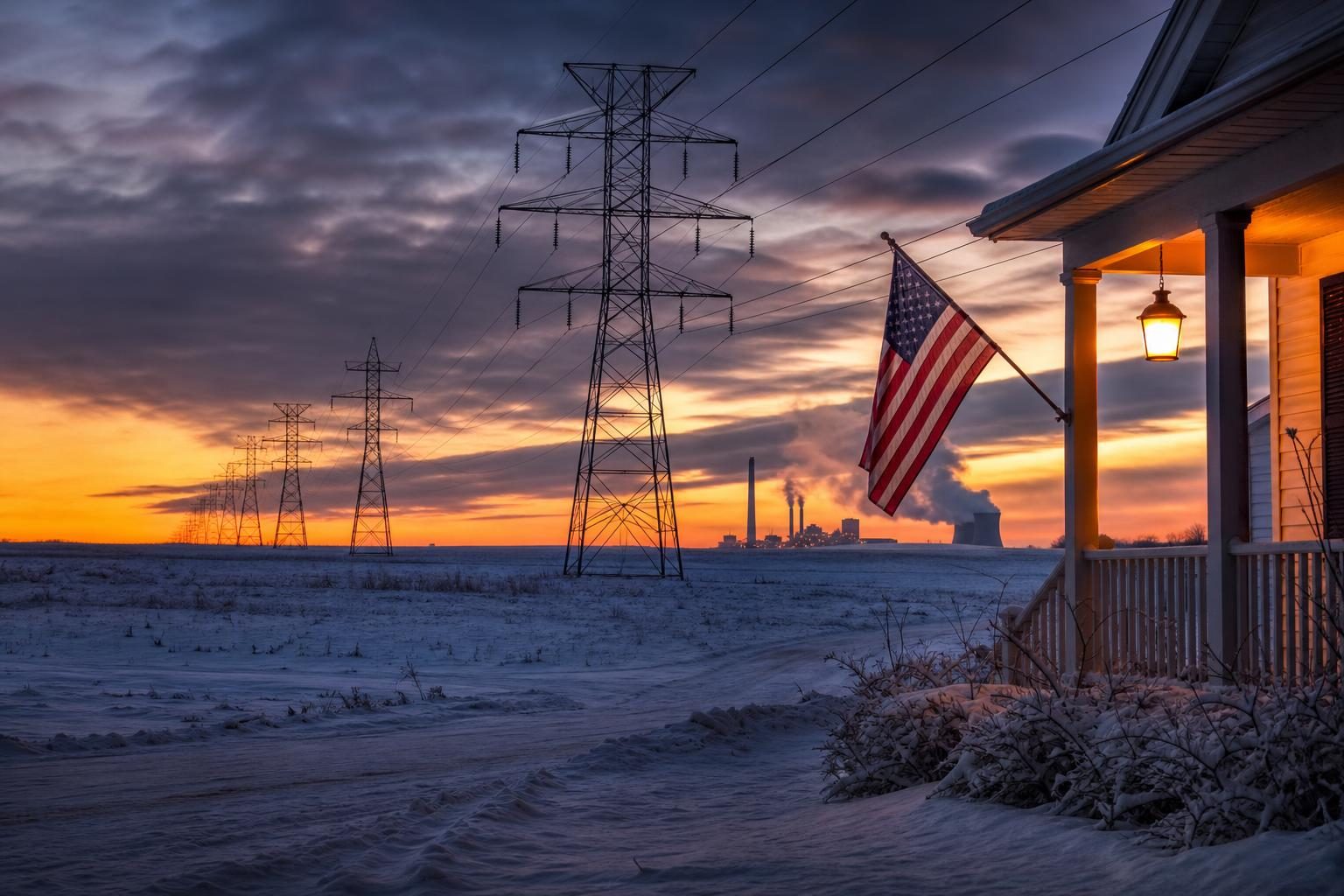
Notice what tops that list: poles, wires, wildfire costs and approved utility spending. A new round of clean energy subsidies shrinks none of those line items, and any new generation still has to be delivered over the grid where costs are climbing [2].
Reliability and the Role of Natural Gas
Cost is only half of the challenge. The North American Electric Reliability Corporation, the grid's reliability watchdog, warned in its long-term assessment released Jan. 29 that 13 of 23 assessment areas face resource-adequacy challenges over the next five years, as projected peak demand grows at the fastest pace since NERC began tracking in 1995, POWER Magazine reported [4]. Over the past year, fossil capacity fell by 21 gigawatts while battery, wind and solar capacity rose by 23 gigawatts, and NERC cautioned that many of those inverter-based resources do not inherently provide essential reliability services such as inertia [4]. The watchdog urged planners and regulators to manage generator retirements carefully and called for streamlined siting and permitting [4]. It also flagged uncertainty over whether gas plants can lock in firm fuel during extreme cold [4].
The fuel itself is in abundant supply, and here the news is good for families. The EIA reported on Nov. 10 that U.S. dry gas production is on track for a record, averaging about 113 billion cubic feet per day in 2026 [3]. The agency expects the Henry Hub benchmark price to average $2.87 per million British thermal units from November through March, 36% below last winter [3]. An abundant domestic fuel that can run on demand on a frigid January night is an asset to protect, not a problem to legislate away.
Who Is Pushing Back, and What Comes Next
The administration is holding its ground. Energy Secretary Chris Wright has argued that renewable mandates in Democratic-led states drive electricity prices higher [6]. FactCheck.org called his red-state versus blue-state comparison misleading and said the data do not show a link between renewables in general and rising prices, but it also noted that other analyses have found renewable portfolio standards do raise prices in certain circumstances [6]. That is a fair reading of the evidence: clean energy is not the main driver of today's bills, and it is not the cure-all Democrats are promising either.
President Trump has said he will use his veto aggressively, and the AP reported that without Republican support, Democrats' more ambitious bills will largely serve to lay out their agenda for 2028 [1]. Analysts see possible bipartisan ground on permitting reform and on extending some clean energy tax credits [1].
That is where real progress lies. If Congress wants lower bills, it should speed permits for transmission lines and pipelines alike and keep reliable plants running until replacements are truly ready, as NERC urges [4]. State regulators, who approve most of what utilities ask for, should scrutinize grid spending line by line [2]. Families do not pay for slogans. They pay for electricity delivered every hour of every day.
Sources
- [1]PBS NewsHourDemocrats plan to challenge Trump's fossil fuel agenda and push clean energy to lower billsOpens in a new tab ↗
- [2]Lawrence Berkeley National LaboratoryRetail Electricity Price Trends and Drivers: 2026 EditionOpens in a new tab ↗
- [3]U.S. Energy Information AdministrationEIA raises November natural gas storage forecast after warm start to monthOpens in a new tab ↗
- [4]POWER MagazineNERC Warns Long-Term Grid Reliability Risks Mounting from Surging Demand, Lagging ResourcesOpens in a new tab ↗
- [5]U.S. Energy Information AdministrationEIA updates forecast amid continued Mideast disruption; will publish new energy security datasetsOpens in a new tab ↗
- [6]Opens in a new tab ↗
Have you ever been censored or shadow-banned on social media?
- Yes
- I think so
- No
- I'm not on social media
More in Pushback

Sanders Puts Medicare for All on a Four-Year Clock. The 154 Million Americans With Job-Based Coverage Deserve Answers First
Today on The Bottom Line with Douglas Park
Hochul Wants Answers on an ICE Site in Batavia. New York's Own Law Is Why It's Being Built
Today on Border Watch with Cole Brennan
A 25-Year-Old Network Isn't a Bargain: The Facts Behind the Fight Over Duffy's $50 Billion Air Traffic Plan
Today on Open Road with Frank Kowalski
Were you there?
If you were at the scene, or this story touched your life, tell us what you saw and what it was like.
Discussion 0
Sign in or create a free account to join the discussion.
No comments yet. Start the discussion.