
 Tonight on The Power Grid with Priya Desai
SpaceX Bets $74 Billion on AI Data Centers in Texas and Arizona, Promising Its Own Power and No Strain on the Grid
A $24 billion campus at Starbase will make its own electricity, the company says, while a roughly $50 billion site in Cochise County, Arizona, could cut co-op members' bills. Critics worry about water and air.
Filed November 12, 2026 · 📍 Brownsville, TX 78520
Were you there? Share your story
Key points
- SpaceX plans more than $74 billion in AI data centers in Texas and Arizona.
- The $24 billion Starbase campus will generate its own power without drawing from the public grid, SpaceX says.
- The Texas site sits outside Brownsville's city limits, beyond a 90-day data center moratorium that took effect Nov. 5.
- The Arizona campus would use dry cooling and could lower local co-op members' bills by up to 20 percent, the company says.
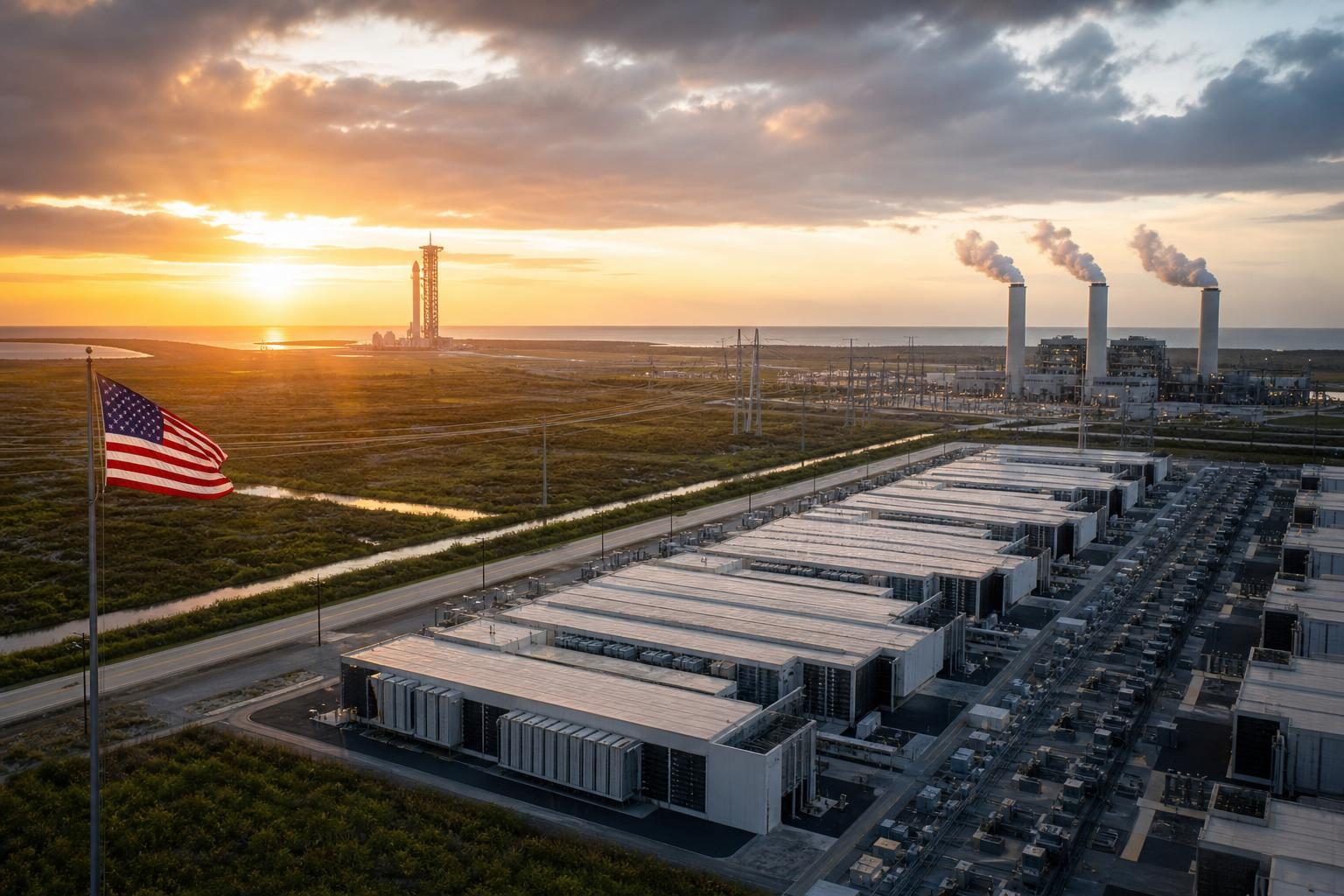
SpaceX announced Thursday that it will invest more than $74 billion in two artificial intelligence data center campuses in Texas and Arizona, pitching the projects as job creators that will pay their own way on power [1][3][4]. The plan includes a supercomputer campus at Starbase, Texas, estimated to cost more than $24 billion, and a roughly $50 billion campus in Cochise County, Arizona [1][5].
Bringing Its Own Power
The most important detail for energy consumers is where the electricity comes from. "The facility will generate its own electricity without drawing power from the public grid," SpaceX said of the Texas site, according to The Epoch Times [1]. The Washington Examiner described the Starbase project as a $24 billion gas-fired power plant and supercomputing facility [2].
That approach answers one of the biggest complaints about the data center boom: that massive server farms drive up demand on regional grids and leave ordinary ratepayers with the bill. A campus that builds its own natural gas generation keeps that cost off families' power bills.
In Arizona, SpaceX said it is working with local electric cooperatives on a power project that would use existing renewable resources and could lower members' bills by as much as 20 percent [1]. The company said the Arizona campus would use dry cooling, with no planned industrial groundwater use [1].
The Moratorium Question
The Texas campus will sit on 444 acres of Starbase-controlled land near the Port of Brownsville and the city's landfill [1]. Brownsville enacted a 90-day moratorium on data center applications within city jurisdiction, effective Nov. 5 [1]. Earlier this year, the city voted at SpaceX's request to remove the land from its boundaries, in exchange for up to $220 million to close a gap in city water and wastewater funding, The Epoch Times reported [1]. Because the land now sits outside city limits, it falls outside the moratorium [1]. The Examiner said the move appears to circumvent the city's ban [2].
SpaceX argues the deal saved local residents money. The company said that relying on public financing to fill the $220 million water gap would have cost ratepayers $370 million over 25 years, including interest [1]. Brownsville says it stands by its agreement and remains committed to evaluating residents' concerns and protecting water resources [1].
Jobs and Local Benefits
SpaceX said the Texas project has already generated more than 3,000 construction jobs and will support more than 500 permanent workers [1]. In Arizona, it expects about 5,500 construction jobs and 1,000 permanent jobs [1]. "These investments will expand local tax bases," the company said, according to The Hill [3]. The Arizona campus still needs approval from local authorities [1].
Critics Raise Water and Air Concerns
Not everyone is cheering. The South Texas Environmental Justice Network organized a protest, arguing the facilities would pollute the air, use up water and raise energy bills [1]. Water is a real concern in the Rio Grande Valley: SpaceX itself noted that about three-quarters of Brownsville's primary water supply comes from two Rio Grande reservoirs that have faced critically low levels [1].
The politics are shifting, too. Texas Gov.-elect Gina Hinojosa, a Democrat, campaigned on halting new data center approvals until the state adopts rules on electricity costs, water use and the role of local governments [1][2].
Why It Matters
America is in a race to build the computing power that will decide who leads the world in artificial intelligence. That race runs on electricity. The most responsible way to build is the way SpaceX is promising: bring your own generation, protect the grid that families and businesses depend on, and plan for water use from the start.
Natural gas, abundant in Texas, is the obvious fuel for that kind of reliable, around-the-clock power. Policymakers who want both AI leadership and affordable electricity should welcome projects that add supply rather than simply draining it, while holding companies to their promises on water and air.
What Comes Next
Watch for Arizona's local approval process and for how Hinojosa's administration treats data centers once she takes office. In Brownsville, the moratorium runs 90 days from Nov. 5 [1]. If SpaceX delivers on self-generated power and dry cooling, these campuses could become a model for how to build the AI economy without sticking ratepayers with the bill.
Sources
Should Congress speed up permits for pipelines and power plants?
- Yes, build more American energy
- Yes, but respect tribal and local input
- No, keep environmental reviews
More in Energy & Environment

Nearly 99% Sent Back: Report Details How $12.26 Billion in Venezuelan Oil Money Moved Under U.S. Watch
Tonight on The Power Grid with Priya Desai
Ukraine's Drones Knock Out Nearly a Third of Russia's Refining Capacity as Peace Talks Resume
Today on The Power Grid with Priya Desai

Gas Heads Toward $3.60 for Thanksgiving as Saudi Output Surges, but Burning Tankers and a Siberian Refinery Strike Keep Oil on Edge
This morning on The Power Grid with Priya Desai
Were you there?
If you were at the scene, or this story touched your life, tell us what you saw and what it was like.
Discussion 0
Sign in or create a free account to join the discussion.
No comments yet. Start the discussion.