
 This morning on The Power Grid with Priya Desai
Gas Heads Toward $3.60 for Thanksgiving as Saudi Output Surges, but Burning Tankers and a Siberian Refinery Strike Keep Oil on Edge
The national average has dropped about 19 cents in a week and Saudi production is back near prewar levels, even as attacks in the Strait of Hormuz and on Russia's biggest refinery keep traders nervous.
Filed November 12, 2026 · 📍 Sacramento, CA 95814
Were you there? Share your story
Part of our continuing coverage: Oil Rebounds From Two-Month Low as Hormuz Attacks Offset Iran Peace Hopes; Saudi Output Surges
Key points
- AAA's national average fell to about $3.91 a gallon Thursday, down from $4.10 a week ago.
- GasBuddy forecasts $3.59 to $3.69 a gallon by Thanksgiving.
- Saudi Arabia reported October output of 10.56 million barrels a day, up 26% from September.
- Iran says two supertankers are burning in the Strait of Hormuz; drones hit Russia's Omsk refinery.
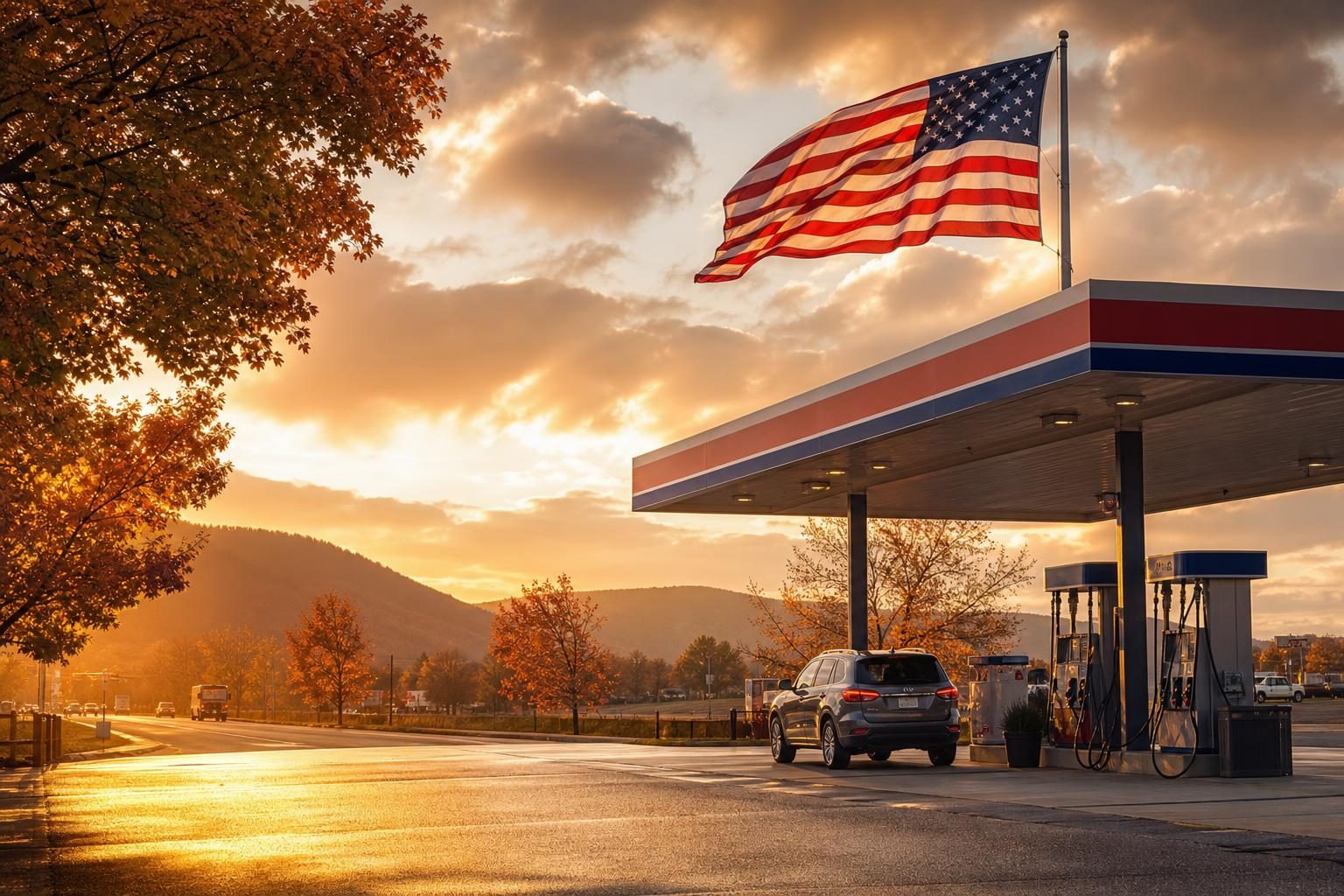
Americans driving to Grandma's for Thanksgiving are on track to pay a good deal less than they feared a month ago. AAA's national average for regular gasoline stood at about $3.91 a gallon on Thursday, down from $4.10 a week earlier and $4.36 a month ago, Newsweek reported [1]. Only California and Hawaii are still above $5 [1].
GasBuddy's head of petroleum analysis, Patrick De Haan, told Newsweek he expects the national average to reach $3.59 to $3.69 by Thanksgiving, with diesel at $5.85 to $5.95, as prices fall "slightly faster than anticipated" [1]. AAA's 3.6-cent drop on Wednesday was the biggest single-day decline in 18 years, according to OilPrice.com [6].
Saudi Barrels Come Back
The biggest reason is supply. Saudi Arabia told OPEC it pumped 10.563 million barrels a day in October, up 26% from 8.372 million in September and the most since February, close to its prewar level of about 10.9 million, OilPrice.com reported [2]. Not all of it reached buyers: about 9.2 million barrels a day went to market, with the rest going into storage [2].
The broader group is recovering, too. OPEC+ output rose by about 2 million barrels a day in October to 41.23 million, according to secondary-source estimates cited by OilPrice.com, while Iran's production fell to about 1.91 million barrels a day, its lowest in 40 years [2]. The group's ministers meet Nov. 29 to set targets for 2027 [2].
Prices Still Swing Day to Day
Crude has been whipsawed by every headline from the Gulf. Brent jumped nearly 3% on Wednesday to about $93.90 a barrel after Iran denied holding any talks with Washington, and West Texas Intermediate rose nearly 2% to about $87.98 [6]. In Asian trading early Thursday, both benchmarks gave back more than a dollar, with Brent near $91.32 and WTI near $85.32, as traders weighed peace hopes [5]. Even with the bounces, Brent had lost about 21% since Nov. 1 [6].
The risks have not gone away. Iran's Revolutionary Guards said two supertankers carrying more than 4 million barrels of oil were ablaze in the Strait of Hormuz after an explosion, blaming the ships for using an unapproved southern route, and Iranian state television said the vessels struck mines, The Times of Israel reported [3]. The paper noted that other tankers were hit earlier in the week and that the speaker of Iran's parliament said the strait will not return to its prewar status [3]. OilPrice.com reported that 37 ships were attacked in October [6].
Russia's Biggest Refinery Under Fire
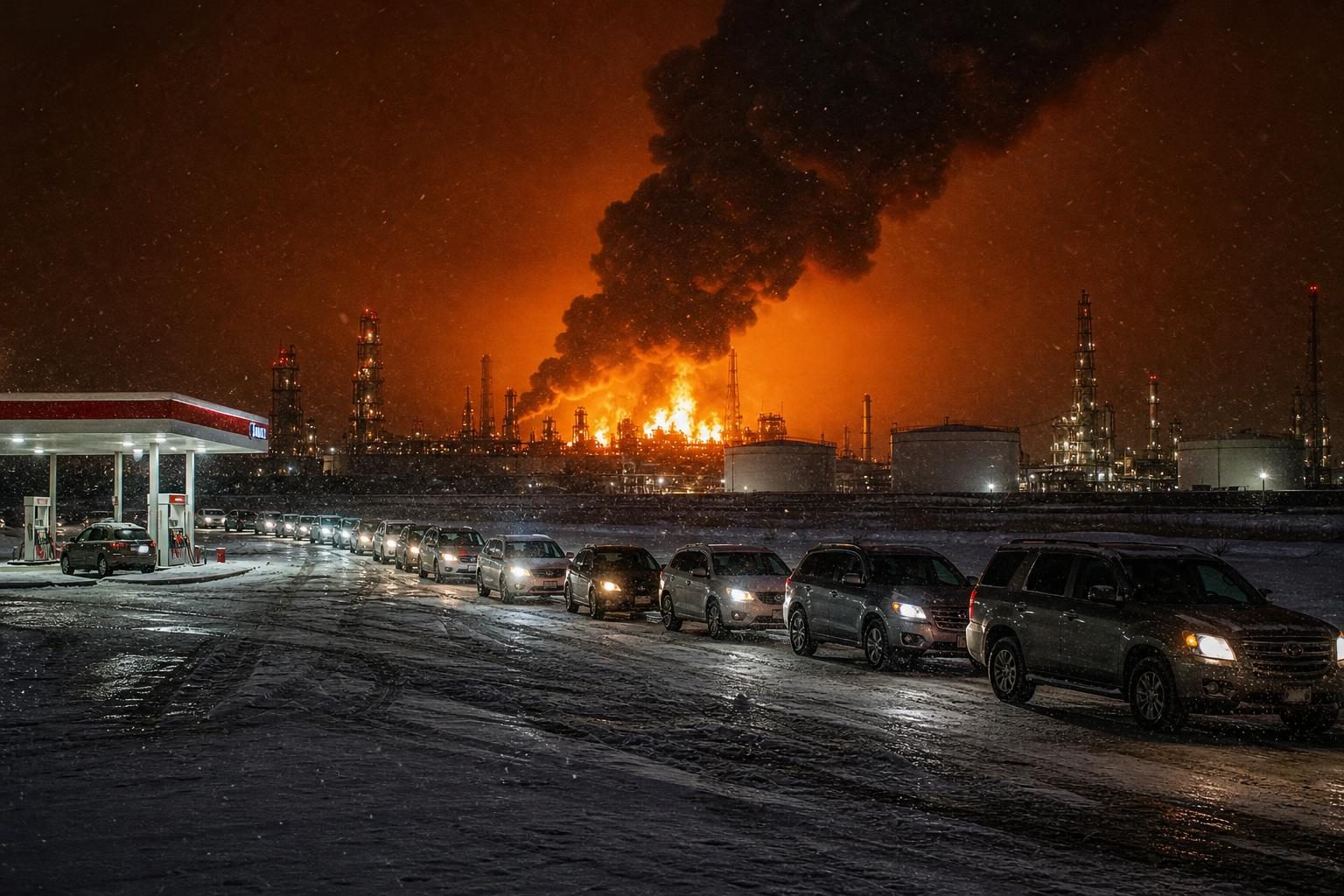
Thousands of miles to the north, drones struck the Omsk refinery in Siberia, Russia's largest, in an attack that lasted more than eight hours on Wednesday, the Kyiv Independent reported [4]. The Gazprom Neft plant, about 2,500 kilometers from Ukraine, produces roughly one in six liters of Russia's gasoline and diesel [4]. The regional governor told residents to stay indoors and said crews responded to sites hit by falling drone debris [4]. It was at least the third attack on Omsk this year [4].
What It Means for Your Wallet
For American families, the near-term news is good. Lower pump prices act like a tax cut at exactly the time of year when budgets are stretched by travel, groceries and Christmas shopping. More oil flowing to market is doing what lectures from climate summits never do: bringing prices down.
But the market is a hair trigger. Analysts at ING said the uncertainty around Iran continues to give prices some support, and an analyst at Nissan Securities said markets are betting on quiet diplomacy behind the scenes [5]. A single serious attack on a Gulf shipping lane, or a breakdown in talks, could erase weeks of savings in a day.
The next dates to watch are the U.S.-China summit next week, the OPEC+ meeting on Nov. 29 and, for drivers, the Thanksgiving weekend itself, when GasBuddy's forecast will be put to the test [5][2][1].
Sources
- [1]Opens in a new tab ↗
- [2]Opens in a new tab ↗
- [3]The Times of IsraelIran says 2 oil tankers carrying 4 million barrels caught fire in Strait of HormuzOpens in a new tab ↗
- [4]Kyiv IndependentRussia's largest oil refinery slammed by drones in 8-hour attack 2,500 km from UkraineOpens in a new tab ↗
- [5]Opens in a new tab ↗
- [6]Opens in a new tab ↗
Should Congress speed up permits for pipelines and power plants?
- Yes, build more American energy
- Yes, but respect tribal and local input
- No, keep environmental reviews
More in Energy & Environment
Ukraine's Drones Knock Out Nearly a Third of Russia's Refining Capacity as Peace Talks Resume
Today on The Power Grid with Priya Desai

Trump's Interior Plan Would Let States, Tribes and Towns Buy Federal Land, Reviving an Old Western Fight
Last night on Hollister Tonight with Jack Hollister
Inside the Senate's Permitting Deal: What the Bipartisan Energy Bill Would Change, and Why the Clock Is Ticking
Last night on The Sterling Report with Ava Sterling
Were you there?
If you were at the scene, or this story touched your life, tell us what you saw and what it was like.
Discussion 0
Sign in or create a free account to join the discussion.
No comments yet. Start the discussion.