
 Tonight on Campaign Trail with Sophia Reyes
Democrats' First 2028 Cattle Call Comes With a Warning From Their Own Strategist: The Voters You Won Aren't Yours Yet
Buttigieg, Shapiro, Booker, Gallego and Khanna made their pitches in Denver. The candidates dodged the hard fights, and a top data expert told them the midterm win was not a mandate.
Filed November 15, 2026 · 📍 Denver, CO 80202
Were you there? Share your story
Key points
- Possible 2028 Democratic contenders gathered in Denver at the 'What's Next' summit, organized by Majority Democrats.
- Strategist David Shor warned that the voters Democrats lost have not yet come back to the party.
- The hopefuls largely avoided the ideological fights a crowded primary will bring.
- Voters who swung to Democrats this fall remain persuadable, which gives Republicans an opening.
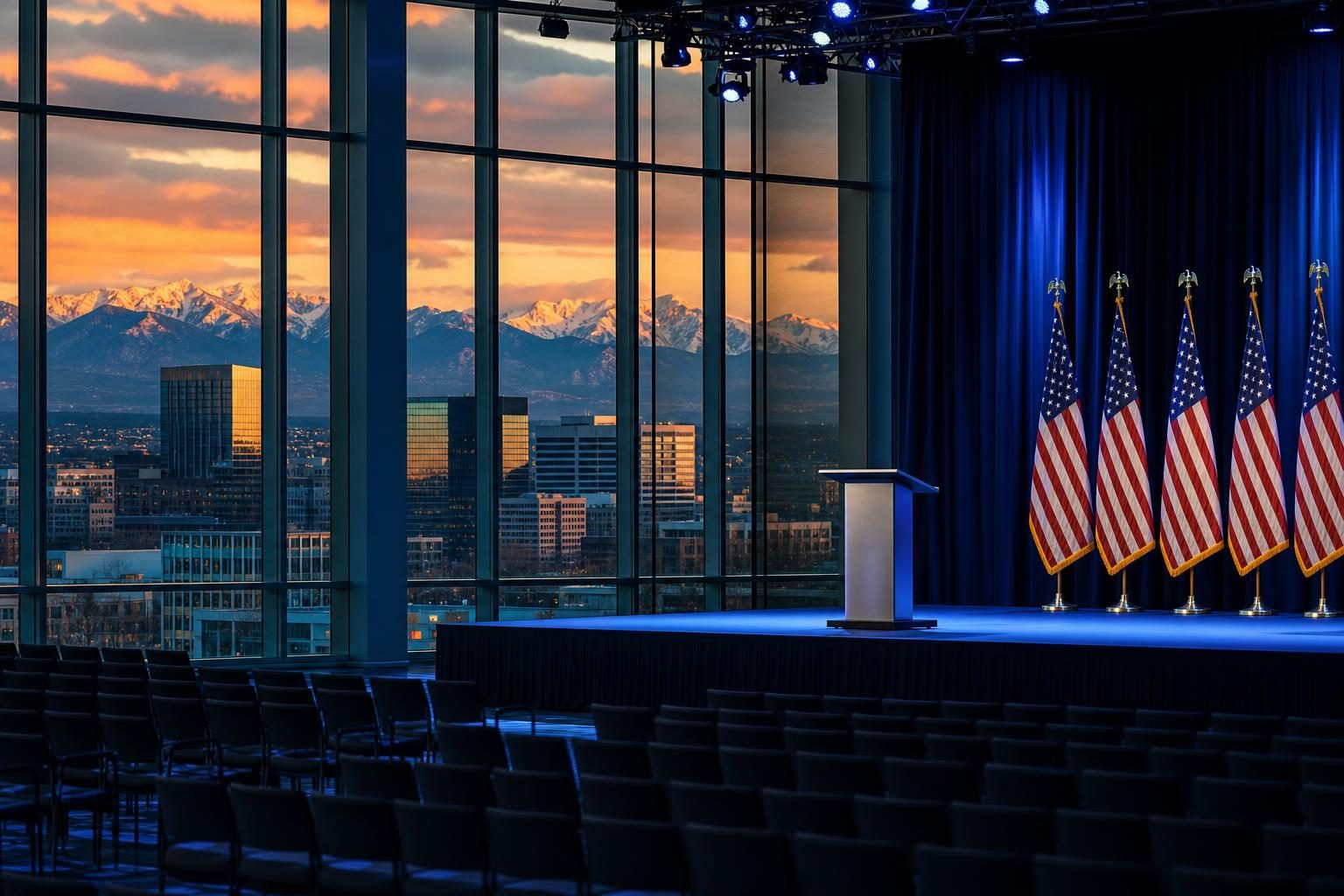
Democrats just won both chambers of Congress, and their first big gathering of would-be presidents came with a surprising message attached: don't get comfortable. The "What's Next" summit in Denver this week brought together a parade of possible 2028 contenders, and the most memorable warnings came from inside the party's own tent [1][3].
Who Showed Up, and What They Said
The conference was organized by Majority Democrats, a group made up largely of moderate officials, and it was not an official party event, according to CNN and Fox News [1][3]. Former Transportation Secretary Pete Buttigieg, Pennsylvania Gov. Josh Shapiro, Sens. Cory Booker and Ruben Gallego and Rep. Ro Khanna were among the speakers, according to coverage of the event [1][6].
The candidates mostly kept their knives sheathed. HuffPost reported that the hopefuls largely avoided the ideological lines that will define a crowded primary and stuck to unity themes: the cost of living, criticism of what they called the billionaire class and promises to hold the Trump administration accountable [2]. Fox News noted that the party is heading into the 2028 cycle without a clear front-runner [3].
The Warning in the Data
The sharpest message came from a numbers man. Democratic data strategist David Shor told the gathering that the voters Democrats lost in recent years have not become Democrats again, CNN reported, and that the midterm win was not a sign those voters had come home [1]. Shor warned that the party has about two years to persuade them [6].
NPR described a party trying to chart its path forward after the election [4], and many speakers stressed the need to earn back voters' trust [6]. Colorado Newsline reported that party leaders talked openly in Denver about building toward a supermajority in 2028 [5].
CNN also reported that the event revealed the anger coming from the party's base, and that some operatives are already asking whether there is room further to the left in the primary, including for Rep. Alexandria Ocasio-Cortez [1].
The Fights They Skipped
HuffPost's headline said it plainly: the gathering dodged the fights to come [2]. Those fights are real. A party that now controls Congress will have to decide what it does about the filibuster, about the war powers votes, about spending and about the progressive push for larger government programs. Our own coverage has followed Sen. Chris Van Hollen's challenge to Chuck Schumer for leadership of the new Senate majority, which turns in large part on those questions.
Khanna, for one, made it clear he will not be part of a cautious, split-the-difference strategy, according to The Spokesman-Review's account of the event [6]. Shapiro, by contrast, has positioned himself as a governor who can win in a swing state, and he urged Democrats to aim for a broad national victory rather than a narrow one [6].
What It Means for Conservatives
Here is my take. Republicans should read the Denver summit carefully, because Democrats are telling on themselves. Their own strategist says the voters who swung their way this fall are not yet Democrats [1]. That means those voters are still up for grabs.
Many of them are working- and middle-class families who care about grocery bills, gas prices, safe neighborhoods, good schools and the freedom to raise their children by their own values. They did not suddenly embrace the progressive agenda. They were frustrated, and they voted for change.
If Democrats spend the next two years on investigations, a fight over the filibuster and the priorities of their activist base, those voters may decide they made a mistake. If Republicans spend the next two years offering a clear plan on prices, a responsible end to the Iran war and a strong defense of faith and family, they will have something to win those voters back with.
What Comes Next
The new Congress is sworn in in January, and with it begins the real test of Democratic unity. The 2028 hopefuls will keep testing their messages in early states over the coming months, and the tensions Denver papered over will surface soon enough.
For now, the lesson of the first cattle call is clear. The party that won this fall is not sure why it won, and its own experts are warning it not to mistake a protest vote for a mandate.
Sources
Who should lead the Republican ticket in 2028?
- JD Vance
- A governor from outside Washington
- A fresh face
- Too early to say
More in Elections
The Fight for Young Men: Why They Swung to Democrats This Fall, and What Faith, Family and Work Can Offer Them Next
Today on Campaign Trail with Sophia Reyes
Peltola Claims Victory in Alaska as Sullivan Waits on the Final Count and No Network Has Called the Race
Last night on Campaign Trail with Sophia Reyes
Alaska Keeps Ranked-Choice Voting as a Repeal Fails for the Second Time in Two Years
Yesterday on Hollister Tonight with Jack Hollister
Were you there?
If you were at the scene, or this story touched your life, tell us what you saw and what it was like.
Discussion 0
Sign in or create a free account to join the discussion.
No comments yet. Start the discussion.