
 Tonight on Border Watch with Cole Brennan
A Record Weekend on the Atlantic Route: Nearly 2,200 Migrants Reach the Canary Islands as El Hierro's Residents Protest
Spain's rescue service reports the busiest weekend yet, EFE counts a one-day record, and the regional president asks Madrid and Brussels for help as frustration grows in the port of La Restinga.
Filed November 15, 2026 · 📍 Washington, DC 20001
Were you there? Share your story
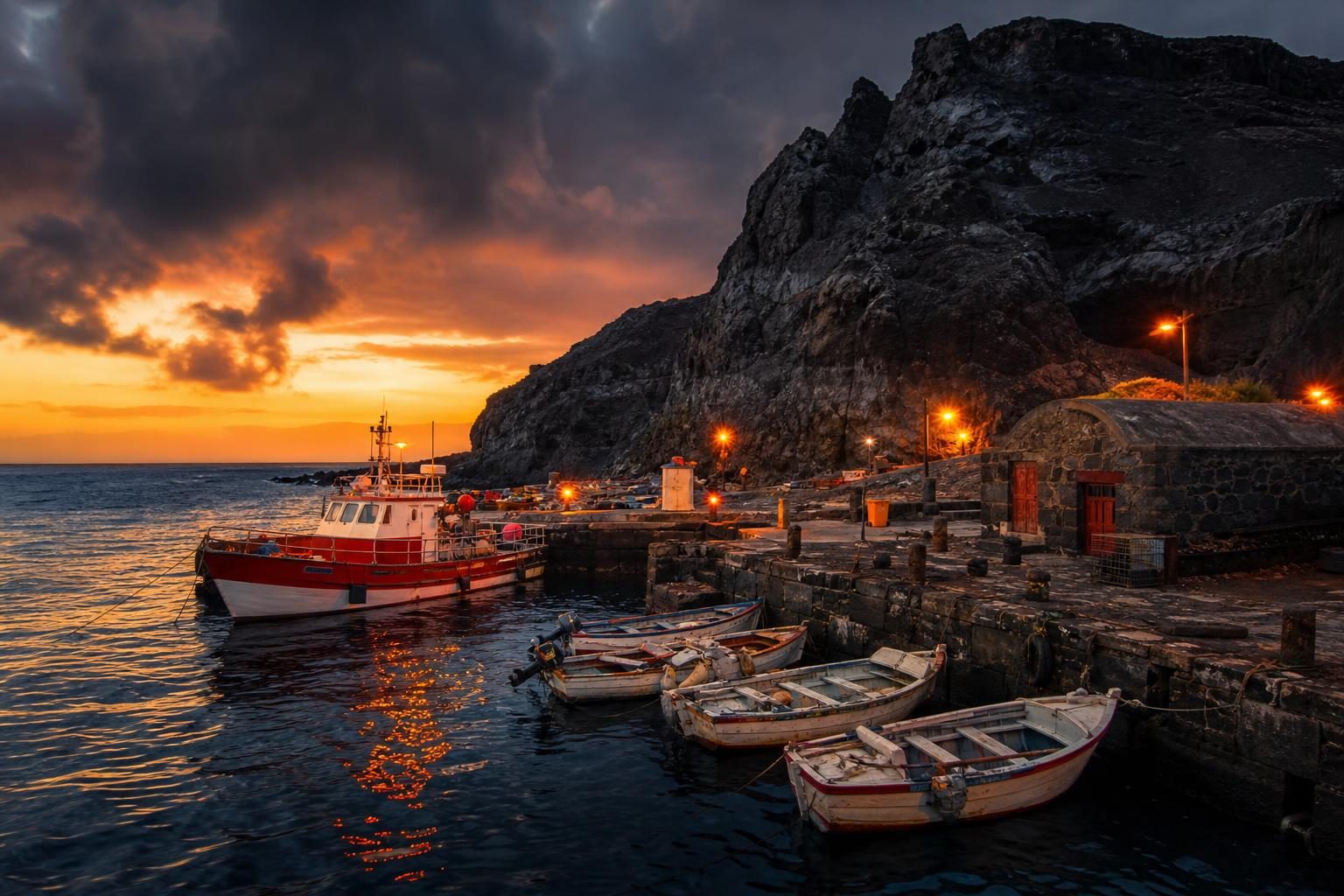
Part of our continuing coverage: El Hierro's Emergency: A Tiny Canary Island Takes In Thousands in Days as Europe's Atlantic Route Roars Back
Key points
- Spain's maritime rescue service said nearly 2,200 migrants reached the Canary Islands by boat over the weekend.
- EFE counted a record 1,580 landings on Nov. 14; the AP's count was 1,324.
- Dozens of residents protested in La Restinga, El Hierro's port, over the strain and what they called official neglect.
- Regional president Fernando Clavijo asked Madrid and the EU for help; a third rescue vessel is being added.
The Atlantic migrant route into Europe hit a new extreme this weekend. Spain's maritime rescue service said nearly 2,200 migrants reached the Canary Islands by boat over Saturday and Sunday, and the tiny island of El Hierro once again took the brunt of the landings, Inquisitr reported [1]. Twelve boats reached El Hierro over the weekend, while Gran Canaria and Tenerife received one each [1].
This is a follow-up to our report on El Hierro's emergency earlier this week. The surge has not slowed. It has grown.
A Record Day
Saturday may have been the busiest single day the route has ever seen. The Spanish news agency EFE counted a record 1,580 migrants landing in the Canary Islands on Nov. 14, most of them on El Hierro, breaking the previous one-day record of 1,461 set on Nov. 7, 2020, the Catalan outlet Ara reported [2]. Counts differ: the Associated Press said the rescue service assisted 1,324 people that day, close to the route's daily record but below it [1]. Either way, the numbers are staggering for El Hierro, an island of roughly 12,000 residents, as we reported earlier this week.
The crossings remain deadly. Anadolu Agency reported that more than 1,000 migrants were brought ashore in one overnight stretch, and that one person was found dead [6].
A Government Playing Catch-Up
The weekend surge follows weeks of warnings. In the first six days of November alone, 49 boats carrying 4,587 people reached the Canary Islands, 35 of them landing on El Hierro, according to Spain in English, which reported that the national government called an urgent migration meeting for Nov. 10 [4]. Canary Islands President Fernando Clavijo said Prime Minister Pedro Sánchez agreed to convene the emergency session after the islands pleaded for help, Euronews reported [5]. The Washington Examiner reported that Sánchez called the meeting over what officials described as a migration emergency [3].
Clavijo has now asked both Madrid and the European Union for help, and he said the rescue service would add a third vessel and more staff on El Hierro, according to Inquisitr [1].
Frustration on the Docks
The strain is showing on the island itself. Dozens of residents gathered in La Restinga, the small port town where rescued migrants are brought ashore, to voice their frustration with the pressure on the island and what they called official neglect, Inquisitr reported [1].
Those residents deserve to be heard. They are not hostile to people in need. Islanders, volunteers and rescue crews have been pulling exhausted travelers out of the sea for years. What they are asking for is a government that treats a crisis like a crisis, instead of leaving a remote fishing village to absorb thousands of people with a handful of clinics and a single small port.
The Lesson for America
Americans know this story. For years, our own border towns were told to absorb wave after wave of arrivals while officials in the capital argued about whose fault it was. The lesson, there and here, is the same: open-ended uncertainty invites more crossings, and the smugglers who profit from them pay close attention to every signal a government sends.
Spain's situation is not identical to ours. The Atlantic crossing from West Africa is longer and more dangerous than most routes into the United States, and El Hierro is an island, not a land border. But the principle holds. Compassion for people fleeing poverty and violence is a Christian duty, and so is protecting human life from criminal smuggling networks that put families into open boats for days on the open ocean. A secure, orderly system serves both goals. Chaos serves neither.
What Comes Next
Officials on the islands are bracing for more boats in the days ahead. Clavijo's appeals to Madrid and Brussels will test whether Spain and the European Union can move people off El Hierro quickly and stop the next wave before it launches [1][5].
We will keep following the crisis and what it means for Europe's migration fight.
Sources
- [1]Opens in a new tab ↗
- [2]Opens in a new tab ↗
- [3]Washington ExaminerSpanish prime minister calls meeting over 'migration emergency' as thousands surge into Canary IslandsOpens in a new tab ↗
- [4]Spain in EnglishSpain calls urgent migration meeting after 4,587 people reach Canary Islands in six daysOpens in a new tab ↗
- [5]Opens in a new tab ↗
- [6]Opens in a new tab ↗
Would you support an immigration deal with the new Democratic Congress?
- Only if the border stays secure and there's no amnesty
- Yes, it's time to fix the system
- No deals at all
More in Immigration & Border Security

Beneath the Border: How America's 'Tunnel Rats' Hunt the Cartels' Secret Passages
Yesterday on Border Watch with Cole Brennan
DHS Stands on Its Record Border Results as Incoming Democrats Plan Probes of Its Detention Buildout
Friday night on Border Watch with Cole Brennan

HUD Finalizes Rule Requiring Proof of Legal Status for Everyone in Federally Assisted Housing
Friday night on Border Watch with Cole Brennan
Were you there?
If you were at the scene, or this story touched your life, tell us what you saw and what it was like.
Discussion 0
Sign in or create a free account to join the discussion.
No comments yet. Start the discussion.