
 Overnight on Campaign Trail with Sophia Reyes
A Divided Field and a Clear Verdict: What Alaska's Democratic Governor Win Should Teach Republicans
Jonathan Kreiss-Tomkins cleared 50 percent outright to become Alaska's first Democratic governor-elect in nearly 30 years, capping a midterm that leaves Democrats with 30 governorships and Republicans with hard lessons for 2028.
Filed November 14, 2026 · 📍 Anchorage, AK 99501
Were you there? Share your story
Key points
- Democrat Jonathan Kreiss-Tomkins, 37, won about 50% of first-choice votes, more than 21 points ahead of Republican Bernadette Wilson.
- Three Republicans combined for roughly 49.7%, and the race never went to a ranked-choice tabulation.
- Democrats will hold 30 governorships after flipping Georgia, Iowa, Nevada, Ohio and Texas.
- Wilson and Bronson conceded graciously; the new governor is set to be sworn in Dec. 7.
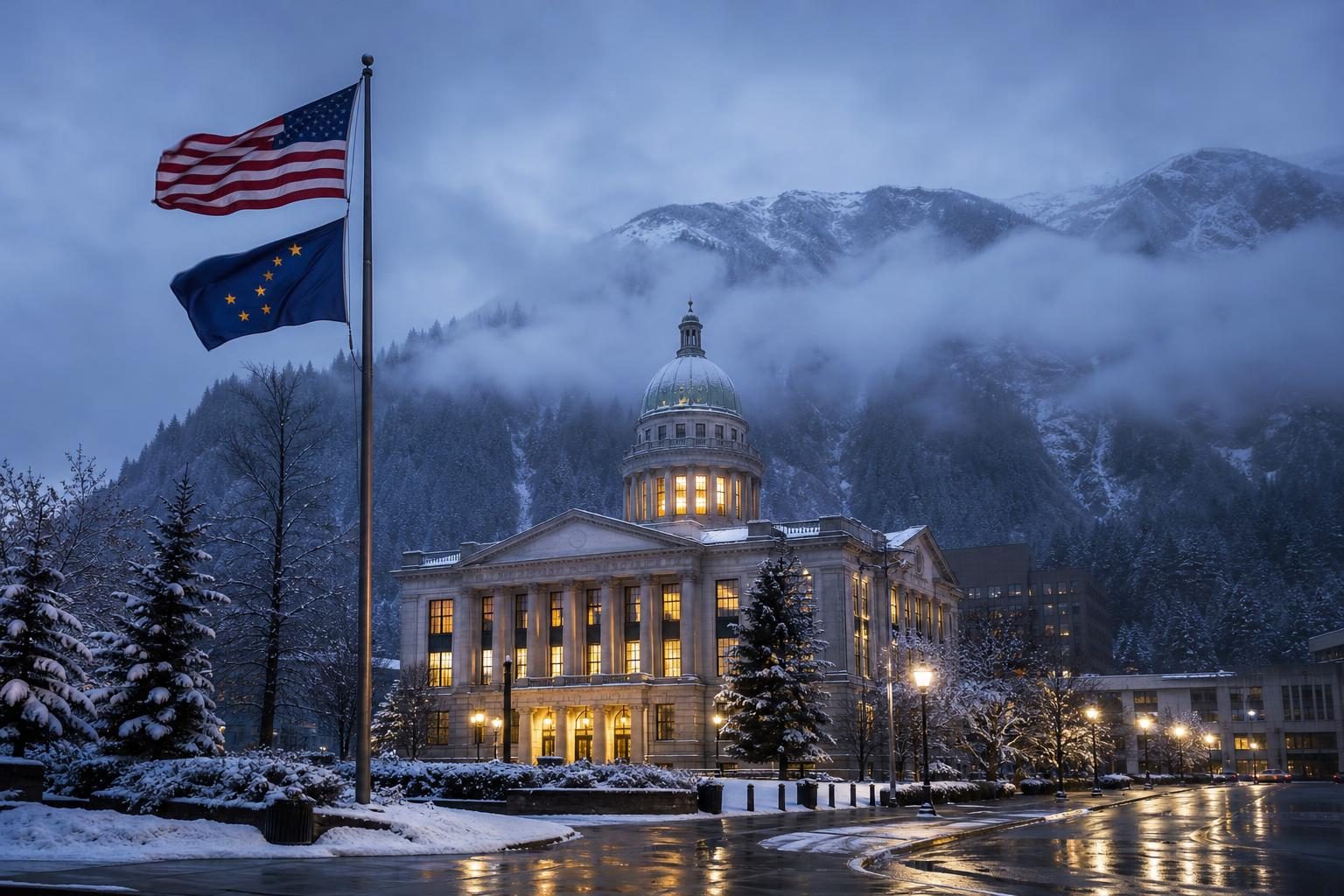
Alaska voters have done something they had not done in nearly 30 years: they elected a Democrat as governor. Jonathan Kreiss-Tomkins, 37, sealed the race late Friday, Nov. 13, Daily Mail reported, and his win means Democrats will control the governor's office in 30 states [1]. The former state lawmaker will become Alaska's 13th governor and the first Democrat to lead the state since Tony Knowles left office in 2002, according to the Anchorage Daily News, succeeding term-limited Republican Gov. Mike Dunleavy [3].
For conservatives who have long counted Alaska as dependable ground, the result calls for sober study, not finger-pointing. The numbers tell a story about a divided Republican field, a national climate that turned hard against the party in power, and a Democrat who presented himself as a bridge-builder in a right-leaning state.
Who he beat, and by how much
Preliminary results from the state Division of Elections, as reported by the Alaska Beacon, gave Kreiss-Tomkins 50.05% of first-choice votes. Republican Bernadette Wilson, a former talk show host [1], finished a distant second with 28.7%. Two more Republicans followed: Dave Bronson with 13.7% and Treg Taylor with 7.3% [2]. That is a lead of more than 21 points over his closest rival, and his campaign said the roughly 35,000 ballots still to be counted came from districts where he was expected to run comfortably ahead [2].
The Republicans accepted the verdict with class. Wilson acknowledged her loss in a phone interview with the Beacon on Friday morning and said she was glad Alaskans had chosen someone born in the state to lead it [2]. Bronson congratulated the winner on social media, and a statement on his campaign's Facebook page said Kreiss-Tomkins had won "with a majority of the vote" [2]. That kind of grace is how self-government is supposed to work, and it is a credit to the candidates who came up short.
The Beacon noted that the governor-elect will be the youngest person Alaska has ever elected to the office and only the third Alaska-born governor in the state's history [2]. He is set to be sworn in on Dec. 7 [3].
How ranked-choice voting played in
Alaska uses an open primary in which the top four finishers advance to November, when voters may rank the candidates. If no one wins a majority of first choices, the last-place finisher is dropped and those ballots move to their next choice until someone passes 50%. Because Kreiss-Tomkins cleared the majority line on first choices alone, the governor's race will not go to a ranked-choice tabulation at all [2].
That matters for the debate on the right about Alaska's system. Many conservatives dislike ranked-choice voting, and there are fair arguments about its complexity and the trust voters place in a simple count. But in this race the ranked ballot did not decide the outcome. First choices did. Add up the three Republicans and they reached about 49.7%, a hair below the winner's own share [2]. Even if every Republican voter had ranked the other two GOP candidates second and third, no transfer of later choices could have overtaken a candidate who already held a majority.
Where the system did shape the race was in the field it produced. With four candidates advancing, three Republicans stayed in through November, and Wilson herself pointed to the cost. She told the Beacon that with three Republicans to choose from, the party's donors stayed on the sidelines or limited their help [2]. A party that cannot settle on one standard-bearer gives its voters, and its contributors, reasons to wait.
A national map that turned blue
Alaska was the latest domino in a broad Democratic advance. Stateline reported the morning after the election that Democrats had won a majority of the nation's governorships for the first time in 16 years, flipping Republican-held offices in Georgia, Iowa, Nevada, Ohio and Texas while defending competitive seats in Maine, Michigan and Wisconsin, according to unofficial results from the Associated Press and Decision Desk HQ [5]. At that point Democrats were set to hold 28 governorships to Republicans' 20, with Alaska and Kansas still uncalled [5].
Kansas, which this site has covered separately, has since been settled, and Daily Mail reported that Alaska's result brings the Democratic total to 30 [1]. That leaves Republicans holding 20 governor's offices [5]. The Texas result, which this site has also reported on, and the Iowa result are especially sobering, because both are states Republicans had come to treat as safe [1][5].
Governors matter more than many voters realize. They sign or veto budgets, appoint judges, set education policy and shape how states respond to everything from energy development to public safety. Losing that many statehouses in one cycle is a setback for conservative governance on the ground, where most Americans feel government most directly.
What Republicans must learn before 2028
The Associated Press found Republicans in Washington still dazed by their losses and trying to work out what went wrong [6]. Rep. Richard Hudson, who leads the House Republican campaign committee, said voters "were sending a message" that gasoline and everyday costs were simply too high [6]. Sen. John Thune, whom Senate Republicans kept as their leader, declined to pin the results on President Donald Trump and described them as the product of several factors, while Sen. Josh Hawley warned that cutting rural health care and walking away from working people would get the party beaten [6]. AP reported widespread frustration that a party handed full control of Washington only two years ago had lost touch with voters, though there was little appetite for a break with the president [6].
Alaska adds lessons of its own.
First, unity has to come before the ballots are printed. In a top-four system, three Republicans splitting both the vote and the donor base is a recipe for defeat. The party needs ways, through early endorsements, candidate forums and honest conversations among leaders, to rally behind one strong candidate long before November.
Second, kitchen-table issues come first. Hudson's own diagnosis points to prices at the pump and the grocery store. Conservative principles of limited government, lower taxes and affordable American energy speak directly to those worries, but only when candidates lead with them.
Third, the winner looked like a coalition-builder. Kreiss-Tomkins chose Zac Johnson, an independent member of the Anchorage Assembly, to serve as his lieutenant governor [3]. Republicans do not need to give up conviction to reach independents. They need to show voters that conservative governance means competence and service, not just combat.
Fourth, losing graciously is itself a witness. Wilson and Bronson conceded quickly and respectfully [2]. For a movement rooted in faith and humility, that example is worth more than any bitter recount fight, and it builds the trust needed for the next campaign.
Finally, a midterm verdict is not a permanent one. Two years is a long time in American politics, and the voters who sent a message this fall can be won back by a party that listens, fixes what is broken and offers a hopeful plan.
What comes next in Juneau
The governor-elect has already sketched his early agenda. The Anchorage Daily News reported that he expects to propose a moderate Permanent Fund dividend along with more spending on some services, especially education, and that he describes his approach as "responsibility and restraint" [4]. He also wants to put part of a possible surplus into the state's rainy-day fund and to introduce legislation placing the Permanent Fund in the state constitution while limiting how much can be drawn from it each year [4]. His first priority, he said, will be fixing nuts-and-bolts problems such as permit delays and slow Medicaid benefits [4]. He takes office as a war-driven jump in oil prices could leave the state with a surplus in the hundreds of millions of dollars [4].
Conservatives will be watching closely. A surplus is a chance to save and to return money to Alaskans, not to grow government. If the new governor keeps his promise of restraint, he will find willing partners across the aisle. If spending outruns the oil windfall, Republicans will have a clear case to make, and this time they will need a united front to make it.
Sources
- [1]Opens in a new tab ↗
- [2]Opens in a new tab ↗
- [3]Anchorage Daily NewsDemocrat Jonathan Kreiss-Tomkins to serve as Alaska's 13th governorOpens in a new tab ↗
- [4]Anchorage Daily NewsKreiss-Tomkins previews policy priorities as he awaits final election resultsOpens in a new tab ↗
- [5]Opens in a new tab ↗
- [6]Associated Press (via WRAL)Republicans dazed by midterm election defeats grapple with what went wrongOpens in a new tab ↗
Who should lead the Republican ticket in 2028?
- JD Vance
- A governor from outside Washington
- A fresh face
- Too early to say
More in Elections
Boebert's Seat Is Called, Alaska Counts On, and Three House Races Hang by a Few Hundred Votes
Last night on Campaign Trail with Sophia Reyes
California's 'Election Month' Is a Choice: Why the Biggest State Still Counts for Weeks, and How Florida Does It Faster
Yesterday on Campaign Trail with Sophia Reyes

Fetterman Holds His Ground on Israel as the Far Left Lines Up 2028 Challengers Against Him
Yesterday on Trending Tonight with Maya Thompson
Were you there?
If you were at the scene, or this story touched your life, tell us what you saw and what it was like.
Discussion 0
Sign in or create a free account to join the discussion.
No comments yet. Start the discussion.