
 Overnight on Free Speech Frontline with Ryan Mercer
Ontario Appeal Court Clears the Way for Canadian Newsrooms' Copyright Case Against OpenAI
Canada's major publishers can press their claim that OpenAI used their journalism to train ChatGPT without permission or payment, after an Ontario appeal court rejected the company's bid to move the fight to the United States.
Filed November 14, 2026 · 📍 NY 12207
Were you there? Share your story
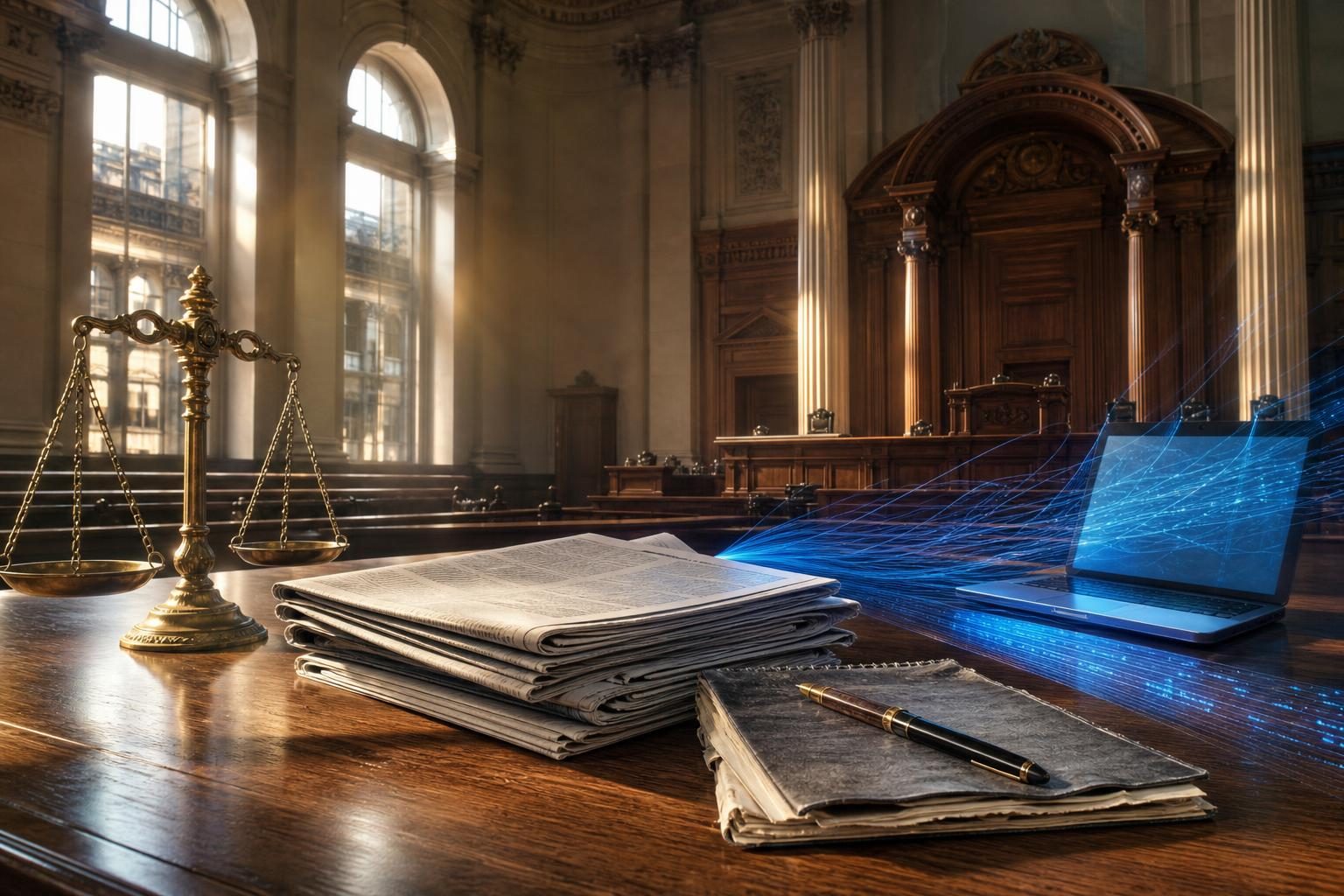
Key points
- The Ontario Court of Appeal dismissed OpenAI's jurisdiction appeal, so the publishers' copyright suit proceeds in Ontario.
- Plaintiffs include The Canadian Press, Torstar, The Globe and Mail, Postmedia and CBC/Radio-Canada; OpenAI denies wrongdoing.
- OpenAI was ordered to pay $100,000 in legal costs; the merits of the case are still undecided.
- The case parallels U.S. suits such as The New York Times v. OpenAI, where fair use is the central fight.
Some of Canada's largest news organizations will get their day in a Canadian court. On Friday, the Ontario Court of Appeal dismissed OpenAI's appeal of an earlier jurisdiction ruling, allowing a copyright lawsuit brought by the country's publishers to proceed in Ontario instead of being pushed into an American courtroom, The Canadian Press reported [1].
The coalition behind the suit includes The Canadian Press, Torstar, The Globe and Mail, Postmedia and CBC/Radio-Canada [1]. The publishers allege that OpenAI used their news content to train its ChatGPT system, breaching their copyrights and profiting from that work without permission or payment [1]. OpenAI has denied the allegations, maintaining that its models are built on publicly available data and that the company follows fair use principles [1].
The ruling also carried a price tag for the company. Broadcast Dialogue reported that the appeal court ordered OpenAI to pay $100,000 in legal costs to the media organizations that defended the lower-court decision [2].
Where, Not Yet Whether
Friday's decision did not settle whether OpenAI broke the law. It settled where that question will be answered. The case remains at the pre-trial stage, and the merits of the copyright claims have not been decided [1].
OpenAI had mounted a jurisdictional challenge, arguing the dispute should be heard in the United States [1]. In the lower court, the company said it is not located in Ontario, does not do business in the province, and that the conduct at issue took place outside Ontario, Global News reported [3]. The Ontario Superior Court of Justice rejected that argument in November 2025 and found that it does have jurisdiction to hear the case [1][3]. The motion judge reasoned that the possibility of similar claims being pursued in two countries with different laws is no reason to stop one of those cases from going forward [1].
The appeal court agreed. According to The Canadian Press, the court noted that OpenAI filed no evidence showing that a Canadian judgment would clash with existing U.S. law in a way that would complicate enforcement [1]. The court also upheld the lower court's view that Canadians can pursue claims against foreign companies in Canadian courts [1].
The stakes are large. When the publishers filed suit in Ontario in late 2024, they proposed damages of C$20,000, roughly US$14,000, for each work used, or whatever other amount a judge considers appropriate, Agence France-Presse reported at the time [4]. AFP described a case that could be worth billions [4]. The Canadian Press called it the first case in Canada to take up the practice of using copyrighted material to train generative AI systems, and noted the lawsuit has dragged on since 2024 [1].
How It Fits With the American Cases
The Canadian fight runs alongside a wave of litigation in the United States. In New York, federal Judge Sidney Stein narrowed The New York Times' lawsuit against OpenAI and Microsoft in 2025 but allowed its central copyright infringement claims to move ahead, NPR reported [5]. OpenAI's main defense in that case is the American doctrine of fair use, which company leaders argue protects the mass collection of online material, including articles from The Times [5].
Friday's ruling means Canadian publishers will not have to wait on how American judges answer that question. Their claims will be tested under Canadian law, in a Canadian court.
The publishers are also widening the fight. In October, Postmedia, Torstar, The Globe and Mail and The Canadian Press filed a separate copyright suit in Ontario against Anthropic, alleging that the company used their journalism to build its Claude models without permission, broke the websites' terms of service and got around technical protections meant to restrict copying, CBC News reported [6]. Those allegations have not been proven in court, and CBC noted that the earlier OpenAI case has yet to be settled [6].
Why It Matters
At its heart, this is a case about property. A news story is the product of someone's labor: a reporter who sat through the long council meeting, an editor who checked the facts, and a company that paid them both. Scripture teaches that the worker deserves his wages, and the ordinary moral sense of most families says the same thing. If you want to use what someone else built, you ask first, and you pay.
New tools deserve room to grow, and few would argue otherwise. But progress has never required treating other people's work as free for the taking. A legal order that lets the wealthiest technology firms help themselves to the output of newsrooms, without permission or payment, would weaken the very institutions that keep communities informed and hold the powerful to account.
What comes next is a long road. With jurisdiction settled, the Ontario case can move toward the merits, where a judge will eventually weigh the publishers' claims against OpenAI's position that it relied on public data and fair use principles [1]. In the United States, the Times case and others will keep working their way through the federal courts [5]. However those cases end, Friday's decision sends a clear message: a company's home address does not put it beyond the reach of the countries whose work it uses.
Sources
Do you trust AI chatbots to give straight answers on politics?
- Yes
- Sometimes
- No, they lean left
- I don't use them
More in Technology
Meta Quietly Tests 'Takes,' a Prediction-Market App Built on Points, Not Dollars
Last night on Code & Coin with Kendall Price

Hackers Stole Uber Drivers' License Data Through an AI Vendor. Here Is What Drivers Should Know
Last night on Free Speech Frontline with Ryan Mercer
Bessent Says Four Agencies Wanted Megaspeed Blacklisted for Months and Commerce Holds the Pen, as Lutnick Prepares to Testify
Yesterday on Free Speech Frontline with Ryan Mercer
Were you there?
If you were at the scene, or this story touched your life, tell us what you saw and what it was like.
Discussion 0
Sign in or create a free account to join the discussion.
No comments yet. Start the discussion.