
 Last night on Main Street Money with Marcus Hale
Trump and Thailand Sign a Trade Statement in Manila, With Zero Tariffs on American Goods and New Sales for U.S. Farmers in View
The president says Bangkok will drop tariffs and trade barriers on American exports; both sides say the final agreement is weeks away.
Filed November 17, 2026 · 📍 White House, DC 20500
Were you there? Share your story
Key points
- Trump and Thai Prime Minister Anutin Charnvirakul signed a joint trade statement at the ASEAN Summit in Manila.
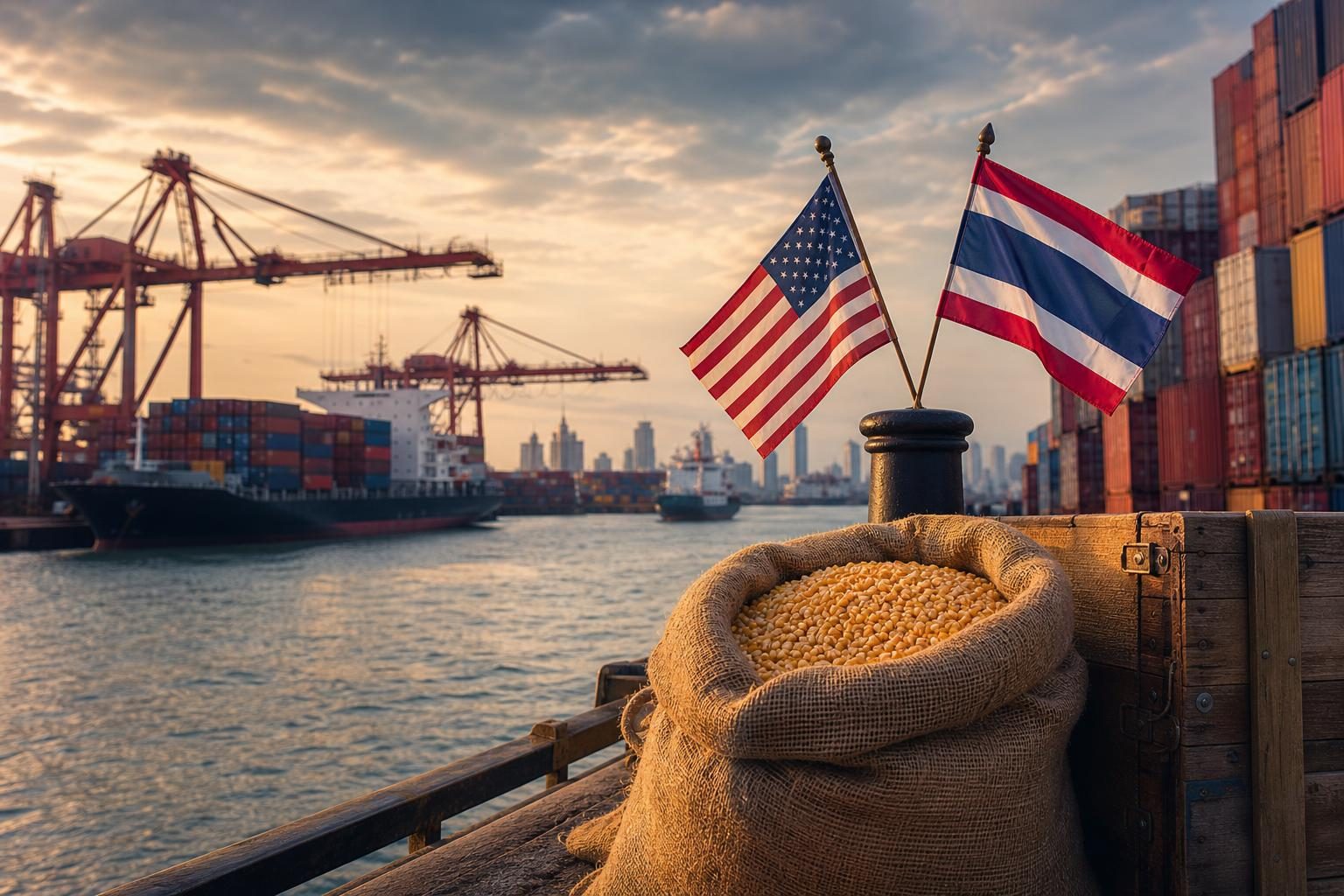
- Trump says Thailand will eliminate tariffs on U.S. exports and drop barriers on vehicles, drugs, ethanol and poultry.
- The 2025 framework included about $2.6 billion a year in Thai purchases of U.S. farm goods.
- The final Agreement on Reciprocal Trade is expected in the coming weeks.
President Trump and Thai Prime Minister Anutin Charnvirakul signed a joint trade statement in Manila on Tuesday, moving the two countries a major step closer to a full reciprocal trade agreement on the sidelines of the 49th ASEAN Summit [4]. The president said Thailand has agreed to eliminate tariffs on American exports and will buy more from American farmers, a promise aimed squarely at the farm states that have carried the cost of trade fights abroad [1][2].
The signing at the Solaire Resort was not the final deal. A Thai official described it as significant progress toward an agreement, and both sides said the formal text will be finished in the coming weeks [4]. Trump himself told reporters that important details still need to be worked out [3].
What Thailand Is Promising
By the president's account, Thailand will drop all tariffs on U.S. goods and clear away a long list of nontariff barriers on American vehicles, medical devices, pharmaceuticals, ethanol and poultry [2]. Those barriers, from inspection rules to import licenses, often matter as much to American exporters as the tariff itself.
The framework the two governments announced in October 2025 had Thailand eliminating tariffs on about 99% of U.S. goods [5][6]. A White House fact sheet released earlier also used the 99% figure, so the final text will show how close the deal comes to the president's promise of zero [3]. Anutin welcomed what he called a substantial conclusion of talks while saying there was still a little more to do [3].
Why It Matters to American Farmers
For rural America, this is the heart of the deal. Under the 2025 framework, Thailand pledged to buy about $2.6 billion a year in American farm products, including corn, soybean meal and dried distillers grains, the protein-rich byproduct of ethanol plants [6]. Opening Thai markets to U.S. ethanol and poultry, as the president described on Tuesday, would add to that [2].
Thailand is a meaningful customer: its large poultry and livestock industries run on feed grains. When Thai feed mills can buy American corn and soybean meal without a tariff, Iowa, Nebraska and Illinois growers have a better shot at winning those sales.
Thai negotiators have pushed over the past year for additional exceptions [3]. How those carve-outs are written will decide how much of the promised access is real.
The Tariff Backdrop
The deal also arrives in a changed legal landscape. The 2025 framework envisioned a 19% baseline U.S. tariff on Thai imports [4][5]. In February, the Supreme Court struck down the administration's country-specific tariffs, and Washington has since used a different tool, citing inadequate action against forced labor to impose new tariffs on 60 economies, Thailand among them [4].
That combination gives the administration leverage and gives Bangkok a reason to settle. Thailand gets predictability for its exporters; the United States gets open markets and purchase commitments. The finished agreement will need to say plainly which U.S. tariffs remain on Thai goods, and the president's team has not yet released that text [3][4].
The Bigger Picture in Asia
Tuesday's signing is part of a broader push by the president on this trip to lock in trade and security ties with American allies and partners in Southeast Asia, a region where China has spent years building economic influence [1][4]. Every market that opens to American beef, grain and machinery is one less market where Chinese goods compete on a tilted field.
Critics will note that announcements are not agreements: the framework was first unveiled in October 2025, and the final text is still being negotiated more than a year later [4][5]. That is fair. The test of this deal is the signed text and the purchase orders that follow.
What Comes Next
U.S. and Thai negotiators will now work to turn Tuesday's joint statement into a finished Agreement on Reciprocal Trade, which both sides say should come within weeks [4][5]. Farmers, ethanol producers and automakers will be reading the fine print closely, especially the list of exceptions and the final tariff rate on Thai goods coming into the United States. For a farm economy that has needed good news, a Thai market with no tariffs on American corn and poultry would be worth waiting a few more weeks to get right.
Sources
- [1]The Washington TimesTrump signs trade pact with Thai leaderOpens in a new tab ↗
- [2]Opens in a new tab ↗
- [3]Yahoo FinanceTrump holds trade signing ceremony with Thailand but says important details still need to be worked outOpens in a new tab ↗
- [4]Yahoo News SingaporeTrump, Thai PM to make joint trade statement in ManilaOpens in a new tab ↗
- [5]Office of the U.S. Trade RepresentativeFact Sheet: The United States and Thailand Reach a Framework for an Agreement on Reciprocal TradeOpens in a new tab ↗
- [6]Opens in a new tab ↗
Should towns welcome AI data centers?
- Yes, they bring jobs and tax money
- Only if they pay their own power costs
- No, they strain water and the grid
More in Business & Economy
Shoppers Come Back to Target: The Best Sales Growth in Five Years, a Raised Outlook and Tariff Refunds Behind Part of the Profit
This morning on Kitchen Table with Megan O’Brien
Trump Sets a 10-Month Goal to Catch China on Rare Earths. Here's Where America Stands and What It Will Take
Overnight on Main Street Money with Marcus Hale
Regulators Order Kalshi to Pull Markets on the President's Words, Citing the Risk of Manipulation
Last night on Code & Coin with Kendall Price
Were you there?
If you were at the scene, or this story touched your life, tell us what you saw and what it was like.
Discussion 0
Sign in or create a free account to join the discussion.
No comments yet. Start the discussion.