
 Yesterday on Main Street Money with Marcus Hale
Justice Department Takes the Lead on Reviewing DoorDash's $17 Billion Instacart Deal
Antitrust officials will examine whether combining the two biggest names in app-based delivery helps or hurts the families who pay the fees, the shoppers who fill the orders and the grocers who rely on them.
Filed November 17, 2026 · 📍 Washington, DC 20001
Were you there? Share your story
Key points
- The Justice Department, not the FTC, will lead the antitrust review of DoorDash's roughly $17 billion purchase of Instacart, Bloomberg and Reuters reported.
- DoorDash agreed on Oct. 29 to pay $65 a share, a 26% premium, with at least 75% of the price in cash.
- The companies expect the deal to close at the end of 2027 or in the first half of 2028, after reviews in the U.S., Canada and Israel.
- DoorDash has pledged to keep the Instacart brand and app and not to require grocers to sign exclusive deals.
The Justice Department will take the lead in reviewing DoorDash's roughly $17 billion purchase of grocery-delivery company Instacart for possible antitrust problems, Bloomberg reported Monday, citing U.S. officials [1]. Reuters, which first reported the assignment citing two sources, said the move puts the deal in front of the department's antitrust division rather than the Federal Trade Commission [2].
The choice of agency matters. The two federal antitrust enforcers divide merger reviews between them by industry, and grocery and retail deals often land at the FTC. Officials who spoke on condition of anonymity because they were not authorized to discuss internal matters said the Justice Department would handle this one, according to Bloomberg [1]. Neither company had commented on the assignment when the reports were published [2].
What DoorDash Agreed to Pay
DoorDash announced the deal on Oct. 29. Under the terms in its filing with the Securities and Exchange Commission, DoorDash will pay $65 for each share of Instacart, whose corporate name is Maplebear Inc., valuing the company at about $17 billion in equity [3]. The price is a 26% premium to Instacart's closing share price on Oct. 22, the last trading day before media reports of a possible sale [3].
Instacart shareholders can choose cash, DoorDash stock or a mix, but the stock portion is capped so that at least 75% of the total is paid in cash [3]. DoorDash said it would fund the cash with money on hand and new borrowing, backed by a bridge loan commitment from JPMorgan Chase, and that the deal does not depend on financing [3]. Instacart's board approved the agreement unanimously [3].
The companies do not expect a fast finish. The filing says closing is expected at the end of 2027 or in the first half of 2028, after an Instacart shareholder vote and antitrust reviews in the United States, Canada and Israel [3]. If the deal is blocked by a final court order on antitrust grounds, or runs out of time with those approvals unmet, DoorDash would owe Instacart a $1.25 billion termination fee, according to a summary of the merger agreement [5].
The Questions Regulators Will Ask
The heart of any review will be what happens to prices and choices for ordinary families. DoorDash has tried to get ahead of those concerns. It says it will keep the Instacart name, app and technology products running after the purchase and will not require grocers to deal with it exclusively [3].
Critics see it differently. The American Economic Liberties Project, an advocacy group that favors tougher antitrust enforcement, has urged regulators to stop the deal, PPC Land reported [4]. The review is likely to weigh how much the two companies compete today for the same customers, the same gig workers who shop and deliver orders, and the same grocery chains that pay to be listed on their apps.
Why It Matters to Our Readers
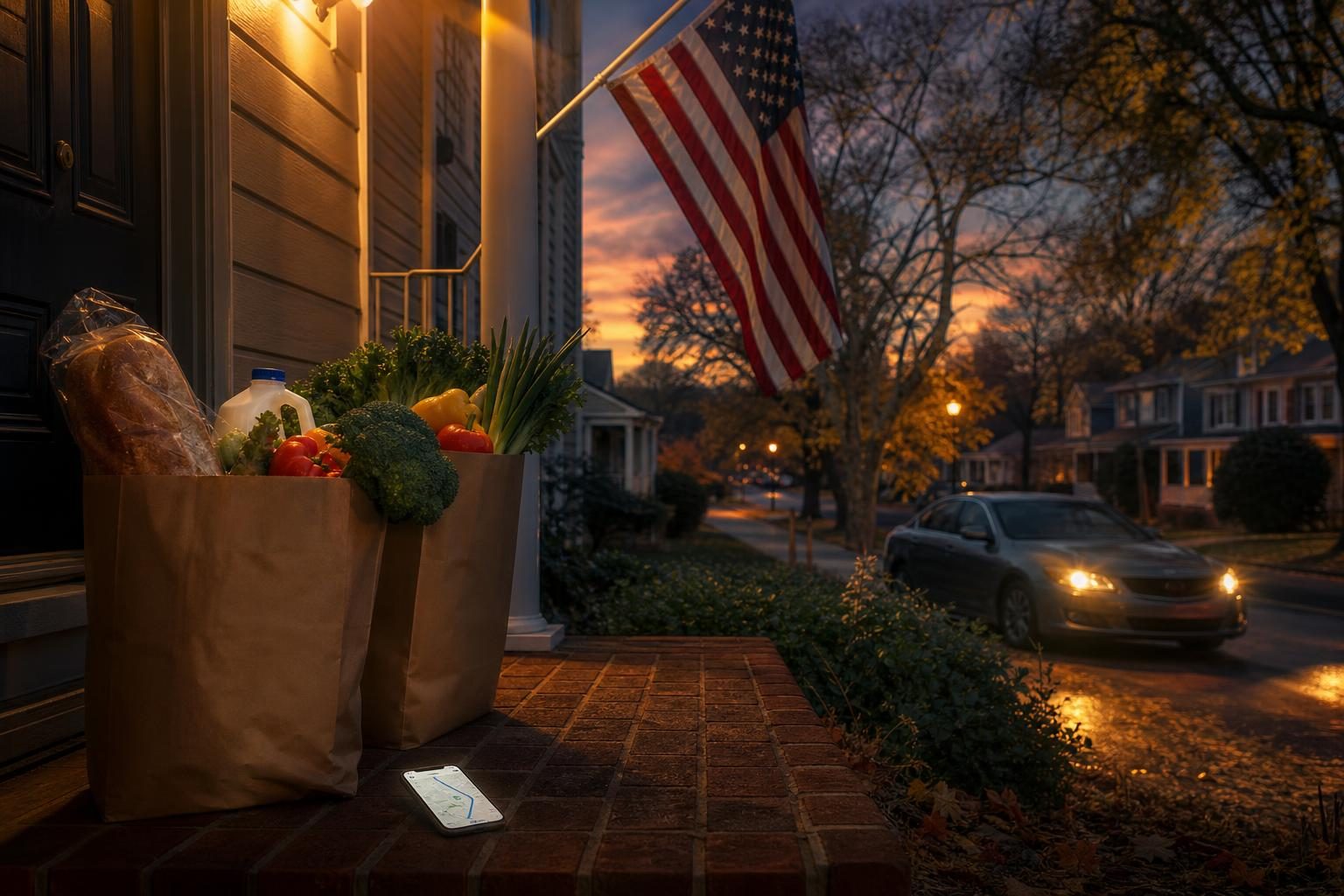
For millions of households, especially seniors, busy parents and rural families far from a full-size store, app delivery has become a real part of how groceries get home. Those families have a stake in whether this deal brings lower fees and better service, as DoorDash promises, or less competition and higher costs, as its critics warn.
A conservative approach to antitrust starts with a simple principle: the law exists to protect consumers and competition, not to punish companies for growing or to protect rivals from a better offer. That means a fair, evidence-driven review on a reasonable timeline, judged by what happens to the price a family pays and the choices it has. Washington should neither rubber-stamp a deal of this size nor drag it out as a political trophy.
What Comes Next
Antitrust reviews of large deals often run many months and can include a demand for more documents and data. The Justice Department declined to comment on the specific transaction [2]. With a closing target that stretches into 2028 [3], the department has time to do the job right, and families who order their groceries through an app will be watching the outcome.
Sources
- [1]Opens in a new tab ↗
- [2]Investing.com (Reuters)Exclusive-DoorDash-Instacart merger to be reviewed by DOJ, sources sayOpens in a new tab ↗
- [3]U.S. Securities and Exchange Commission (DoorDash 8-K)DoorDash to Acquire InstacartOpens in a new tab ↗
- [4]Opens in a new tab ↗
- [5]MLQJustice Department will review DoorDash's $17 billion Instacart deal, Reuters and Bloomberg reportOpens in a new tab ↗
Should towns welcome AI data centers?
- Yes, they bring jobs and tax money
- Only if they pay their own power costs
- No, they strain water and the grid
More in Business & Economy
Shoppers Come Back to Target: The Best Sales Growth in Five Years, a Raised Outlook and Tariff Refunds Behind Part of the Profit
This morning on Kitchen Table with Megan O’Brien
Trump Sets a 10-Month Goal to Catch China on Rare Earths. Here's Where America Stands and What It Will Take
Overnight on Main Street Money with Marcus Hale
Trump and Thailand Sign a Trade Statement in Manila, With Zero Tariffs on American Goods and New Sales for U.S. Farmers in View
Last night on Main Street Money with Marcus Hale
Were you there?
If you were at the scene, or this story touched your life, tell us what you saw and what it was like.
Discussion 0
Sign in or create a free account to join the discussion.
No comments yet. Start the discussion.