
 This morning on World Watch with Grace Whitfield
First in the Court's History: The World's Highest Court Finds Myanmar Guilty of Genocide Against the Rohingya
By a 9-6 vote, the International Court of Justice rules that Myanmar's 2017 crackdown was genocide and orders reparations. Here is what it means for persecuted minorities, for Israel's case, and for enforcement.
Filed November 19, 2026 · 📍 World desk · Washington, DC
Were you there? Share your story
Key points
- The ICJ ruled 9-6 that Myanmar committed genocide against the Rohingya in 2017
- It is the first time the court has found a state responsible for genocide
- The court ordered reparations and a safe return for refugees; the ruling cannot be appealed
- The strict intent standard will shape South Africa's case against Israel
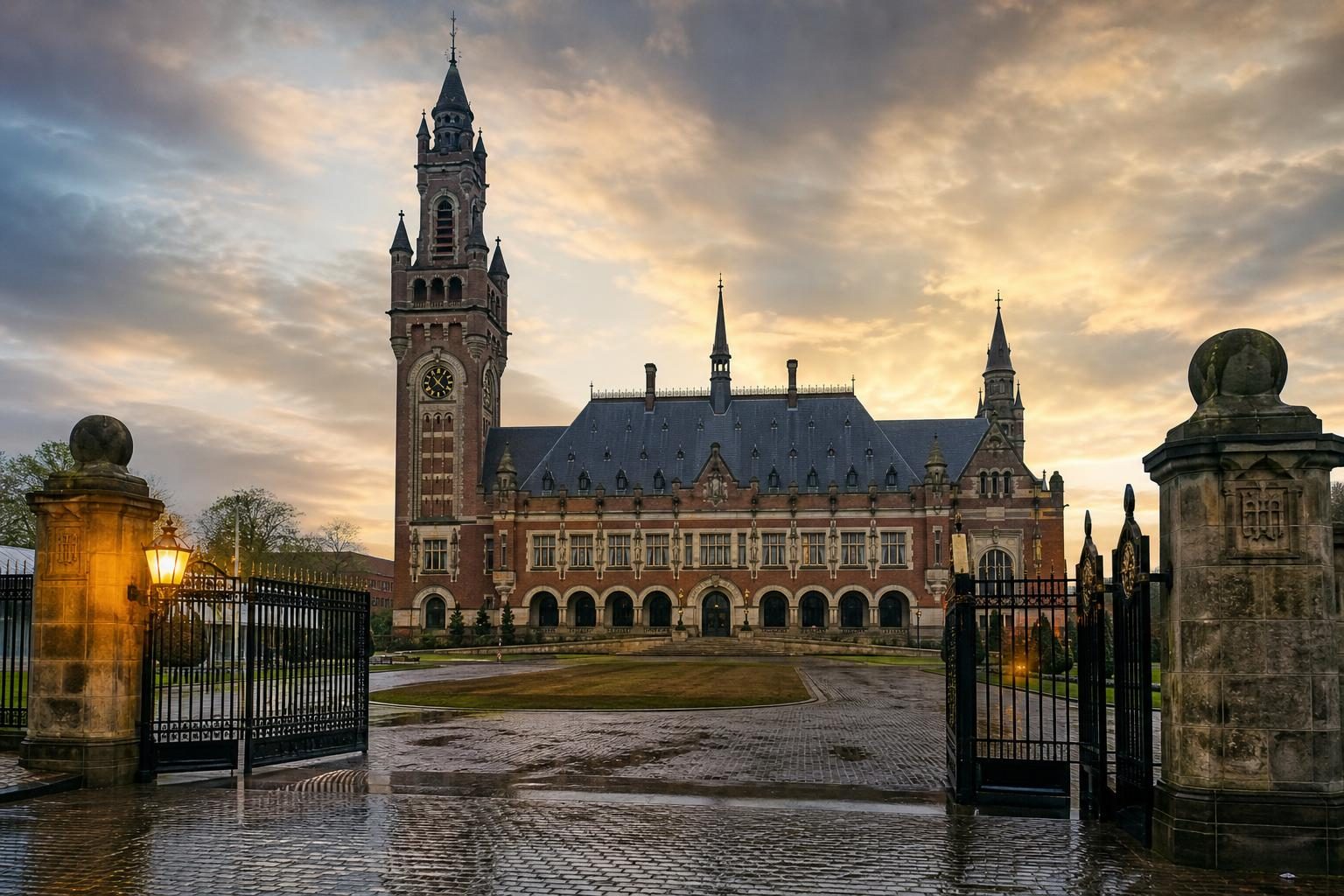
For the first time in its history, the United Nations' highest court has found a nation guilty of genocide. In a landmark judgment on Thursday, the International Court of Justice in The Hague ruled that Myanmar committed genocide against the Rohingya, a Muslim minority, during a brutal military operation in 2017, CBS News reported [1].
The court found that Myanmar's security forces "acted with genocidal intent" against the Rohingya during the 2017 operations in northern Rakhine State, NPR reported [2]. The vote was 9 to 6, and the ruling marks the first time a state has been found responsible for genocide at the court, according to Al Jazeera [3].
It is a verdict nine years in the making, and it carries lessons well beyond Southeast Asia: about religious persecution, about the slow machinery of international justice, and about how the same legal standard will be tested in other wars now before the same judges.
What the Court Decided
The judges reasoned that the only reasonable inference from the evidence of widespread atrocities was that Myanmar's forces intended to destroy a substantial part of the Rohingya people, Al Jazeera reported [3]. That is the heart of the case. Under the 1948 Genocide Convention, mass killing alone is not enough to prove genocide; prosecutors must show intent to destroy a national, ethnic, racial or religious group, in whole or in part. The court concluded that intent was proven.
The evidence showed that Myanmar's forces killed about 10,000 Rohingya, according to Al Jazeera's account of the ruling [3]. The court also rejected Myanmar's long-standing defense that its 2017 campaign was a counter-terrorism operation aimed at a Rohingya militant group [3].
The judges went further than a finding of guilt. The court upheld large parts of the case and called on Myanmar to pay reparations and to let Rohingya refugees return safely to their homes, Deutsche Welle reported [4]. Al Jazeera reported that the measures include restoring or replacing the property of those driven out and providing physical and mental rehabilitation for survivors [3]. The decision is final and cannot be appealed [3].
Nine Years of Waiting
The violence that led to Thursday's verdict began in August 2017. Villages in Rakhine State were burned, families were killed, and more than 700,000 Rohingya fled across the border into Bangladesh, where most of them still live in crowded camps today.
The legal case came two years later. The small West African nation of The Gambia filed it in November 2019, with the backing of the Organisation of Islamic Cooperation, Al Jazeera reported [3]. Under the Genocide Convention, any country that has signed the treaty can bring a case against another, even if it was not directly harmed, because genocide is treated as an offense against all of humanity.
The road to a verdict was long. In July 2022, the court rejected Myanmar's objections to its jurisdiction and allowed the case to go forward, and the judges heard arguments on the merits in January of this year. The treaty at the center of it all, the Genocide Convention, was adopted by the U.N. General Assembly in December 1948, in the shadow of the Holocaust, and the United States ratified it in 1988 under President Ronald Reagan.
Myanmar denied genocide throughout the proceedings [3]. Its government has changed in the meantime: the military seized power in a coup in 2021, and the same armed forces whose conduct was on trial now run the country.
America Called It Genocide First
The United States reached its own conclusion years before the court. In March 2022, Secretary of State Antony Blinken announced at the U.S. Holocaust Memorial Museum that the American government had determined Myanmar's military committed genocide and crimes against humanity against the Rohingya, Al Jazeera reported at the time [6]. Blinken tied the decision to a State Department factual assessment and legal analysis, and he said Washington had shared information with The Gambia for its case [6].
That matters. American leadership on religious freedom has been one of the few causes that unites both parties in Washington, and the documentation American diplomats gathered helped build the record that judges in The Hague have now accepted. When people of faith pray for the persecuted, this is part of what an answer looks like: the truth written down, tested in court and declared to the world.
For Christians, the Rohingya case should resonate deeply. Believers in Nigeria, China, North Korea and elsewhere know what it means to be targeted for their faith. The principle the court affirmed on Thursday, that no government may set out to destroy a people because of who they are or how they worship, protects every persecuted minority, whatever its creed.
A High Bar, and the Test Ahead
The ruling will echo in another case before the same court. Semafor reported that the decision has huge consequences for ongoing conflicts, noting that South Africa has brought a similar genocide case against Israel over its war in Gaza [5].
Supporters of Israel, and anyone who wants international law applied fairly, should read Thursday's ruling closely. The court set a demanding standard: genocidal intent had to be the only reasonable inference from the evidence [3]. That is exactly as it should be. Genocide is the gravest charge in international law, and it must not be stretched to cover every war in which civilians suffer.
Israel has rejected South Africa's accusation and says it is fighting Hamas, the terrorist group that launched the Oct. 7, 2023, massacre. Myanmar, too, claimed it was fighting militants, and the court rejected that claim on the facts of that case [3]. The lesson is not that every counter-terrorism defense fails. It is that judges must weigh the evidence of each war on its own record, under the same strict standard. If the court holds to that discipline, it will strengthen its credibility. If it bends the standard for political reasons, it will squander the moral authority it earned on Thursday.
Can the Ruling Be Enforced?
Here is the hard truth: the International Court of Justice has no police force. It cannot arrest generals or seize assets. Compliance depends on governments, and on the willingness of other nations to apply pressure.
Under the U.N. Charter, a country can ask the Security Council to act when another fails to comply with a judgment of the court. But Myanmar's military has long relied on friendly ties with China and Russia, both of which hold veto power on the council. That makes meaningful enforcement through the United Nations uncertain at best.
That is where diplomacy, sanctions and the moral weight of the verdict come in. The ruling gives the United States and its allies a firm legal foundation for pressing Myanmar's rulers, for supporting the refugees in Bangladesh and for insisting on a safe return home, as the court ordered [4].
What Comes Next
For the Rohingya, the verdict is recognition, not rescue. Families in the camps in Bangladesh still cannot go home safely, and nothing in Thursday's judgment changes the facts on the ground overnight. The reparations the court ordered [3] will be meaningful only if Myanmar's rulers are pushed to honor them.
For the rest of the world, the ruling is a reminder of a promise made after the Holocaust: never again. That promise has been broken too many times. On Thursday, at least, a court of law said plainly what happened to the Rohingya, and it named the government responsible.
Sources
Israel's new parliament is sworn in. Who would you rather see lead Israel?
- Benjamin Netanyahu
- Gadi Eisenkot
- Someone new
- That's for Israelis to decide
More in World News
Somalia Gives the UAE's Ambassador 72 Hours to Leave, Accusing Abu Dhabi of Violating Its Sovereignty
Tonight on World Watch with Grace Whitfield
Netanyahu's Office Defends Aide Who Relayed Election-Day Tip
Tonight on World Watch with Grace Whitfield

Tories Tap James Cleverly to Take On Sadiq Khan, Promising Safer Streets and Renewed Pride in London
Today on World Watch with Grace Whitfield
Were you there?
If you were at the scene, or this story touched your life, tell us what you saw and what it was like.
Discussion 0
Sign in or create a free account to join the discussion.
No comments yet. Start the discussion.