
 This morning on Deep Dive with Kevin Nakamura
Watchdog Says Hackers Have the Food Supply in Their Sights, and USDA Is Pushing Back on the Fixes
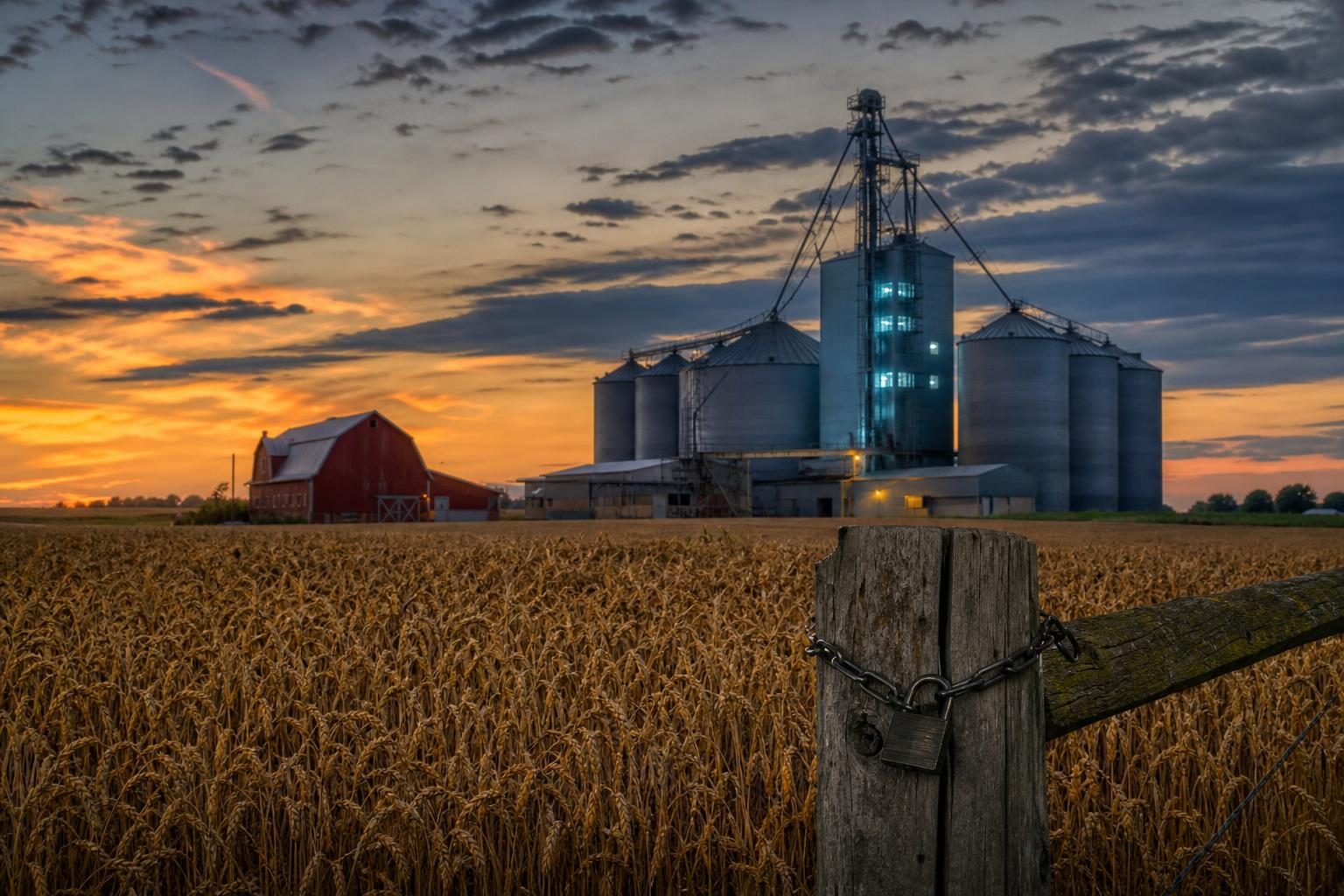
A GAO report counts ransomware attacks on farms and food companies rising every year since 2023 and says the Agriculture Department needs better threat-sharing and emergency drills.
Filed November 29, 2026 · 📍 Washington, DC 20001
Were you there? Share your story
Key points
- A Nov. 19 GAO report warns ransomware is a growing threat to the U.S. food and agriculture sector.
- Ransomware incidents in the sector rose from 167 in 2023 to 295 in 2025, with 227 through July 2026.
- HHS accepted its three recommendations; USDA rejected both of its own, on threat-sharing and emergency exercises.
- The GAO says its recommendations are warranted, as USDA deals with its own recent cyber incident.
The federal government's own watchdog is warning that America's food supply has become a growing target for hackers, and that the agencies responsible for protecting it are not as ready as they should be, Just the News reported Sunday [1].
The Government Accountability Office report, released Nov. 19 under the title Critical Infrastructure Protection: Further Action Needed to Enhance Cybersecurity of the Food and Agriculture Sector, found that the sector's growing reliance on connected technology leaves farms, processors and distributors exposed to ransomware [3][4]. American Greatness reported that ransomware attacks on farms and food companies have climbed every year since 2023, and that the Agriculture Department is resisting the watchdog's proposed fixes [2].
A Rising Count
The numbers in the report, drawn from the industry's own threat-sharing group, the Food and Agriculture Information Sharing and Analysis Center, show a steady climb. The group counted 167 ransomware incidents in 2023, 206 in 2024 and 295 in 2025, and it had already logged 227 through July of this year, Industrial Cyber reported [3].
Most of the reported incidents were aimed at shutting down food production and distribution systems to force a ransom payment, according to the report [3]. That is the danger in plain terms: an attacker does not have to poison anything to cause harm. Freezing the computers that run a processing line, a cold-storage warehouse or a shipping schedule can be enough to empty shelves and spoil products.
Five Fixes, Two Refusals
The GAO made five recommendations, three to the Department of Health and Human Services, which oversees the Food and Drug Administration, and two to the U.S. Department of Agriculture, according to Industrial Cyber and MeriTalk [3][4]. The two USDA recommendations concern sharing threat information with the industry and running emergency preparedness exercises, along with assessing whether the department's resources need to be reprioritized or expanded [3].
HHS agreed with all three of its recommendations. USDA disagreed with both of its own and asked the GAO to remove or redirect them, Industrial Cyber reported [3]. The watchdog did not back down, writing that "the recommendations are warranted" [3].
This is not the first time the GAO has pressed the department on cybersecurity. A January report counted 17 open recommendations under the purview of USDA's chief information officer from earlier GAO work, each tied to the watchdog's high-risk areas for federal cybersecurity and information technology management [5].
A Department Already Under Strain
The warning lands on a department that has had a difficult month. ABC News reported that USDA Under Secretary Richard Fordyce confirmed a cybersecurity incident at the department, with the disruption stretching across several days at the time of that report [6]. The GAO's review looked at the preparedness of the whole food and agriculture sector rather than at any single attack, but the timing has drawn attention to both [6].
Why It Matters to Families
Food security is national security. The men and women who grow, raise and process America's food already contend with weather, input costs and thin margins. They should not also have to wonder whether a criminal gang overseas can freeze the systems that move their harvest to market.
It is worth being clear about what the GAO is and is not asking for. These recommendations are not new mandates on family farms or small processors. They are about the federal government doing its own job well: telling the industry quickly when a threat is spotted, and practicing for an emergency before one happens. Those are basic duties, and taxpayers have a right to expect them.
USDA may have reasons for its objections, and it should lay them out in full for Congress and the public. But when the government's own auditors say the department is not ready, and the attack count keeps climbing year after year, the burden of proof belongs on the department. What comes next: the GAO will track whether its recommendations are carried out, and the agriculture committees in Congress will have every reason to ask USDA why it said no.
Sources
- [1]Opens in a new tab ↗
- [2]American GreatnessGAO Warns Hackers Could Threaten America's Food Supply, Faults Federal Agencies on Cyber ReadinessOpens in a new tab ↗
- [3]Industrial CyberFederal cybersecurity gaps leave US food supply vulnerable to ransomware and operational disruptions, GAO warnsOpens in a new tab ↗
- [4]Opens in a new tab ↗
- [5]U.S. Government Accountability OfficeGAO-26-108709: open recommendations to USDA's chief information officerOpens in a new tab ↗
- [6]Opens in a new tab ↗
Do you trust AI chatbots to give straight answers on politics?
- Yes
- Sometimes
- No, they lean left
- I don't use them
More in Technology
Trump Takes His 'Super Intelligence' Push to the SEC
Overnight on Free Speech Frontline with Ryan Mercer
OpenAI Fires Back: Countersuit Accuses Apple of Taking Secrets and Squeezing Suppliers
On Friday on Free Speech Frontline with Ryan Mercer

Restricted Nvidia Racks Surface in Shanghai, at a Site Tied to Alice Huang
On Friday on Free Speech Frontline with Ryan Mercer
Were you there?
If you were at the scene, or this story touched your life, tell us what you saw and what it was like.
Discussion 0
Sign in or create a free account to join the discussion.
No comments yet. Start the discussion.