
 This morning on From the Bench with Margaret Callahan
Arrested at 16, Still Waiting to Be Heard: The Fight to Save Pakistani Christian Shahzad Masih
Nine years after a blasphemy accusation at work, his death-sentence appeal still sits unheard in Lahore. An American legal group is pressing Pakistan to spare him, and a Supreme Court ruling in October raised the stakes.
Filed November 29, 2026 · 📍 Supreme Court, DC 20543
Were you there? Share your story
Key points
- Shahzad Masih was arrested at 16 in 2017 on a blasphemy accusation and sentenced to death in 2022.
- His appeal is still pending at the Lahore High Court after repeated postponements, his lawyers say.
- A UN working group called his detention arbitrary; the ACLJ is urging Pakistan to spare him.
- In October, Pakistan's Supreme Court upheld another Christian's blasphemy death sentence for the first time.
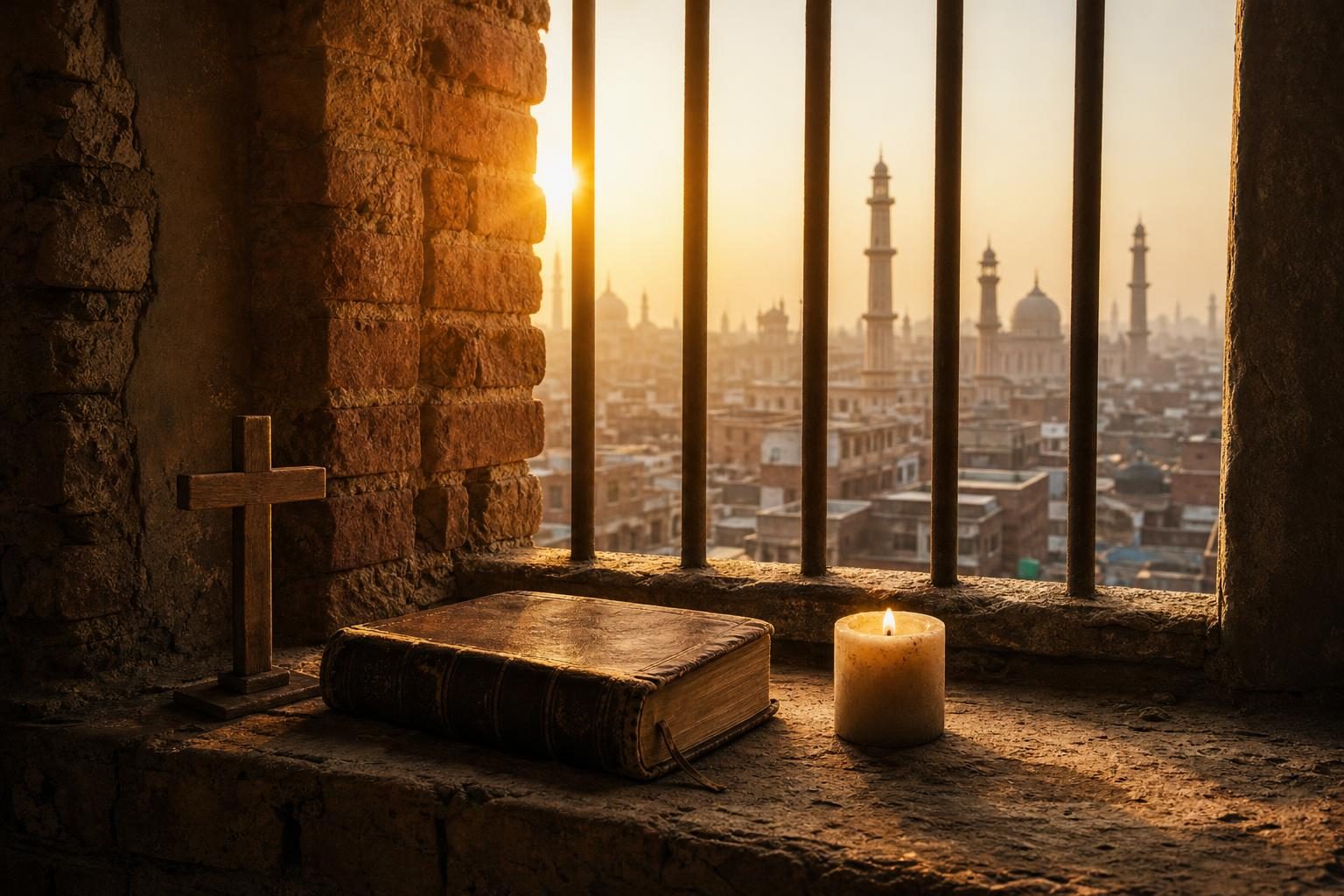
A young Pakistani Christian who was arrested at 16 on a blasphemy accusation has now spent more than nine years behind bars, and an American legal group is pressing Pakistan to spare his life before his long-delayed appeal is finally heard [1][2].
Shahzad Masih was taken into custody in July 2017 after he was accused of insulting Islam, and a trial court sentenced him to death in November 2022, according to the American Center for Law and Justice, which is supporting his defense [2]. Fox News reported Sunday that the accusation grew out of a conversation at work: ACLJ attorney CeCe Heil told the outlet that a coworker rallied a large crowd at the cell phone shop and had the teenager arrested [1].
His appeal is still pending before the Lahore High Court [1]. The ACLJ says its Pakistani partners have filed at least four petitions asking the court to take up the case, and that hearings have been scheduled and then postponed each time [2].
A Case the World Has Noticed
Masih's case has drawn attention far beyond Pakistan. The U.S. Commission on International Religious Freedom lists him in its database of people imprisoned for their faith or beliefs [4]. A United Nations working group on arbitrary detention concluded that his detention was arbitrary and called on Pakistan to release him immediately and unconditionally, the ACLJ reported [3]. His defenders also say the investigating officer found nothing blasphemous in what Masih said, yet the court tried him as an adult [3].
Pakistan's government has kept its distance. In a response to United Nations experts quoted in the Fox News report, Islamabad said the cases of Masih and two other Christians were before the courts and that the executive branch could not step into individual cases [1].
Why the Clock Feels Shorter Now
The urgency has grown since October. On Oct. 7, a Supreme Court bench headed by Justice Muhammad Hashim Khan Kakar dismissed the appeal of Qaiser Ayub, a Christian convicted of posting blasphemous material online, and upheld his death sentence, while acquitting his brother, Amoon Ayub, for lack of evidence, UCA News reported [5]. The case against the brothers was first registered in 2011 [5].
The Organization for Legal Aid, a Pakistani legal group working on these cases, said it was the first time the country's highest court had upheld a death sentence for blasphemy, and Qaiser's lawyers are preparing a petition asking the court to review its ruling [5]. Fox News reported that worry over Masih's fate rose sharply after that decision [1].
The law at the center of both cases is Section 295-C of Pakistan's penal code, which prescribes death for derogatory remarks about the Prophet Muhammad [5]. The political pressure is not easing, either. Last week the Punjab Provincial Assembly, in Pakistan's most populous province, adopted a resolution asking the federal government to toughen punishment under another blasphemy provision, Section 298-A, Dawn reported [6].
What It Means for American Families
For Americans, the case is a sharp reminder of what the First Amendment protects. Here, a teenager who says the wrong thing at work might lose a job or a friendship. In Pakistan, according to Masih's defenders, a coworker's accusation was enough to put a 16-year-old on the road to the gallows [1][2].
Religious liberty is not a favor handed down by governments. Americans have long held that it belongs to every person, because every person is made in the image of God. That conviction has put churches, lawmakers and advocates in this country on the side of persecuted believers abroad, and it is why the ACLJ is asking ordinary Americans to add their names to its effort to save Masih [2].
Scripture is plain about the duty owed to believers like him: "Remember them that are in bonds, as bound with them" (Hebrews 13:3). For families who gathered around their tables last week to give thanks, that can mean a prayer tonight, a call to a congressional office, or simply refusing to let his name be forgotten.
What Comes Next
The Lahore High Court must still schedule, and actually hold, Masih's appeal hearing, and Qaiser Ayub's lawyers are expected to ask the Supreme Court to review its October ruling [2][5]. Until a court hears him, a man who was a boy when he was jailed waits in a cell for the chance to answer the charge that could cost him his life.
Sources
- [1]Fox NewsChristian sentenced to death over workplace conversation in Pakistan as US group fights to save himOpens in a new tab ↗
- [2]GlobeNewswire (ACLJ)ACLJ Fights to Save Pakistani Christian Sentenced to Death After Arrest for Blasphemy at Age 16Opens in a new tab ↗
- [3]Opens in a new tab ↗
- [4]USCIRFShehzad MasihOpens in a new tab ↗
- [5]Opens in a new tab ↗
- [6]Opens in a new tab ↗
Pope Leo XIV drew more than a million people in Argentina. Would you travel to see the pope?
- Absolutely
- Maybe, if he came to the U.S.
- No, but I'd watch on TV
- No
More in Faith & Religion
Fed in His Name: The Christian Charities on This Year's NFL Cleats Are Doing What Jesus Asked
Last night on From the Bench with Margaret Callahan

Faith on Their Feet: Brock Purdy's Cleats Back a Church Ministry That Feeds Hungry Kids
Last night on Fourth Quarter with Andre Coleman
'The Holy Spirit Is at Work': Harvard's Catholic Chaplain Sees Conversions Surge Among Students and Faculty
Last night on Faith & Family with Ethan Calloway
Were you there?
If you were at the scene, or this story touched your life, tell us what you saw and what it was like.
Discussion 0
Sign in or create a free account to join the discussion.
No comments yet. Start the discussion.