
 This morning on Deep Dive with Kevin Nakamura
Redact the Names, Keep the Files: Why the USAID Records Should Stay Online
Two top Democrats want the newly posted USAID archive taken down. Sen. Eric Schmitt says no. The public's right to see how its money was spent should win, and there's a simple fix for the privacy worry.
Filed November 28, 2026 · 📍 NH 03301
Were you there? Share your story
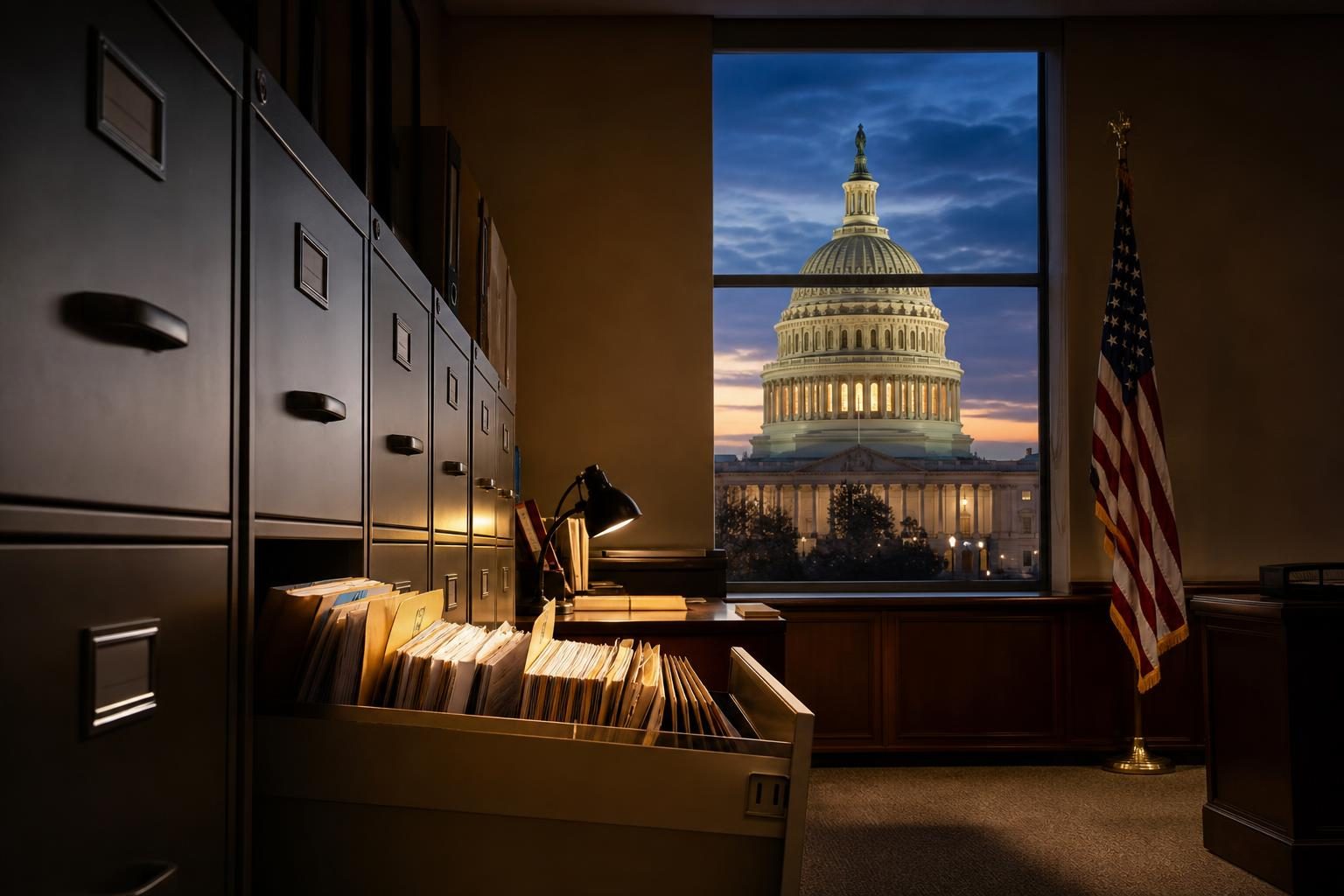
Part of our continuing coverage: The USAID Files Are Out. Here Is What They Show, and What Congress Should Ask Next
Key points
- Sen. Jeanne Shaheen and Rep. Gregory Meeks asked that the newly posted USAID files be pulled, citing privacy.
- Sen. Eric Schmitt refused, saying it's time to end the grift.
- The records center on the agency's disinformation work and its dealings with tech platforms.
- Redacting personal details answers the privacy concern without hiding officials' decisions.
Two of the most senior Democrats on foreign policy want the public to stop reading the USAID files. Sen. Jeanne Shaheen of New Hampshire and Rep. Gregory Meeks of New York, the top Democrats on the Senate Foreign Relations and House Foreign Affairs committees, wrote to Secretary of State Marco Rubio and acting USAID Administrator Bill Woolf asking that the newly posted records be taken down immediately, Breitbart reported [1]. Their letter argues that the archive contains personally identifiable information and that publishing it may violate federal law [1].
Sen. Eric Schmitt, R-Mo., answered on social media. "No way. It's time to end the grift," he wrote, adding that Democrats are running scared, according to Breitbart [1].
The privacy concern deserves a fair hearing. The answer to it is not to bury the files.
What Was Posted, and What Critics Say
The administration relaunched the old USAID website this week as an archive of internal records it calls "The USAID Files" [2]. Breitbart described the release as 248 items, about 1.1 gigabytes of emails, memos, chat logs and videos from 2021 through 2024 [1]. Reports by NewsBytes and Particle say the material centers on the agency's work against what it called disinformation and on its dealings with major technology platforms, including a disinformation primer and records of meetings with the companies [2][3].
Critics have raised two objections. A group of former aid professionals says staff names were left visible, which they warn could put former employees and foreign partners at risk [3]. Former USAID Administrator Samantha Power has called the release a distraction from what she describes as the deadly toll of deep aid cuts [3]. Some coverage also notes, fairly, that a document sitting in an archive does not by itself prove a platform removed a post or silenced a speaker [2].
Why the Records Should Stay Public
Start with whose records these are. USAID was a federal agency paid for by American taxpayers. It employed around 15,000 people worldwide before it was formally shut down in July 2025, NPR reported [4]. When an agency of that size closes, the people who paid for it have every right to see what it did with their money, and above all what it did in the sensitive business of judging speech.
That last point matters most. The First Amendment says Congress shall make no law abridging the freedom of speech, or of the press [6]. The founders wrote it so the government would never get to decide which ideas citizens are allowed to hear. When a federal agency spends public money on programs to grade, label or counter speech it considers misleading, the public needs the paperwork to judge whether that line was crossed.
Americans already have reason to ask. Earlier this year the State Department settled a lawsuit from The Daily Wire, The Federalist and the state of Texas over its now-closed Global Engagement Center. Under a court-entered consent decree that runs until 2036, the department may not fund efforts to label news outlets as disinformation, Just the News reported [5]. What remains of USAID's work now sits inside that same department. The files help show whether the kind of conduct the decree forbids reached beyond one office.
A Fair Fix for a Fair Concern
The Democrats' worry has a simple, narrow remedy: redact. Personal phone numbers, home addresses and the names of junior employees and foreign partners who could face danger abroad can be blacked out without hiding a single decision made by the officials in charge. That is ordinary work for any agency that releases records.
What Shaheen and Meeks asked for goes much further. They want the archive pulled down [1]. That would hide far more than names. The officials who designed and approved these programs made public choices with public money, and their decisions belong in the open, where voters, reporters and Congress can weigh them.
It would also shortchange the agency's own defenders. Power and other critics are free to argue that the files lack context. The best way to supply context is with more records, not fewer. If the programs were sound, the documents will show it.
Who's Pushing Back, and What Comes Next
Schmitt's answer drew the line clearly: the files stay up [1]. And the administration has said more batches of documents are coming [2][3], so this argument is only starting.
The Democrats' letter is a request, not a court order. Expect the fight to move into hearing rooms when Congress returns, where privacy arguments and oversight powers will meet head-on.
There is an easy path through it. Protect the people who could truly be hurt. Publish the rest. Let the record speak, and let the American people decide what it says.
Sources
- [1]Opens in a new tab ↗
- [2]Opens in a new tab ↗
- [3]Opens in a new tab ↗
- [4]Opens in a new tab ↗
- [5]Just the NewsState Department settles censorship lawsuit with Daily Wire, Federalist, agrees to consent decreeOpens in a new tab ↗
- [6]National ArchivesThe Bill of Rights: A TranscriptionOpens in a new tab ↗
Have you ever been censored or shadow-banned on social media?
- Yes
- I think so
- No
- I'm not on social media
More in Pushback

Yes, Ask How They'll Pay for It: Why Seven New House Democrats Have the Right Idea
Tonight on The Bottom Line with Douglas Park
A Stopgap Bill Can't Run a War: The Constitutional Trouble With Kaine's Iran Cutoff
Today on First Principles with Benjamin Stone

Work, Not Paperwork: What the 'Two Million Children' Food Stamp Headline Leaves Out
Today on The Bottom Line with Douglas Park
Were you there?
If you were at the scene, or this story touched your life, tell us what you saw and what it was like.
Discussion 0
Sign in or create a free account to join the discussion.
No comments yet. Start the discussion.