
 Today on Free Speech Frontline with Ryan Mercer
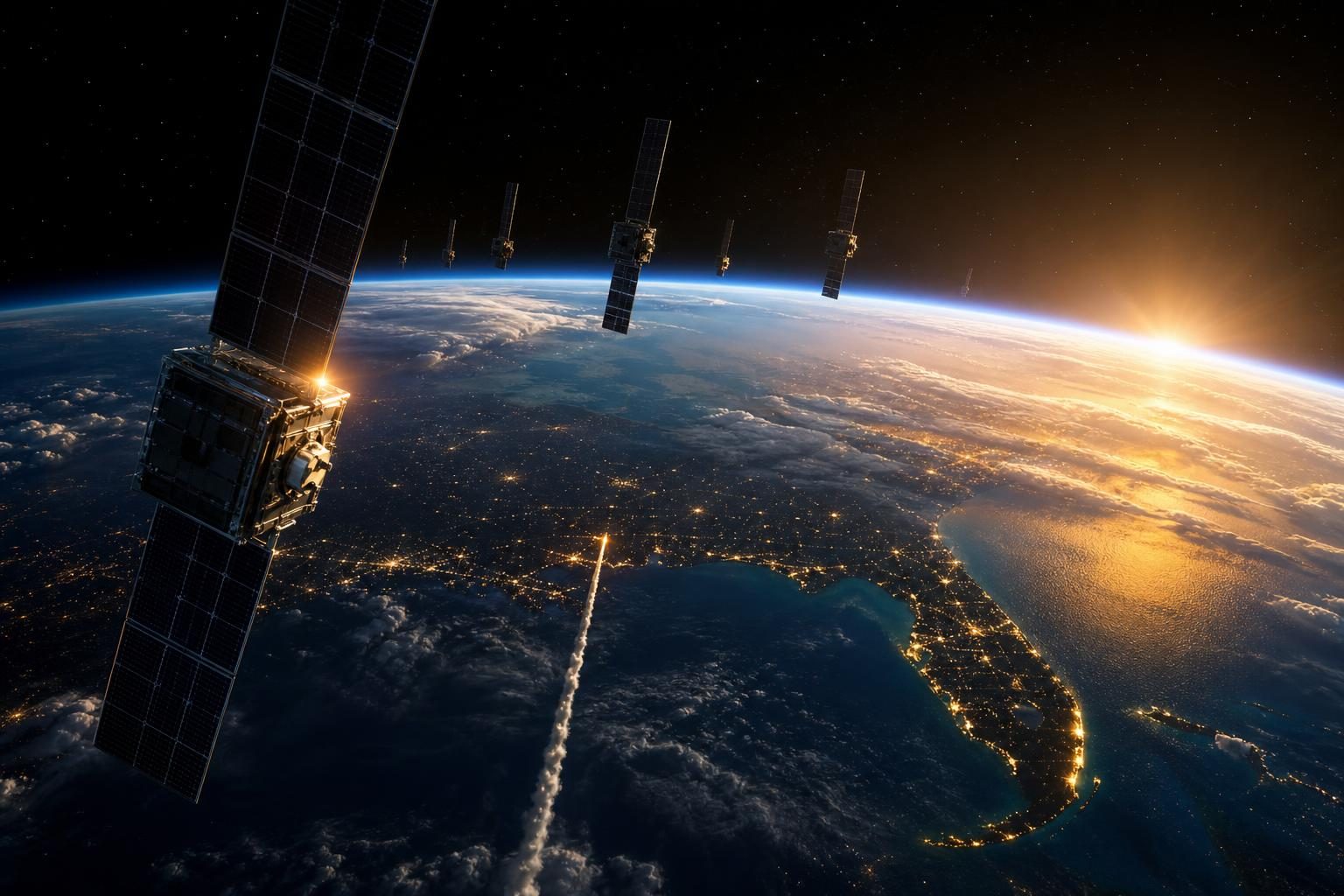
One Million Satellites, Cleared for Launch: FCC Gives SpaceX the Green Light to Put AI Data Centers in Orbit
The Starmind approval comes with a firm deadline and one deferred question, and it gives America's leading launch company a head start in moving computing power off the ground.
Filed November 25, 2026 · 📍 Washington, DC 20001
Were you there? Share your story
Key points
- The FCC authorized SpaceX to deploy up to 1 million Starmind data center satellites.
- Half must be operating by November 2038 or SpaceX loses the license.
- Amazon, Viasat and the American Astronomical Society had urged the FCC to deny it.
- SpaceX plans to begin flying Starmind satellites in 2027.
The Federal Communications Commission on Wednesday authorized SpaceX to deploy up to 1 million satellites built to work as data centers in orbit, clearing a project the company calls Starmind [1][2]. The approval, which several reports described as the first of its kind, came over objections from Amazon and other groups [1][3].
The agency described the spacecraft as "orbital compute modules" [4]. FCC Chairman Brendan Carr said in a statement that SpaceX and the many competitors working on their own orbital data centers are meeting the moment by moving computing capacity beyond Earth [3][4].
For a country locked in a race over artificial intelligence, the decision is a statement of intent. The computing power that trains and runs AI systems has become strategic infrastructure, and Washington has now told the company behind the world's largest satellite network that it may put that infrastructure in orbit under an American license.
What the FCC approved, and what it held back
SpaceX first asked for the authority in a Jan. 30 filing, seeking permission for a system of up to 1 million satellites operating between 500 and 2,000 kilometers above Earth [6]. The commission's grant is partial and comes with conditions. Under the order, SpaceX must have half of the satellites working by November 2038 or lose the license [4].
The FCC also set aside, for now, a SpaceX request to leave some satellites in higher orbits at the end of their working lives rather than bringing them down through the atmosphere. The agency said the company had not supplied enough detail about how it would dispose of them [4]. That piece matters, because space debris in crowded orbits is among the most serious concerns raised about very large constellations.
Amazon's satellite unit, the satellite company Viasat and the American Astronomical Society had all asked the commission to deny the application, according to coverage of the order [1]. The FCC set aside the environmental and optical-astronomy objections as outside its authority [1].
A running fight with Amazon
The decision sharpens a long-running dispute between the two American companies building broadband networks in space. In a March filing, Amazon called SpaceX's data center plan a "lofty ambition rather than a real plan" [5]. Carr answered by faulting Amazon for opposing the plan while it sought more time on its own obligations: the company had asked the FCC for a waiver or a 24-month extension, to July 2028, of a deadline that required it to deploy roughly 1,600 internet satellites by July 2026 [5].
Amazon did not immediately respond to a request for comment on Wednesday's approval, CNBC reported [1].
What comes next
SpaceX said on its Oct. 20 earnings call that it plans to begin flying Starmind satellites in 2027 [3]. Each one is engineered to deliver up to 250 kilowatts of peak computing power, drawing on solar arrays rated at 210 kilowatts, Investing.com reported [3].
The idea behind the project is to run AI computing on solar power in orbit instead of on the ground, where new data centers increasingly compete with homes, farms and factories for electricity and land. In many states, the data center boom has turned into a fight over power lines, water and utility bills. If even part of Starmind works, it could take some of that pressure off American families while keeping the most important computing infrastructure of the coming decade in American hands.
The skeptics' questions are real and deserve answers. A million spacecraft is an enormous number, and Amazon has argued that SpaceX is unlikely to launch them all [5]. Astronomers worry about what bright, crowded orbits mean for the night sky, and the disposal question the FCC deferred is not a small one [1][4]. The 2038 deadline gives the company a firm test it will have to meet in public.
For now, the commission has made a clear choice. The nation that leads the world in launching rockets is betting that it should also lead in what rides on top of them, and that the next great data centers do not have to be built in anyone's backyard.
Sources
Do you trust AI chatbots to give straight answers on politics?
- Yes
- Sometimes
- No, they lean left
- I don't use them
More in Technology

Intruders Reach Into Treasury's FinCEN Systems
This morning on Deep Dive with Kevin Nakamura

Judge Frees Ex-OpenAI Engineer Accused of Bugging Company Meetings on $1 Million Bond Over Prosecutors' Objections
Last night on Free Speech Frontline with Ryan Mercer

Apple Puts a Lock on Mac Files as AI Agents Come Knocking
Last night on Free Speech Frontline with Ryan Mercer
Were you there?
If you were at the scene, or this story touched your life, tell us what you saw and what it was like.
Discussion 0
Sign in or create a free account to join the discussion.
No comments yet. Start the discussion.