
 Tonight on Home Front with Carlos Mendoza
The Starter Home Is Slipping Away: Renter-to-Owner Rate Falls 46% Since 2009
A new TransUnion analysis finds just 3.9% of renters bought a home in 2025, down from 7.2% in 2009, as 7% mortgage rates, rising prices and a housing shortage push family milestones further down the road.
Filed November 24, 2026 · 📍 NY 12207
Were you there? Share your story
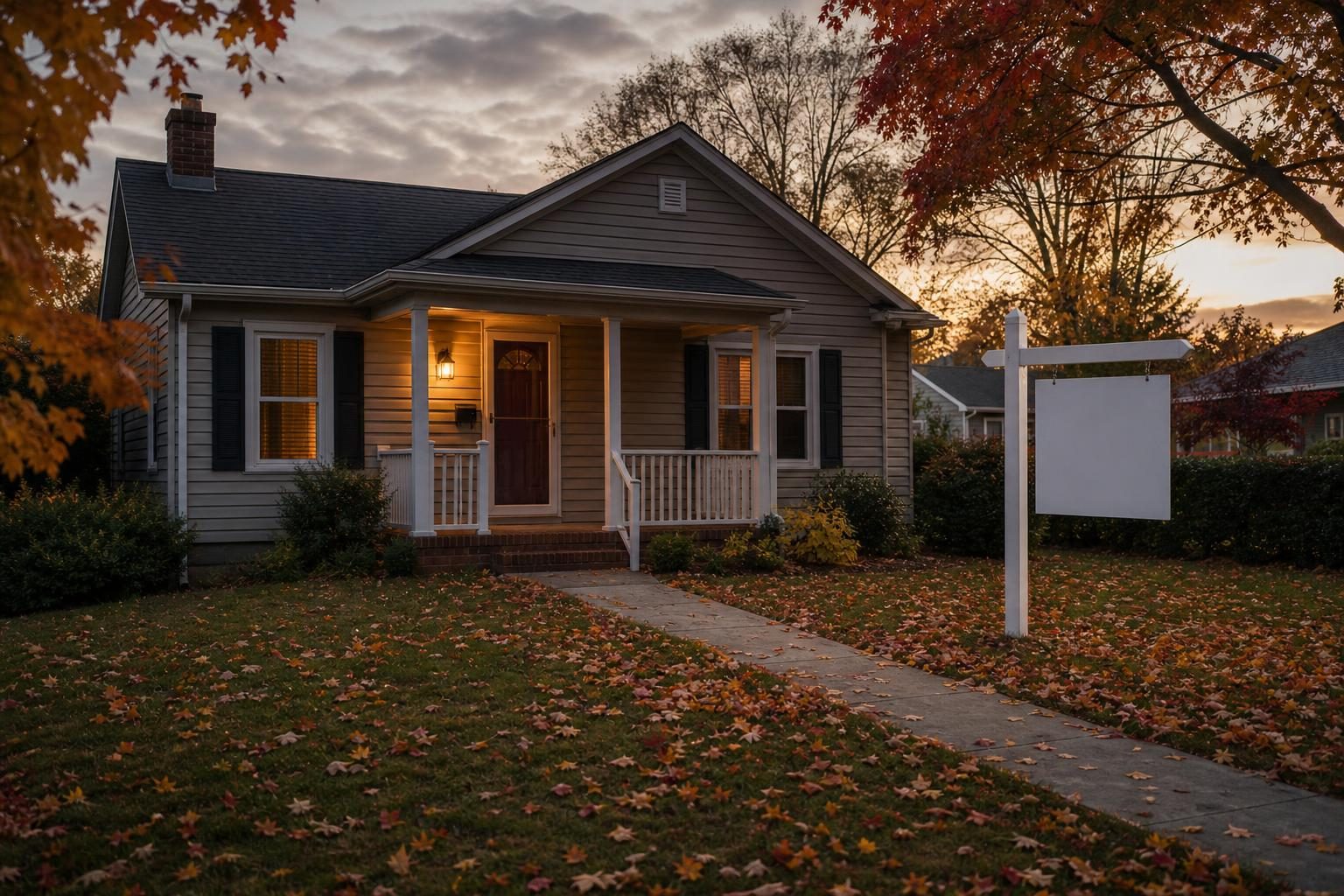
Key points
- Just 3.9% of renters bought a home in 2025, down from 7.2% in 2009, a 46% drop, TransUnion found.
- Mortgage rates hit 7.28% last week as October home sales fell to their slowest pace since 2010.
- The typical first-time buyer is now 40, and a record 25.2 million young adults live with their parents.
- White House economists estimate a shortage of at least 10 million homes, blaming overregulation and zoning.
For millions of young Americans, the path from a lease to a front-door key has narrowed to a footpath. Just 3.9% of renters bought a home last year, the New York Post reported Tuesday, citing a new analysis from the credit bureau TransUnion [1]. In 2009, that share was 7.2% [2].
The Post's headline described a 50% plunge [1], and TransUnion's own announcement called it a drop of nearly half [2]. The precise figure, according to TransUnion, is a 46% decline in the rate at which renters become owners [2]. Put another way, by our math, for every 100 renters who made the leap in 2009, about 54 do so today.
That is not only a statistic about real estate. A first home has long been where American families put down roots: where a young couple joins a parish, learns the neighbors' names and makes room for a crib. When that first rung moves out of reach, much of what normally follows it is put on hold, too.
What the TransUnion Data Shows
The renter figure appears in TransUnion's 2027 Personal and Commercial Lines Annual Insurance Outlook, released Nov. 17 [2]. The company's interest is insurance. It found that economic pressures are leading fewer consumers to buy homes and vehicles, leaving insurers to compete for a shrinking pool of new policyholders [2].
The report also tracked where Americans are moving. Texas, Florida, North Carolina, South Carolina and Tennessee recorded the highest inbound migration rates in the country, TransUnion said, and all five carry elevated exposure to hurricanes, severe storms and other catastrophic weather [2]. Patrick Foy of TransUnion said insurers that can accurately sort high-value renters and homeowners still have room to grow, though he tied much of that growth to elevated weather risk [2]. Foy also suggested insurers stay visible to renters so they are front of mind when those customers finally buy [2].
The Post connected the slide to soaring mortgage rates and home prices that have pushed monthly payments beyond many household budgets, and to a typical first-time buyer who is now a record 40 years old [1].
Rates and Prices: The Math Has Broken
The average rate on a 30-year mortgage rose to 7.28% last week, the first increase since early October, as government bond yields climbed on signs that inflation is heating up again, The Washington Times reported [3].
Those rates are choking off sales. Existing-home sales fell to a seasonally adjusted annual pace of 3.75 million in October, the slowest since August 2010 and 8.8% below a year earlier, according to the National Association of Realtors [4]. NAR's chief economist pointed to mortgage rates that have climbed to their highest levels since 2000, apart from a single month in 2023 [4]. In the West, sales were down 14.5% from a year earlier [4].
Prices, meanwhile, are not coming down. The national median price of an existing home was $416,700 in October, up 0.4% from a year earlier, NAR said. That was the 40th straight month of year-over-year gains, though the smallest increase since February [4]. The group's housing affordability index fell to 100.7, its lowest reading since mid-2025 [4].
Consider what that means for a young family. By our math, a buyer who puts 10% down on a median-priced home and borrows the remaining $375,030 at 7.28% faces a principal-and-interest payment of about $2,566 a month, before property taxes and homeowners insurance. Saving the $41,670 down payment while also paying rent is its own mountain to climb.
Waiting Until 40
The age figure deserves a second look. According to the National Association of Realtors data cited by the Post, the typical first-time buyer is now 40 [1]. That is an age when many parents are already helping a child with middle-school homework. Today, a growing share of Americans are signing their first mortgage at that stage of life, if they sign one at all.
The arithmetic of delay is unforgiving. By our math, a buyer who takes out a 30-year mortgage at 40 will be making payments until 70, a decade longer than one who starts at 30. Every year spent renting in the meantime is a year of housing payments that builds no equity for the family.
The delay starts early. As this site reported Monday, a record 25.2 million Americans ages 18 to 34 lived with their parents in 2025, roughly one in three, according to a Realtor.com analysis reported by Fox Business [5]. About seven in 10 of the 25- to 34-year-olds living at home are working, and Realtor.com senior economist Hannah Jones told Fox Business the trend reflects a shortage of housing, not of jobs [5].
There is nothing shameful about families living together; households have always helped their own. But a generation that is employed, saving and still unable to move out is not failing the system. The system is failing to build what that generation needs.
Why Supply Comes First
The deepest problem is that America has not built enough homes. In April, White House economists estimated the nation is short at least 10 million single-family homes, a higher figure than many earlier estimates, PBS NewsHour reported [6]. The Council of Economic Advisers blamed much of the gap on overregulation, including exclusionary zoning practices and Biden-era green energy mandates such as stricter efficiency standards, and estimated that regulation adds more than $100,000 to the cost of building a home [6]. Reducing that burden, the report said, could help spur construction of as many as 13.2 million homes [6].
Critics have questioned the council's methodology, and most other estimates put the national shortage well below 10 million [6]. But nearly everyone agrees on the direction: more homes, built faster and at lower cost.
Zoning is where that fight is won or lost, and it is largely a local decision. An administration official said President Trump could make some federal funding for state and local governments contingent on reducing regulations [6]. Conservatives who prize local control should still cheer towns that choose, on their own, to allow smaller lots, modest starter homes and duplexes. Those are the homes young couples can actually afford.
Churches, charities and local builders have a part to play as well. Congregations with underused land, and towns willing to approve modest homes on it, can do more for young families than another federal program.
What Would Help, and What Would Not
Rates are the second lever. Mortgage rates have followed government bond yields higher on fears of renewed inflation [3]. The most durable relief for buyers would come from bringing inflation down and restraining Washington's appetite for borrowing, not from short-term gimmicks.
That argues for caution about proposals that pump up demand without adding supply. Programs that let buyers borrow more with less money down can sound compassionate, but when the number of homes stays fixed, extra buying power tends to show up as higher prices. Loosening lending standards to chase homeownership numbers ended badly the last time Washington tried it.
Families also need stability as much as subsidies. A household that can predict its payment, its taxes and its insurance bill can plan for children, giving and college. TransUnion's finding that new buyers are heading toward states with higher weather exposure [2] is a reminder that insurance costs belong in the affordability conversation, too.
The next read on the market comes Dec. 9, when NAR is scheduled to release November existing-home sales [4]. Until builders are freed to build and rates ease, that 3.9% figure is likely to remain a sobering measure of how far the American dream has drifted from the young families who should be starting it.
Sources
- [1]New York PostNumber of renters becoming homeowners plummets by 50% as Americans struggle with affordabilityOpens in a new tab ↗
- [2]GlobeNewswire (TransUnion)TransUnion Finds Nearly 50% Drop in Renters Becoming Homeowners, Reshaping Property Insurance MarketOpens in a new tab ↗
- [3]The Washington TimesThe average U.S. 30-year mortgage rate rises to 7.28% this week, ending a four-week slideOpens in a new tab ↗
- [4]National Association of RealtorsExisting-Home Sales Decreased 5.5% in OctoberOpens in a new tab ↗
- [5]Opens in a new tab ↗
- [6]PBS NewsHourThe US is short 10 million houses. A new White House report lays out a blueprint to fix thatOpens in a new tab ↗
Would you move to another state for lower costs?
- Already did
- Thinking about it
- No, I'm staying put
More in Real Estate & Housing
Split NY Court Upholds Section 8 Mandate on Landlords
Last night on From the Bench with Margaret Callahan
21 Attorneys General Sue to Block HUD's Proof-of-Status Rule for Taxpayer-Funded Housing
Yesterday on Home Front with Carlos Mendoza
Record 25 Million Young Adults Still Living With Mom and Dad
Yesterday on Home Front with Carlos Mendoza
Were you there?
If you were at the scene, or this story touched your life, tell us what you saw and what it was like.
Discussion 0
Sign in or create a free account to join the discussion.
No comments yet. Start the discussion.