
 Today on Free Speech Frontline with Ryan Mercer
Why Security Experts Are Saying No to Google Powering Al Jazeera's Newsroom
Qatar's state-funded network has launched 'The Core,' a news system built on Google Cloud. Al Jazeera says humans stay in charge. Critics say American technology should not amplify a foreign government's message.
Filed November 21, 2026 · 📍 Washington, DC 20001
Were you there? Share your story
Key points
- Al Jazeera launched the first phase of 'The Core,' a newsroom system built with Google Cloud as its main technology provider.
- The network says its journalists and editors make every editorial decision and that humans stay in the loop.
- Critics at the Foundation for Defense of Democracies warn the system could let a state-backed outlet mass-produce its content.
- Proposals include requiring tech companies to disclose and label when products rely on foreign state-directed media.
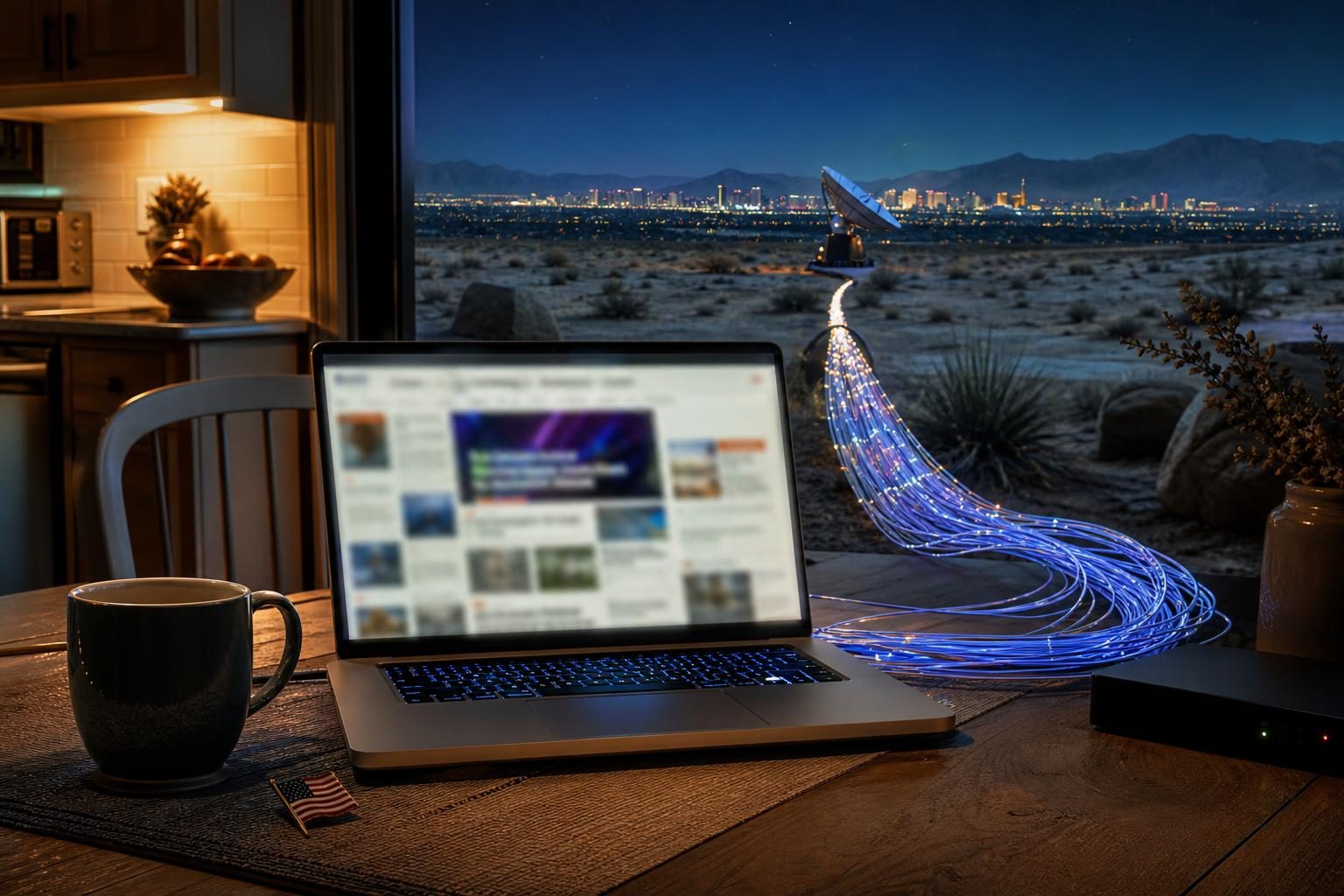
When an American technology giant builds the engine for a foreign government's news network, Americans have a right to ask who benefits. That question is now front and center after Al Jazeera switched on the first phase of a new newsroom system built on Google Cloud.
What Al Jazeera and Google say
Al Jazeera announced the project, called The Core, in December 2025, describing it as part of an expanded collaboration in which Google Cloud serves as the network's primary technology provider, according to NewscastStudio [1]. The network launched the first phase on its 30th anniversary this month, The Daily Signal reported [2].
Al Jazeera's position is that people remain in charge. The network told The Daily Signal that editorial decisions are made by its journalists and editors, and it has said humans stay involved at every stage of any work that technology tools assist [2]. Jewish Insider reported that the network has described a language-model component as the "editorial brain" of the system [3]. Google referred reporters to its press release, according to The Daily Signal [2].
The answer: follow the money and the message
Al Jazeera is not an ordinary news company. It is funded by the government of Qatar, and lawmakers in both parties have described it as a state-controlled propaganda arm, Jewish Insider reported [3].
Critics say that history matters when the network gains powerful new tools. Toby Dershowitz of the Foundation for Defense of Democracies warned that feeding Al Jazeera's archives into such a platform would let the network mass-produce new versions of its material, The Daily Signal reported [2]. In an analysis published earlier this year, Dershowitz and a colleague argued that Western technology companies should not be partnering with the network at all [4].
The concern is not abstract. More and more Americans get their news through search results and automated summaries. A Washington Free Beacon analysis last year found that Al Jazeera was a leading source for automated news summaries on Israel and Gaza produced by major American platforms [5]. When a foreign government's outlet becomes a default source inside American products, it gains influence that no paid advertising campaign could buy.
Common sense, not censorship
This is not a call to ban anyone's journalism. Americans are free to read Al Jazeera, and the First Amendment protects that freedom. The question is narrower and fair: should American companies supply the infrastructure that helps a state-backed network scale its message, and should American users know when that content is shaping what they see?
The FDD analysis proposed two practical answers. Congress could require companies with these products to disclose how much foreign state-directed media is used in their training data, retrieval systems or outputs, and companies could clearly label summaries that rely on such sources [4][6]. Those are transparency measures, the same kind of sunlight conservatives have long demanded from Big Tech on everything from political ads to content moderation. They do not silence any outlet. They simply let Americans see who is behind the information they rely on, and decide for themselves how much to trust it. A free people can handle the truth about their sources; what they cannot do is weigh influence they are never told about.
Who is pushing back
National security experts have raised alarms about the partnership since it was announced, Jewish Insider reported [3]. Sen. Tom Cotton told the Free Beacon that American companies should not rely on networks that sympathize with terrorists for anything, especially news about the Middle East [5]. Parents who already worry about what their children see online have one more reason to ask where the answers on their screens come from.
What comes next
With Congress changing hands in January, technology policy will remain one of the few areas where both parties have shown interest in working together. A simple disclosure rule for foreign state-directed media would be a good place to start. Until then, Google owes its American customers a clear explanation of what it is building, for whom, and with what safeguards.
Sources
- [1]Opens in a new tab ↗
- [2]The Daily SignalGoogle's Al Jazeera AI News Partnership Raises Concerns About Islamist Bias, Foreign InfluenceOpens in a new tab ↗
- [3]Jewish InsiderGoogle's AI partnership with Al Jazeera raises concerns among national security expertsOpens in a new tab ↗
- [4]Foundation for Defense of DemocraciesShould Western Tech Giants Partner With Pro-Hamas Network Al Jazeera?Opens in a new tab ↗
- [5]The Washington Free Beacon'Reliable' Al Jazeera Is Top Source for OpenAI and Google-Powered AI News Summaries on Israel and GazaOpens in a new tab ↗
- [6]Opens in a new tab ↗
Have you ever been censored or shadow-banned on social media?
- Yes
- I think so
- No
- I'm not on social media
More in Pushback
Security First, Then the Truth: What the President Actually Said About the FBI Breach, and the Record Behind His 'Russia Hoax' Point
Today on The Briefing Room with Claire Donovan
The Facts Behind 'Clean' Wind: A Federal Study Counts 18.7 Million Dead Bats, and Farmers May Pay the Price
Today on The Power Grid with Priya Desai

Speech Is Not Harassment: Why the First Amendment Stands With the Colorado Shop Owners Fighting the State's Pronoun Law
Today on First Principles with Benjamin Stone
Were you there?
If you were at the scene, or this story touched your life, tell us what you saw and what it was like.
Discussion 0
Sign in or create a free account to join the discussion.
No comments yet. Start the discussion.