
 Tonight on Main Street Money with Marcus Hale
Waiting Until January Would Cost Families: Why the House Should Pass Permitting Reform Now
Progressive House Democrats want to block the Senate-passed permitting bill or wait for a Democratic majority in January, but independent modeling shows the deal would lower power costs and emissions at the same time.
Filed November 24, 2026 · 📍 Santa Fe, NM 87501
Were you there? Share your story
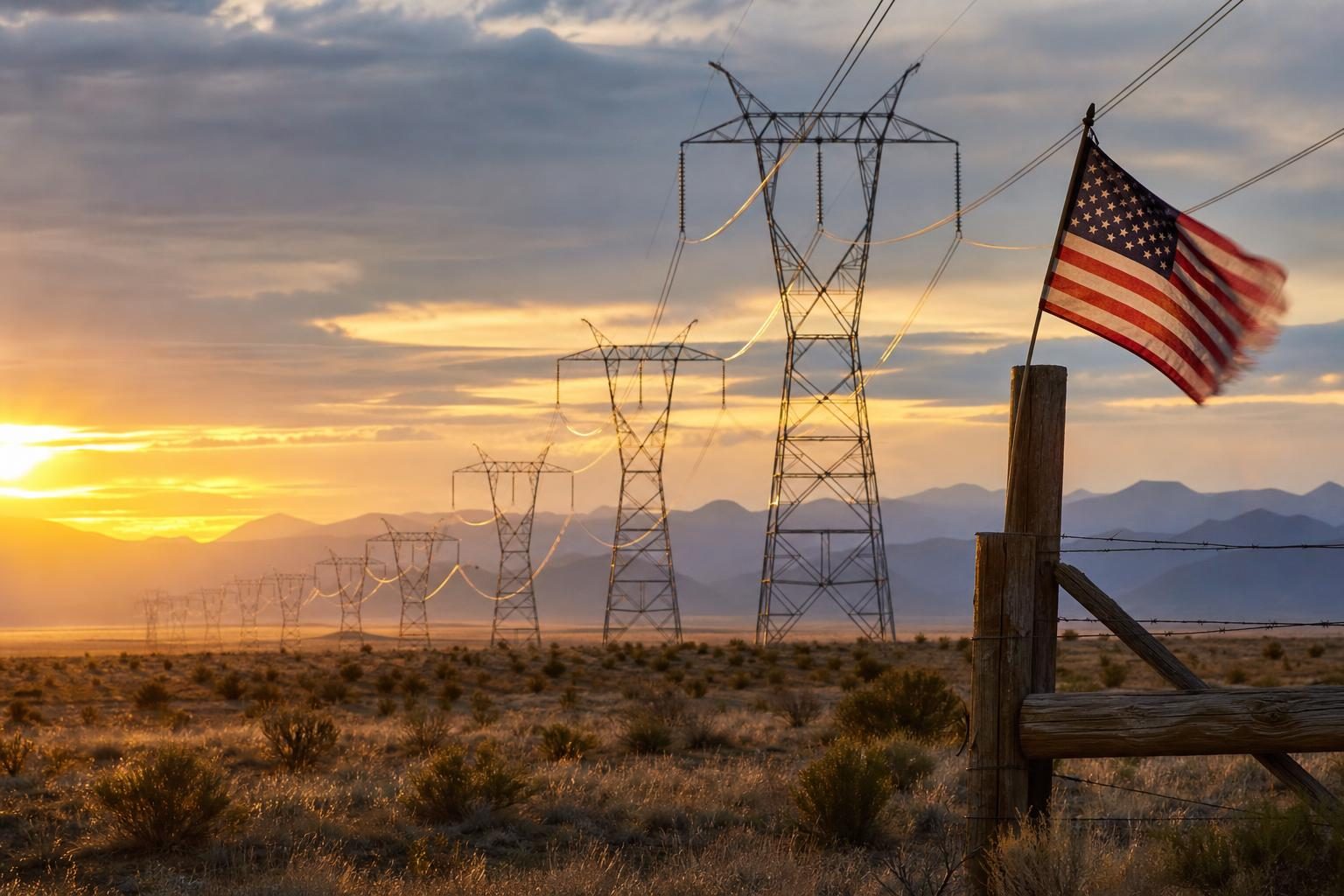
Part of our continuing coverage: Army Corps Takes a Second Look at Atlantic Shores Wind Permit as Senate Sends Permitting Overhaul to the House
Key points
- Progressive House Democrats, led in part by Rep. Melanie Stansbury, want the Senate-passed BAAJA defeated or delayed until the new Democratic majority arrives.
- Resources for the Future projects more than $350 billion in power-sector savings through 2050 and lower national electricity prices.
- Rhodium Group estimates household power bills $50 to $78 a year lower in 2040, and RFF projects about 1.8 billion tonnes less power-sector carbon through 2041.
- The bill passed the Senate 62-33 with 14 Democrats and one independent; even opponent Rep. Mike Levin sees 'real promise on costs.'
A bill that would let America build power lines, power plants and pipelines faster cleared the Senate last week with votes from both parties [4]. Now a bloc of progressive House Democrats wants to stop it, or at least push it into next year, when their party takes the House majority [1][2].
What the Progressives Are Saying
Progressive Democrats in the House are pushing back on the Bipartisan American Affordability and Jobs Act, the permitting overhaul known as BAAJA, Bloomberg reported Tuesday [1]. Rep. Melanie Stansbury of New Mexico, standing with tribal leaders, urged colleagues to vote the bill down as written or, at the least, wait about six weeks for the incoming Democratic majority to rework it, according to Source NM [2]. Fellow New Mexico Democrats Teresa Leger Fernández and Gabe Vasquez have also come out against the current version, Source NM reported [2].
Rep. Mike Levin of California, a clean energy advocate, said Monday he will vote no, citing the bill's effects on the environment, tribal sovereignty and fossil fuel development, The Hill reported [3]. Yet Levin's own statement acknowledged "real promise on costs," and he left the door open to voting yes if leaders negotiate changes [3].
The concerns of tribal nations deserve a serious hearing, and nothing here dismisses them. But the core argument, that Congress should shelve a bipartisan deal and start over in January, does not hold up against the numbers.
What the Numbers Say
Start with the household budget. Resources for the Future, an independent research organization, modeled the bill's effect on the power sector and projected savings of more than $350 billion through 2050 in present-value terms, along with lower national electricity prices [5]. Rhodium Group estimated that household electricity bills would run $50 to $78 a year lower in 2040 than they would without the bill, according to a summary by the World Resources Institute [6]. The same summary notes RFF's projection that the cost of the entire power system would fall by 3.5% to 7% [6].
The reason is not complicated. When new power plants and transmission lines can be permitted and connected sooner, lower-cost electricity reaches the grid sooner [6]. Every year a project sits in review is a year its costs climb while families keep paying the old rates. Delay is not a neutral choice. Someone pays for it, and it is usually the household checking its electric bill each month.
Now the environment. Progressives warn that the bill will help fossil fuel development [3]. Yet RFF's modeling found that, compared with doing nothing, the bill would reduce cumulative power-sector carbon emissions by about 1.8 billion tonnes through 2041 [5]. In fairness, RFF studied only the power sector and left out mining, pipelines and other activities the bill touches [5]. But opponents have not offered modeling showing the reverse. A reform that lowers costs and, by the left's own climate yardstick, lowers emissions is a strange thing for climate-minded lawmakers to block.
Who Is Pushing Back
The strongest answer came from the Senate itself. The bill passed 62-33, and NPR reported that 14 Democrats and one independent joined most Republicans to send it to the House [4]. That is not a party-line measure forced through by one side. It is the rare compromise that negotiators in both parties could live with.
Even Levin's statement makes the case for finishing the job rather than abandoning it. A lawmaker who sees real promise on costs and is open to a yes vote [3] is a lawmaker who can be won over with targeted fixes, not a reason to scrap the whole bill.
The wait-until-January pitch also carries its own price. A bill that does not pass before this Congress ends must begin again: new text, new committee work and a new Senate vote, with no guarantee that 62 senators line up a second time. Families facing another winter of heating bills should not be asked to bet on that.
What Comes Next
The decision now rests with the House, which has only weeks left before the new Congress is sworn in [2]. The place to start is the tribal consultation language that Stansbury and tribal leaders have flagged [2], along with the specific changes Levin says would earn his vote [3].
But House members should not throw away a bipartisan deal that independent analysts project would lower electricity costs and emissions at the same time [5][6]. Good stewardship of the land God gave us means building wisely, not refusing to build. And an affordability agenda that stalls the most promising affordability bill in years is not much of an agenda.
Sources
- [1]Opens in a new tab ↗
- [2]Opens in a new tab ↗
- [3]Opens in a new tab ↗
- [4]Opens in a new tab ↗
- [5]Resources for the FutureProjected Effects of the Bipartisan American Affordability and Jobs Act on the Power SectorOpens in a new tab ↗
- [6]World Resources InstituteThe Bipartisan American Affordability and Jobs Act energy permitting bill, explainedOpens in a new tab ↗
Have you ever been censored or shadow-banned on social media?
- Yes
- I think so
- No
- I'm not on social media
More in Pushback

Mocking the Mass Isn't Edgy: Why Catholics Are Saying No to Netflix's 'The Body'
Tonight on The Vance Edge with Sienna Vance

The Port of Seattle Raised Your Property Taxes 8.2%. Voters Never Got a Say
Today on The Bottom Line with Douglas Park
Every Culture but One? Hunter College Owes Its Jewish Students the Same Stage
Today on Report Card with Rebecca Hartman
Were you there?
If you were at the scene, or this story touched your life, tell us what you saw and what it was like.
Discussion 0
Sign in or create a free account to join the discussion.
No comments yet. Start the discussion.