
 This morning on Main Street Money with Marcus Hale
NEW TARIFF WAVE TAKES AIM AT CHINA, EU AND 14 MORE
The administration is readying duties on most goods from 16 economies it says flood the world with subsidized output, with China facing the highest rate, the Wall Street Journal reports.
Filed November 24, 2026 · 📍 Wall Street, NY 10005
Were you there? Share your story
Key points
- New tariffs would hit most goods from China, the EU and 14 other economies, the Journal reports
- China is expected to pay the most; the EU, Japan and South Korea 15% or lower
- Trade Representative Greer could announce findings as soon as this week
- The Section 301 case replaces emergency tariffs the Supreme Court struck down
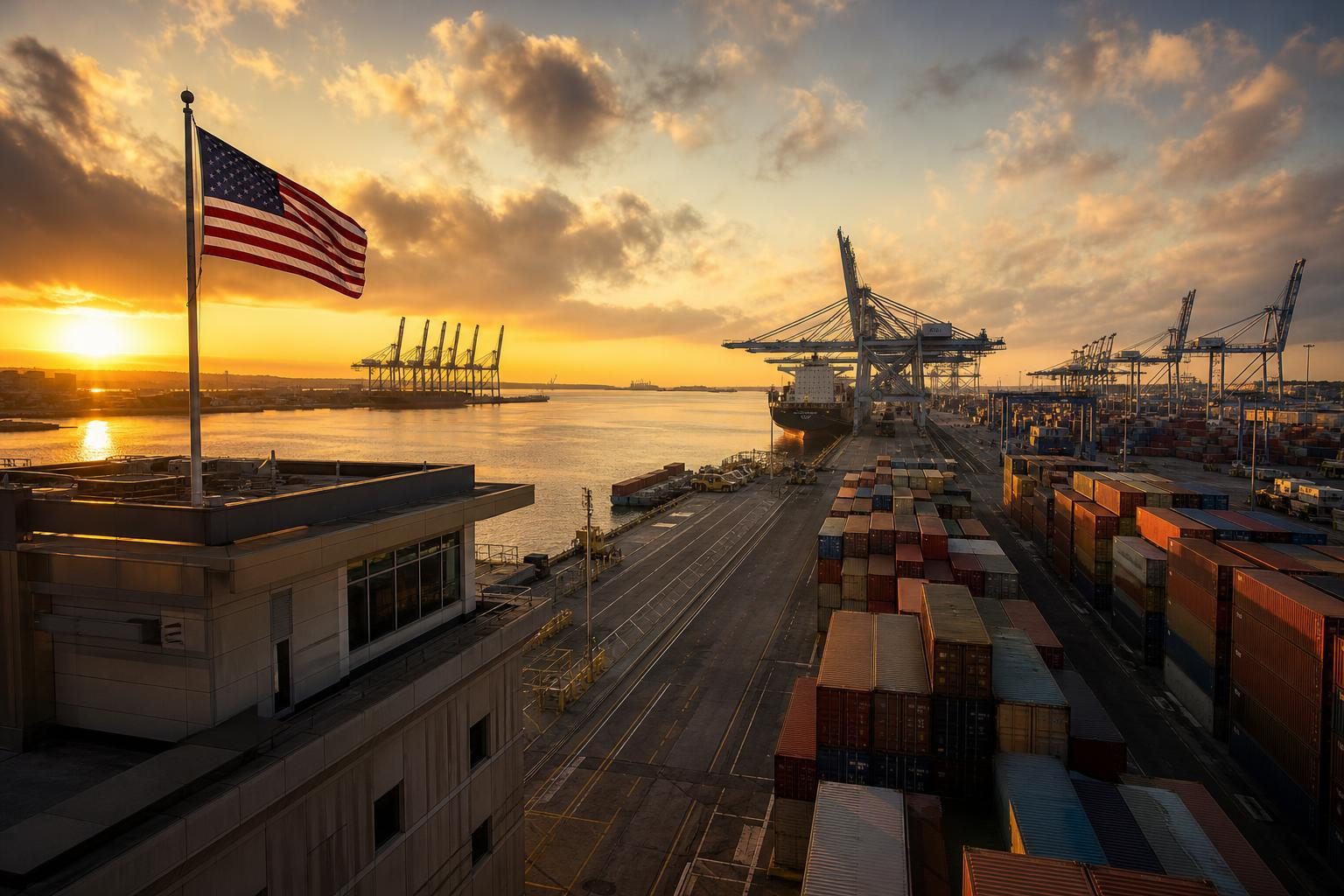
The Trump administration is getting ready to put new tariffs on most goods from China, the European Union and 14 other economies, The Wall Street Journal reported Tuesday, according to accounts of the report [1][2]. China would likely pay the steepest rate. Officials argue that Beijing's industrial subsidies are especially large and do the most damage to the world economy [1][2].
According to those accounts, U.S. Trade Representative Jamieson Greer could announce the findings of his months-long investigation into foreign factory overcapacity as soon as this week. The timing could still change [1][2]. The European Union, Japan and South Korea are expected to face rates of 15 percent or lower. Vietnam and India could face higher rates, depending on where their trade talks with Washington stand [1][2]. Steel, aluminum and autos would reportedly be left out [1].
Where the Probe Came From
The tariffs would come out of a set of Section 301 investigations that Greer's office opened on March 11 [3]. They target what USTR calls structural excess capacity in manufacturing in 16 economies: China, the EU, Japan, South Korea, Taiwan, India, Mexico, Vietnam, Thailand, Malaysia, Indonesia, Cambodia, Bangladesh, Singapore, Switzerland and Norway [3].
The administration opened the probes after the Supreme Court struck down the broad global tariffs President Trump had imposed under a national emergencies law, Reuters reported [4]. Section 301 tariffs were not part of that case. Any challenge to them would first go to the Court of International Trade [5].
Greer has also signaled that he will honor the deals he already made. In September he said tariff caps negotiated with partners would be weighed in the probe. The EU, Japan and South Korea secured a 15 percent ceiling on U.S. tariffs in their deals, and Greer has said "a deal's a deal" [4].
Why It Matters
The administration's case is simple: American factories should not have to compete against industries that foreign governments prop up with subsidies and state-directed overbuilding [1][3]. That is a fight worth having for the workers in factory towns from Ohio to the Carolinas who have watched cheap foreign output undercut them. A Section 301 case also builds the record country by country, under a law Congress wrote, instead of relying on emergency powers the courts have already rejected [3][4][5].
There are risks. New tariffs can raise prices at the checkout, and trading partners could hit back with tariffs of their own.
What happens next depends on the fine print: which countries land in the higher tiers, what goods are covered, and whether partners can buy their way down with new market openings. Greer has said the investigation will wrap up "very soon," and certainly by year's end [6]. Families and factory owners will be watching which numbers he puts on the table.
Sources
- [1]Opens in a new tab ↗
- [2]Opens in a new tab ↗
- [3]Office of the U.S. Trade RepresentativeFact Sheet: USTR Initiates Section 301 Investigations into Structural Excess Capacity and Production in Manufacturing SectorsOpens in a new tab ↗
- [4]BusinessWorld (Reuters)US trade chief to consider trade deal tariff caps in excess capacity probeOpens in a new tab ↗
- [5]International Trade InsightsUSTR Announces New Section 301 Investigation Into "Structure Excess Capacity and Production"Opens in a new tab ↗
- [6]Opens in a new tab ↗
Should towns welcome AI data centers?
- Yes, they bring jobs and tax money
- Only if they pay their own power costs
- No, they strain water and the grid
More in Business & Economy

Stripe Eyes $200 Billion Price Tag in Employee Share Deal
This morning on Code & Coin with Kendall Price

Consumer Confidence Rockets to a Near Two-Year High
This morning on The Hart of the Economy with Evelyn Hart
Boeing Lands Its Biggest China Jet Order in Years
This morning on Open Road with Frank Kowalski
Were you there?
If you were at the scene, or this story touched your life, tell us what you saw and what it was like.
Discussion 0
Sign in or create a free account to join the discussion.
No comments yet. Start the discussion.