
 Yesterday on The Bottom Line with Douglas Park
The Facts Don't Back Up Ro Khanna's $1,700 War Check. Borrowed Money Can't Pump More Oil.
The California Democrat wants a refund for every family to offset higher prices tied to the Iran war. A $2 trillion deficit and the inflation lesson of 2021 argue for a different answer.
Filed November 17, 2026 · 📍 Pentagon, VA 22202
Were you there? Share your story
Key points
- Rep. Ro Khanna is pitching a $1,700 refund check for every American family to cover higher gas, food and electricity bills tied to the Iran war.
- The federal government just closed fiscal 2026 with a $2 trillion deficit, and debt held by the public reached 100% of GDP, the highest since 1946.
- A San Francisco Fed study found pandemic-era fiscal support raised U.S. inflation by about 3 percentage points by the end of 2021.
- The price spike is a supply problem; more checks add demand without adding a single barrel of oil.
Rep. Ro Khanna of California has a simple pitch for a war-weary country: send every American family a $1,700 check. The Democrat says the payment would cover the higher gas, food and electricity bills that families have absorbed since the war with Iran disrupted oil shipping routes, according to Fox News, which reported that Khanna called the idea "a chance to deliver" [2]. The Hill reported that he wants the House and Senate to pass the payments in the first week of January [1].
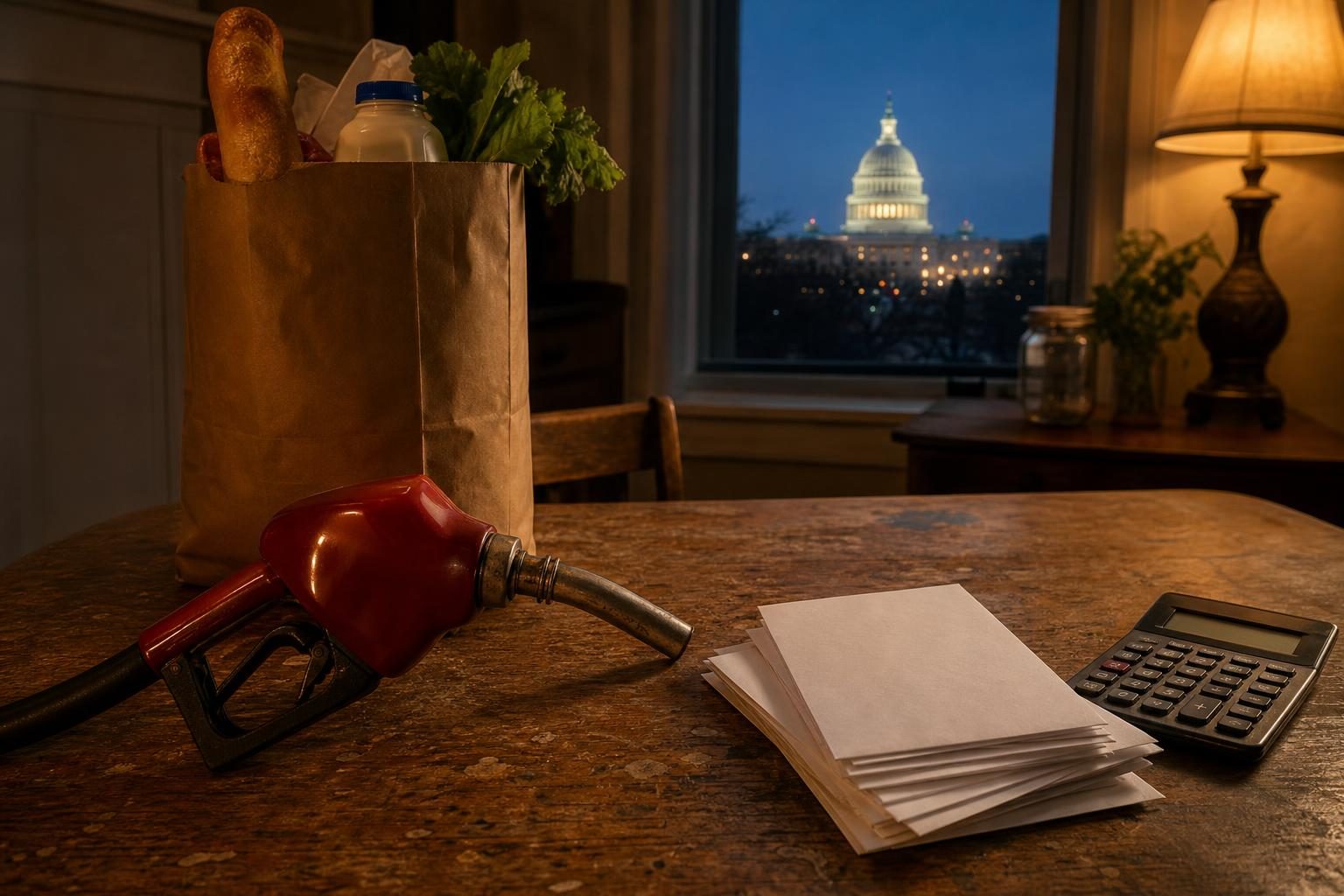
It is fair to say what is true in Khanna's case. Families have paid more. Fox News reported that the national average for gasoline climbed above $4 a gallon at its peak before easing to about $3.81 on Monday [2]. Khanna's September bill, which he calls the Illegal War Refund Act, cites an estimate from Moody's economist Mark Zandi that the conflict has cost Americans about $230 billion, or roughly $1,760 per household, and would redirect an equal amount from the Pentagon to the Treasury for payments to taxpayers [4]. Those are real numbers and real kitchen-table costs.
But a check is the wrong answer to them, and the record shows why.
The Money Isn't There
Washington does not have $1,700 per family sitting in a drawer. The federal government closed fiscal 2026 with a deficit of about $2.0 trillion, up $217 billion from the year before, according to the American Action Forum's review of Congressional Budget Office figures [5]. Debt held by the public reached $32.4 trillion, or 100% of the economy, the highest share since 1946 [5].
Khanna's answer is to take the money from the Defense Department. That is a choice to cut the military before the conflict is over. And even on its own terms, shifting dollars from one account to another does not change the larger picture: Washington spent about $7.4 trillion last year while collecting about $5.4 trillion [5], borrowing roughly one of every four dollars it spent.
We Have Run This Experiment Before
The country has already tested the idea that mailing out money eases a cost-of-living squeeze. In 2022, economists at the San Francisco Federal Reserve estimated that pandemic-era fiscal support raised U.S. inflation by about 3 percentage points by the end of 2021, Fox Business reported [6]. That aid came during a genuine emergency, and that is the fair way to read it. But the lesson for today is plain: when Washington pumps cash into households faster than the economy can produce goods, prices rise.
That lesson matters more now, not less. The war's price shock is a supply problem. Even Khanna frames the cost as the result of disruptions to the routes that carry oil [2]. A $1,700 check does not put one more barrel of crude on a ship or one more truckload of groceries on a shelf. It adds buying power chasing the same limited supply, which is the recipe for the very inflation it claims to fix.
The Better Answer
The relief families need comes from more supply and a faster end to the conflict. Gasoline prices have already eased from their peak [2]. American energy production, open shipping lanes and a firm finish to the war will do more for a family's budget than a one-time payment financed with borrowed money that our children will repay with interest.
Conservatives should apply the same test to their own side. Earlier check ideas floated on the right, including a proposed "DOGE dividend," never materialized either [3]. The principle is the same whichever party proposes it: a government running $2 trillion deficits should not be in the business of election-season mailers.
What Comes Next
No refund has been enacted, and Khanna's September bill launched with only five original cosponsors [4]. Its fate will rest with the new Congress that convenes in January. When the debate begins, the question for every member of Congress should be simple: will this lower prices, or just raise the debt? On the evidence, Khanna's check does the second and not the first.
Sources
- [1]Opens in a new tab ↗
- [2]Fox NewsRo Khanna pitches $1,700 checks for Americans to offset Iran war costs: 'A chance to deliver'Opens in a new tab ↗
- [3]Benzinga'Give Every American Family a $1700 Check': Ro Khanna Says Compensate American Families for Iran WarOpens in a new tab ↗
- [4]Quiver QuantitativePress Release: Rep. Ro Khanna Introduces Illegal War Refund ActOpens in a new tab ↗
- [5]American Action ForumCBO: FY 2026 Budget Deficit Totaled $2 TrillionOpens in a new tab ↗
- [6]Opens in a new tab ↗
Have you ever been censored or shadow-banned on social media?
- Yes
- I think so
- No
- I'm not on social media
More in Pushback
Sanders Puts Medicare for All on a Four-Year Clock. The 154 Million Americans With Job-Based Coverage Deserve Answers First
Today on The Bottom Line with Douglas Park
Hochul Wants Answers on an ICE Site in Batavia. New York's Own Law Is Why It's Being Built
Today on Border Watch with Cole Brennan
A 25-Year-Old Network Isn't a Bargain: The Facts Behind the Fight Over Duffy's $50 Billion Air Traffic Plan
Today on Open Road with Frank Kowalski
Were you there?
If you were at the scene, or this story touched your life, tell us what you saw and what it was like.
Discussion 0
Sign in or create a free account to join the discussion.
No comments yet. Start the discussion.