
 On Monday on The Power Grid with Priya Desai
Democratic States Want the Carbon Capture Mandate Back. The Facts on Cost, Reliability and the Law Say No.
As the EPA's repeal takes effect, 21 states ask a federal appeals court to restore rules built on carbon capture that has struggled to work at scale.
Filed November 16, 2026 · 📍 Washington, DC 20001
Were you there? Share your story
Key points
- The EPA's repeal of the 2024 power plant carbon rules took effect Monday as 21 states sue.
- Federal auditors found seven of eight federally backed coal carbon capture projects were never built.
- NERC forecasts 224 gigawatts of added summer peak demand within a decade, mostly from data centers.
- West Virginia and 24 other states back the EPA as the D.C. Circuit weighs the case.
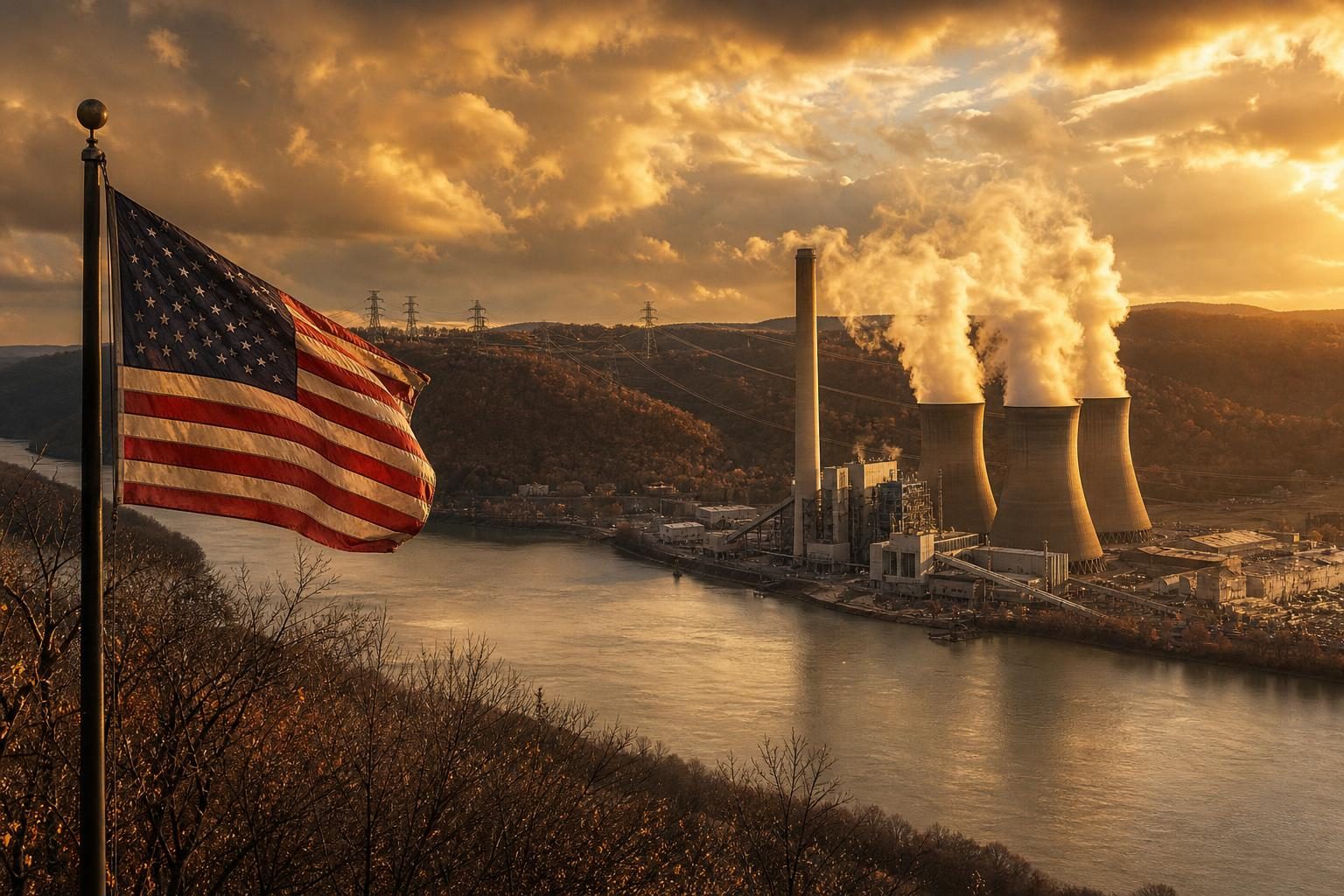
The Environmental Protection Agency's repeal of the Biden administration's 2024 power plant carbon rules took effect Monday, and a coalition of Democratic-led states is asking a federal appeals court to bring those rules back, The Daily Caller reported [1].
New York Attorney General Letitia James is leading the challenge in the U.S. Court of Appeals for the D.C. Circuit on behalf of 21 states and the District of Columbia, joined by Pennsylvania Gov. Josh Shapiro and the cities of Chicago, Denver and New York, court records show, the Daily Caller reported [1].
What the States Are Arguing
The states' case deserves a fair hearing. Announcing the Oct. 1 petition, James's office said the 2024 Carbon Pollution Standards required many of the nation's largest power plants to significantly cut their greenhouse gas emissions [2]. The coalition contends that the EPA discarded those requirements without weighing reasonable alternatives and without accounting for the health and climate costs of added pollution, and it is asking the court to strike the repeal down [2]. The states also served notice that they intend to sue the agency separately for failing to regulate greenhouse gases from many existing gas-fired plants [2].
Those are serious legal arguments. But the policy the states want restored rests on a premise the record does not support: that carbon capture is ready to be required across the nation's power fleet on a federal deadline.
The Technology Was Never Ready on Schedule
When Administrator Lee Zeldin signed the repeal on Sept. 14, the EPA concluded that the 2024 standards relied on control technologies, including carbon capture, that were not adequately demonstrated, which is the test the Clean Air Act sets [3]. The final action removed the emission guidelines for existing coal-, oil- and gas-fired steam units, along with the carbon capture requirements for coal plants undertaking large modifications and for new base-load natural gas turbines [3]. The agency projected the repeal will save Americans and the power sector up to $310 billion [3].
That conclusion did not come out of nowhere. The Government Accountability Office reported that the Energy Department had put about $1.1 billion since 2009 into 11 projects meant to show carbon capture could work at coal plants and industrial sites [4]. Of the eight coal projects the department backed, seven were never built, and the only one that was, Petra Nova in Texas, went offline in May 2020, the auditors found [4]. GAO warned the department risked spending significant funds on coal projects with little likelihood of success [4].
For a utility deciding whether to keep a plant running or build a new one, a mandate built on that track record reads less like a cleanup plan than a closure notice with a long fuse.
The Grid Needs More Power, Not Less
The timing matters. The North American Electric Reliability Corporation, the nation's grid watchdog, now forecasts that summer peak demand will grow by 224 gigawatts over the next decade, a 24% jump from 2025 peak demand and more than 69% above its previous 10-year forecast, Utility Dive reported [5]. New data centers account for most of that projected increase [5]. NERC also counts more than 105 gigawatts of confirmed and announced retirements over that span [5]. In the PJM grid that serves much of the mid-Atlantic, annual energy demand growth is now projected to average 4.8% a year over the next decade, up from 2.3% in the prior forecast [5].
Much of the around-the-clock power needed to meet that demand will come from natural gas. Forcing new base-load gas plants to bolt on carbon capture would raise the cost of the very plants grid planners need most.
The Supreme Court Has Already Drawn a Line
There is also the question of who decides. In West Virginia v. EPA in 2022, the Supreme Court ruled 6-3 that the Clean Air Act did not authorize the EPA to set power plant emission caps based on shifting electricity generation away from coal, the approach at the heart of the Obama-era Clean Power Plan [6]. Writing for the majority, Chief Justice John Roberts said that "a decision of such magnitude and consequence rests with Congress itself" [6].
A rule that leaves plant owners a choice between unproven technology and shutting down reaches for a similar result by another road. Remaking the nation's power fleet around carbon capture is a choice for elected lawmakers, not a regulation that changes with each administration.
Who Is Pushing Back and What Comes Next
The suing states are not the only governments in the case. West Virginia and 24 other states have sided with the EPA, as have the industry group America's Power and the U.S. Chamber of Commerce, according to the docket as reported by the Daily Caller [1]. Zeldin framed the stakes plainly in September, saying the Obama and Biden administrations "implemented a war on coal" [1].
The D.C. Circuit will now decide whether the EPA's reasoning holds up. The agency has also proposed repealing all remaining power plant greenhouse gas standards, arguing the Clean Air Act does not authorize regulating those emissions to address climate change; that proposal is not final [3]. The states' promised lawsuit over existing gas plants could open a second front [2].
Good stewardship means caring for the air and for the families who need the lights on in January. A mandate that leans on technology that has rarely worked at scale, on a grid already warning of tight supplies, serves neither.
Sources
- [1]The Daily Caller21 States Fight In Court To Revive Biden Carbon Capture Mandate As Repeal Takes EffectOpens in a new tab ↗
- [2]New York State Attorney GeneralAttorney General James Challenges EPA Rollback of Power Plant Pollution LimitsOpens in a new tab ↗
- [3]U.S. Environmental Protection AgencyEPA Finalizes Repeal of 2024 Power Plant Regulations, Delivering $300+ Billion in Savings, Proposes Repeal of All Remaining Greenhouse Gas Emissions Standards for Power PlantsOpens in a new tab ↗
- [4]U.S. Government Accountability OfficeCarbon Capture and Storage: Actions Needed to Improve DOE Management of Demonstration ProjectsOpens in a new tab ↗
- [5]Opens in a new tab ↗
- [6]Supreme Court of the United StatesWest Virginia v. Environmental Protection Agency, No. 20-1530 (June 30, 2022)Opens in a new tab ↗
Have you ever been censored or shadow-banned on social media?
- Yes
- I think so
- No
- I'm not on social media
More in Pushback
Tax the Oil Companies, and Families Pay at the Pump: The Facts Behind COP31's 'Make Polluters Pay' Push
Tonight on The Vance Edge with Sienna Vance
Old Enough to Vote, Serve and Sit on a Jury: Why Two Liberty Students Are Right to Challenge Virginia's Under-21 Gun Ban
Tonight on First Principles with Benjamin Stone

Sanders Puts Medicare for All on a Four-Year Clock. The 154 Million Americans With Job-Based Coverage Deserve Answers First
Today on The Bottom Line with Douglas Park
Were you there?
If you were at the scene, or this story touched your life, tell us what you saw and what it was like.
Discussion 0
Sign in or create a free account to join the discussion.
No comments yet. Start the discussion.