
 On Monday on Rule of Law with Lauren Pierce
Supreme Court Declines the Administration's Appeal in the UC Grants Case, Sending the DEI Funding Fight Back to the Lower Courts
The justices gave no explanation and decided nothing on the merits; the administration argues taxpayers are not obliged to fund research that promotes DEI.
Filed November 16, 2026 · 📍 Supreme Court, DC 20543
Were you there? Share your story
Key points
- The Supreme Court declined Monday to hear the administration's appeal over UC research grants.
- The order leaves a Ninth Circuit First Amendment ruling in place but sets no national precedent.
- The Justice Department argues the government may decline to fund DEI-focused research.
- The lawsuit now continues in federal court in California.
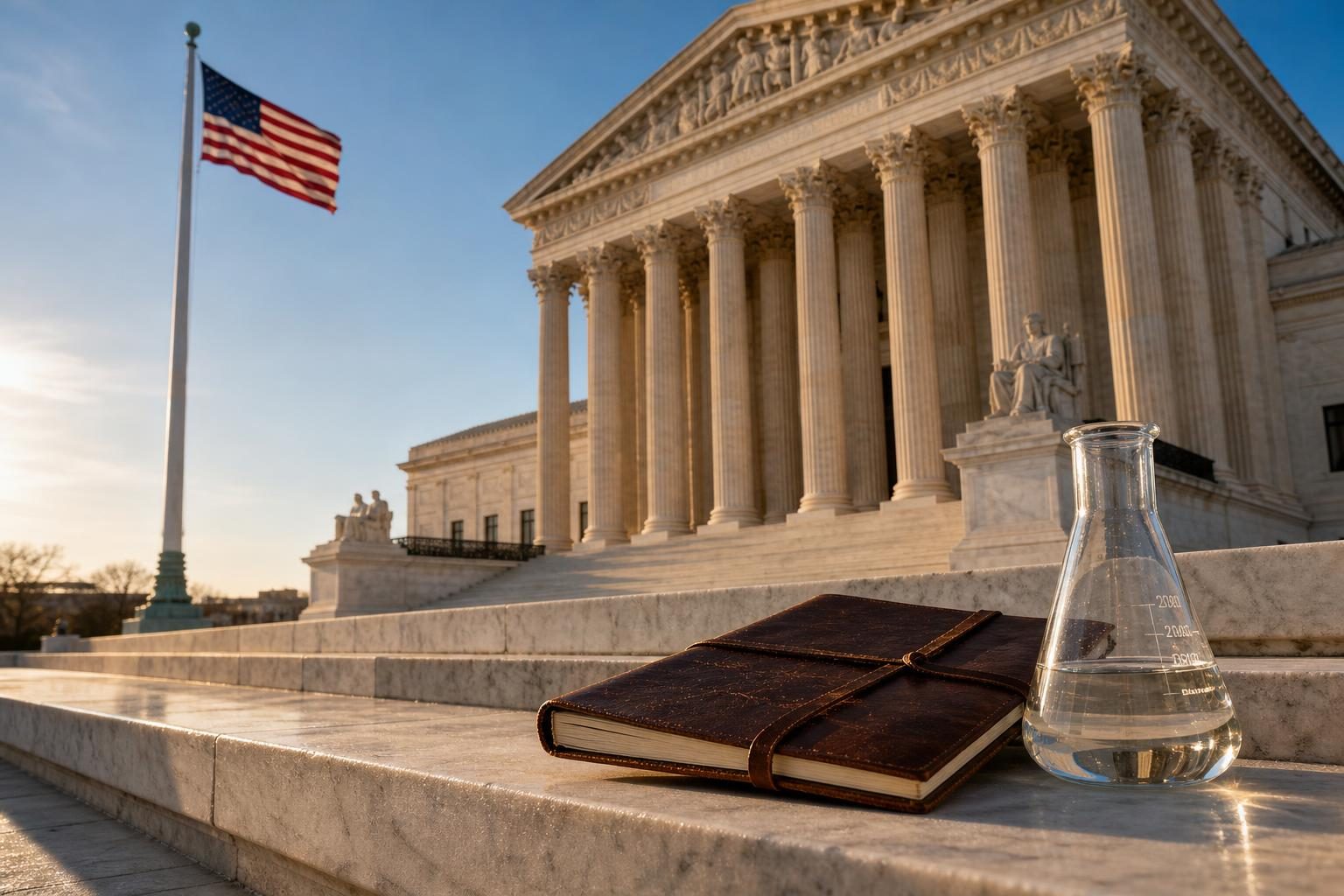
The Supreme Court on Monday declined to hear the Trump administration's appeal in a fight over federal research grants to University of California scholars, leaving in place a lower-court order that keeps the money flowing while the lawsuit continues [1][2].
The administration's position has been consistent from the start. The Justice Department told the justices that the First Amendment does not stop Washington from declining to award competitive grants for research projects that promote diversity, equity and inclusion, CNN reported [2]. In the administration's view, deciding which projects receive taxpayer dollars is a spending choice, not censorship, and the government is not obliged to underwrite every academic agenda.
What the court did, and did not do
The justices gave no explanation, and none of the nine publicly noted a dissent, according to CNN [2]. The order leaves standing a ruling by the San Francisco-based Ninth Circuit Court of Appeals, which concluded that canceling the grants likely violated the First Amendment [2][5]. Earlier, U.S. District Judge Rita Lin had halted the terminations after finding that the researchers were likely to win their argument that the cuts amounted to viewpoint discrimination [2].
Turning down an appeal is not a ruling on the merits, and it sets no national precedent. The Epoch Times described Monday's order as allowing the lower-court block on the terminations to stand [6], and Legal Insurrection noted that it leaves the Ninth Circuit's First Amendment ruling in place for now [5]. The case itself returns to the lower courts, where the administration can keep contesting the researchers' claims.
The grants and the agencies
Two federal agencies had moved to cancel grants to UC researchers that they said did not line up with President Trump's policies on DEI, CBS News reported [4]. The Los Angeles Times reported that the grants at issue were awarded by the National Science Foundation and the National Endowment for the Humanities [3]. Estimates of the money involved differ: The Hill described tens of millions of dollars in research grants [1], while Legal Insurrection put the total targeted at about $150 million [5].
The dispute had already been narrowed before it reached the justices. The Los Angeles Times noted that in other grant cases the Supreme Court has said claims over canceled grants belong in the Court of Federal Claims, and that the Ninth Circuit, citing those rulings, limited the UC case in May to its First Amendment claim [3]. That earlier guidance from the high court still governs grant fights that turn on money owed rather than free speech.
What comes next
The Los Angeles Times called Monday's order a significant win for the professors and a defeat for the President [3]. The larger question, whether a federal agency may decline to fund research because of the viewpoint it advances, has not been decided by the Supreme Court and remains open.
For now the grants stay in place, and the lawsuit moves forward in federal court in California [2][3]. The administration's argument, that choosing what to fund is not the same as silencing anyone, will be tested there on the full record.
Sources
- [1]Opens in a new tab ↗
- [2]Opens in a new tab ↗
- [3]Los Angeles TimesSupreme Court turns down Trump's plan to cut off UC research grants that promote DEIOpens in a new tab ↗
- [4]Opens in a new tab ↗
- [5]Legal InsurrectionSupreme Court Rejects Trump Appeal Over UC Research Grants Cut Over DEIOpens in a new tab ↗
- [6]Opens in a new tab ↗
With Democrats taking Congress, what should Republicans focus on first?
- Blocking bad bills
- Working on prices and costs
- Winning back the House in 2028
- Confirming judges before January
More in Politics
Jeffries Wins the Speaker Nomination 251-11, but 11 Democrats Say No and the Real Test Comes January 3
Today on The Sterling Report with Ava Sterling
Mullin Takes the Outage Questions Head-On as the House Opens Its Worldwide Threats Hearing
This morning on The Sterling Report with Ava Sterling
AP Projects Peltola the Winner in Alaska, Completing a 56-44 Democratic Senate as a Second-Sullivan Appeal Looms
Last night on Campaign Trail with Sophia Reyes
Were you there?
If you were at the scene, or this story touched your life, tell us what you saw and what it was like.
Discussion 0
Sign in or create a free account to join the discussion.
No comments yet. Start the discussion.