World News
Indonesia's Vice President Resigns After Courts Reject His Education Papers, Giving Prabowo Two Weeks to Name a Successor
Gibran Rakabuming Raka, son of former President Joko Widodo, stepped down as the rule of law caught up with his eligibility, and the choice of his replacement now runs through Jakarta's legislature.
By GRACE WHITFIELDStaff Correspondent · WASHINGTON · Nov 13, 1:15 AM · 3 min. read
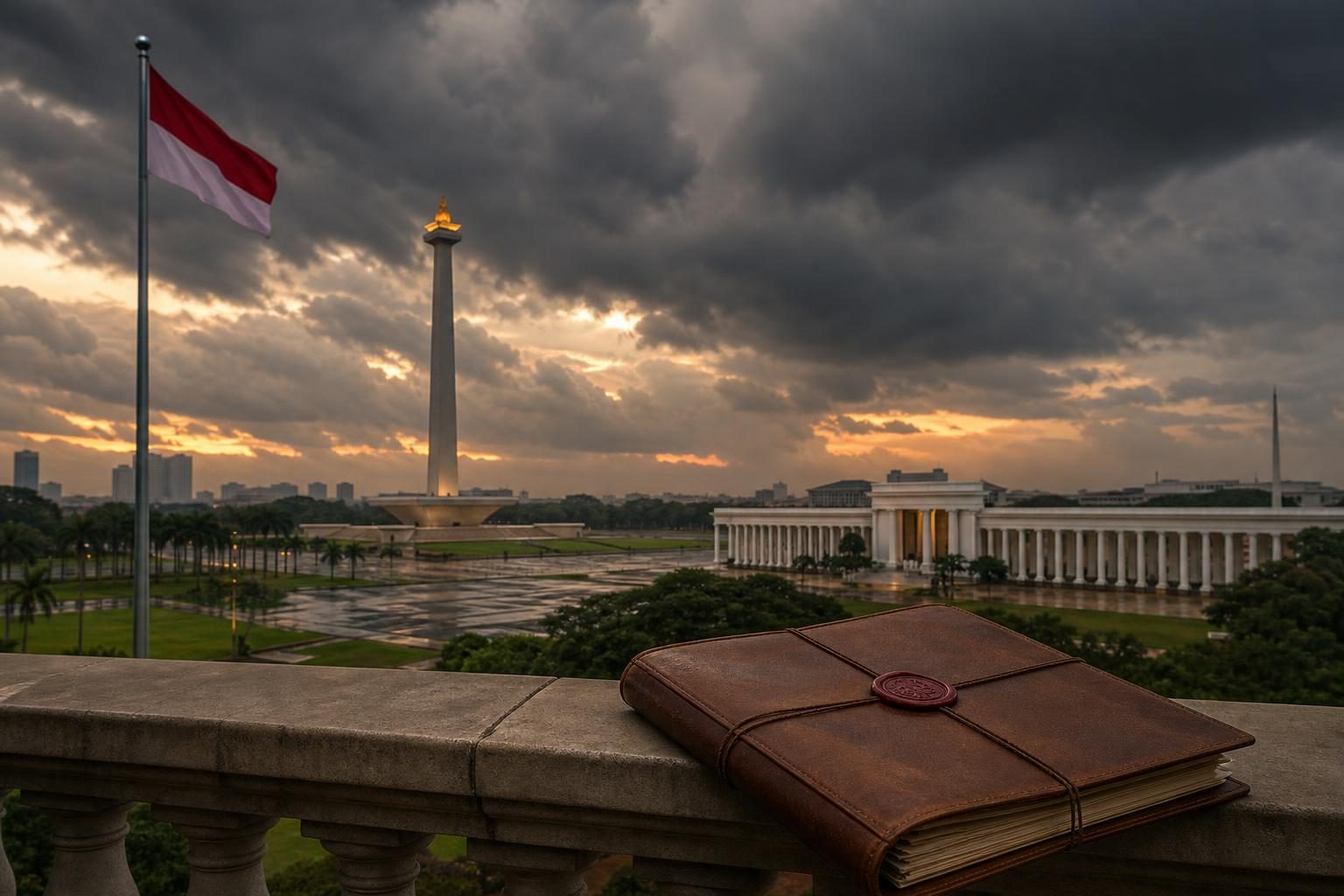
Illustration · Liberty Bell Report
Indonesia's Vice President Gibran Rakabuming Raka resigned on Thursday, bowing to mounting questions about whether he was ever eligible for the office after two of the country's highest courts disputed the educational credentials he submitted to run. The 39-year-old is the eldest son of former President Joko Widodo, and his exit removes one of the most visible symbols of the political partnership that carried President Prabowo Subianto to power.
According to The Associated Press, the resignation followed recent court rulings that disputed the educational credentials Gibran submitted when he ran for office. Gibran first offered to step down earlier in the week, NPR reported, as the questions mounted.
Prabowo, a former general who has led the world's third-largest democracy since October 2024, said he accepted the resignation "with a heavy heart," Tempo reported. His gracious tone suggested the president wants an orderly transition rather than a public fight with the family of the man who helped elect him.
The resignation comes at a tense moment for Indonesia's ruling coalition. Widodo, who left office in 2024 after two terms, remains a powerful figure with a loyal following, and any sign of distance between the two camps draws close attention in Jakarta.
Even so, Reuters reported that Widodo publicly backed Prabowo as his son formally handed his resignation to parliament. That show of support matters. A public split between the sitting president and his popular predecessor could have unsettled markets and emboldened opponents at a time when the government is trying to deliver on promises of growth and free school meals.
How Gibran Got Here
Gibran's path to the vice presidency was controversial from the start. Indonesian law required candidates for president and vice president to be at least 40 years old, and Gibran, then the mayor of the city of Surakarta, did not meet that bar. In October 2023, the Constitutional Court opened the door for him by allowing candidates younger than 40 to run if they had held elected regional office, The Jakarta Post reported at the time. Critics saw the ruling as tilted in favor of Widodo's family, and the episode followed Gibran into office.
The Prabowo-Gibran ticket went on to win the February 2024 election comfortably, with Widodo's popularity widely seen as a major asset. This year's court rulings on his education records reopened the old wound and ended his tenure just over two years after it began.
What Happens Now
Indonesia's constitution does not leave the vice presidency vacant for long. Under the process now underway, Prabowo has 14 days to propose two candidates to replace Gibran, Tempo reported, and lawmakers in the People's Consultative Assembly will choose between them. Gibran's formal delivery of his resignation to lawmakers set that clock running.
The choice gives Prabowo a chance to reshape his coalition. He can reward a loyal party, bring in a technocrat to reassure investors, or reach toward Widodo's camp to close the rift. Whoever is chosen will serve out the term through 2029 and could gain a head start in the next presidential race.
Why It Matters to America
Indonesia is not a far-off curiosity for the United States. It is the world's most populous Muslim-majority nation, a democracy of more than 280 million people, and it sits astride the Strait of Malacca and other sea lanes that carry a large share of the world's trade. It also borders the South China Sea, where Beijing's expansive claims collide with the interests of America's friends and allies.
Prabowo has tried to balance between Washington and Beijing, courting Chinese investment while deepening defense ties with the United States and its partners. A stable government in Jakarta that respects its own courts and constitution is good news for American interests in the Indo-Pacific. A messy succession fight could have opened space for outside pressure.
There is also a lesson here that Americans can appreciate. Indonesia's courts applied the rules to the son of a former president and the second-highest official in the land, and the official stepped aside. Whatever one thinks of Gibran, the rule of law held. In a region where strongmen and family dynasties often bend the rules, that is worth noting.
The next two weeks will reveal whether Prabowo uses the vacancy to heal the breach with Widodo or to consolidate his own control. Watch the names he sends to the assembly and the reaction from Widodo's supporters. For now, the world's third-largest democracy has handled a constitutional test without crisis, and that alone counts as good news.
Sources
- The Washington Times: Indonesia's vice president resigns as his eligibility and academic credentials are questioned (link)
- NPR: Indonesia's VP offers resignation as questions mount over his eligibility (link)
- Tempo: Prabowo Says He Accepted Gibran's Resignation 'With a Heavy Heart' (link)
- Tempo: Prabowo Has 14 Days to Propose Two Candidates to Replace Gibran (link)
- U.S. News & World Report: Indonesia VP Hands Resignation to Parliament as Jokowi Backs Prabowo (link)
- The Jakarta Post: Constitutional Court opens door for Jokowi's son to run in presidential poll (link)
— 30 —