World News
Weeks of Warnings, More Than 200 Dead: Amnesty Says U.N. Peacekeepers Failed a South Sudan Village
A new report says the U.N. mission and South Sudan's government knew an attack on Abiemnom was likely but did not do enough to stop the March massacre. The U.N. says it sheltered about 2,500 people.
By GRACE WHITFIELDStaff Correspondent · WASHINGTON · Nov 12, 10:00 PM · 3 min. read
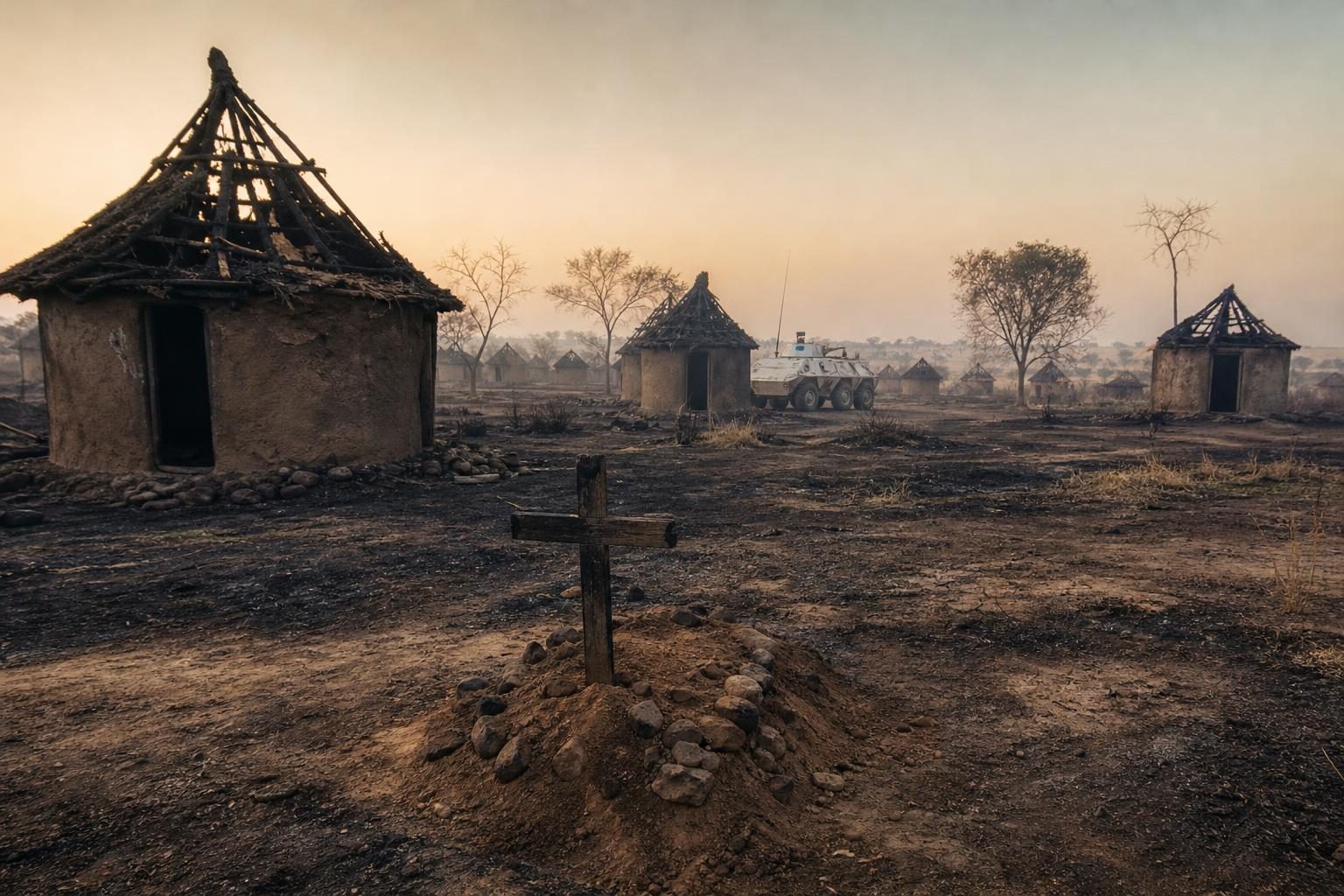
Illustration · Liberty Bell Report
United Nations peacekeepers and South Sudan's government had weeks of warning before armed men stormed the town of Abiemnom and killed more than 200 people this year, but neither did enough to protect civilians, Amnesty International said in a report released Thursday.
What Happened in Abiemnom
The attack came on March 1 in Abiemnom, a remote area near the border with Sudan, according to Al Jazeera's account of the report. Amnesty says between 1,000 and 1,500 armed men from neighboring Mayom County shot residents, burned homes and looted part of the local hospital. Authorities have put the dead at 213, including 130 town residents, 76 security personnel and seven foreign nationals. Satellite images show more than 230 structures burned, and most victims were buried in two mass graves, the report says.
Amnesty says the raid may have been triggered by tensions over the earlier killings of several young men from Mayom County.
The Warnings That Went Unheeded
The heart of the report is that the attack was foreseeable. Amnesty says the U.N. Mission in South Sudan, known as UNMISS, knew an assault on Abiemnom was likely but did not reinforce its roughly three dozen peacekeepers there until after March 1. The rights group also asked why peacekeepers were not deployed sooner, given a similar deadly attack in April 2025.
"Their failure to take stronger action cost lives," said Tigere Chagutah, Amnesty's regional director for East and Southern Africa. Amnesty said both the government and the U.N. mission had enough information and time to take more effective preventive steps.
The U.N. Responds
UNMISS pushed back. Spokesperson Priyanka Chowdhury said tensions had been high since mid-February and that the mission had repeatedly asked South Sudan's national army for more forces, Al Jazeera reported. She said UNMISS protected and treated about 2,500 people in a protected area it set up in anticipation of the attack, and that it focused its available capacity on civilians seeking refuge at its base. The mission sent 40 more police officers after the massacre.
South Sudan's government did not answer two letters from Amnesty seeking information and responses to its findings, according to the report. Amnesty is calling for an independent investigation into the killings and a separate review of how peacekeepers responded.
A Fragile Country Heading to the Polls
The report lands at a delicate moment. South Sudan is due to hold elections on Dec. 22. The African Union's envoy, Jakaya Kikwete, has urged the U.N. Security Council to help keep the vote peaceful, and the International Crisis Group has warned that a rushed election could deal a final blow to the 2018 peace deal that ended five years of civil war.
Meanwhile, the peacekeeping mission is shrinking. The Security Council renewed UNMISS's mandate in April but cut its troop ceiling from 17,000 to 12,000, even though protecting civilians is one of its core tasks, and the mission faces budget cuts.
Why It Matters
Peacekeeping missions exist for one purpose above all: to stand between the defenseless and those who would harm them. When a mission has warning, has a base nearby and still cannot stop a massacre, the people who fund and staff it deserve hard answers. Accountability is not hostility to the U.N.; it is the only way to make sure the next warning is acted on.
For people of faith, the suffering in South Sudan should never become background noise. The country has already endured five years of civil war before the 2018 peace deal, and its families deserve the same protection that any community would demand for its own children.
What Comes Next
Amnesty wants an independent probe and a review of the peacekeepers' conduct. The U.N. Security Council, which sets the mission's mandate, will face pressure to show how it will protect civilians with fewer troops as election day approaches. The 213 people buried in Abiemnom are a reminder of what is at stake if it fails.
Sources
- Al Jazeera: Amnesty says UN, South Sudan officials failed to prevent village massacre (link)
- The Washington Times: U.N. peacekeepers failed to protect civilians before South Sudan massacre, Amnesty says (link)
- The Hindu: UN peacekeepers failed to protect civilians before South Sudan massacre: Amnesty (link)
- The Independent: UN peacekeepers failed to protect civilians before South Sudan massacre, Amnesty says (link)
- France 24: NGO criticizes UN's response to massacre in South Sudan (link)
— 30 —