Military & Defense
The Navy Is Holding Its Commanders Accountable. Now Congress Wants It Done in the Open
A submarine's leadership team relieved after an October grounding and a destroyer captain removed in September came to light only this week, and lawmakers want the Navy to explain the silence.
By DAN WHITAKERStaff Correspondent · NEW YORK · Nov 13, 2:03 AM · 6 min. read
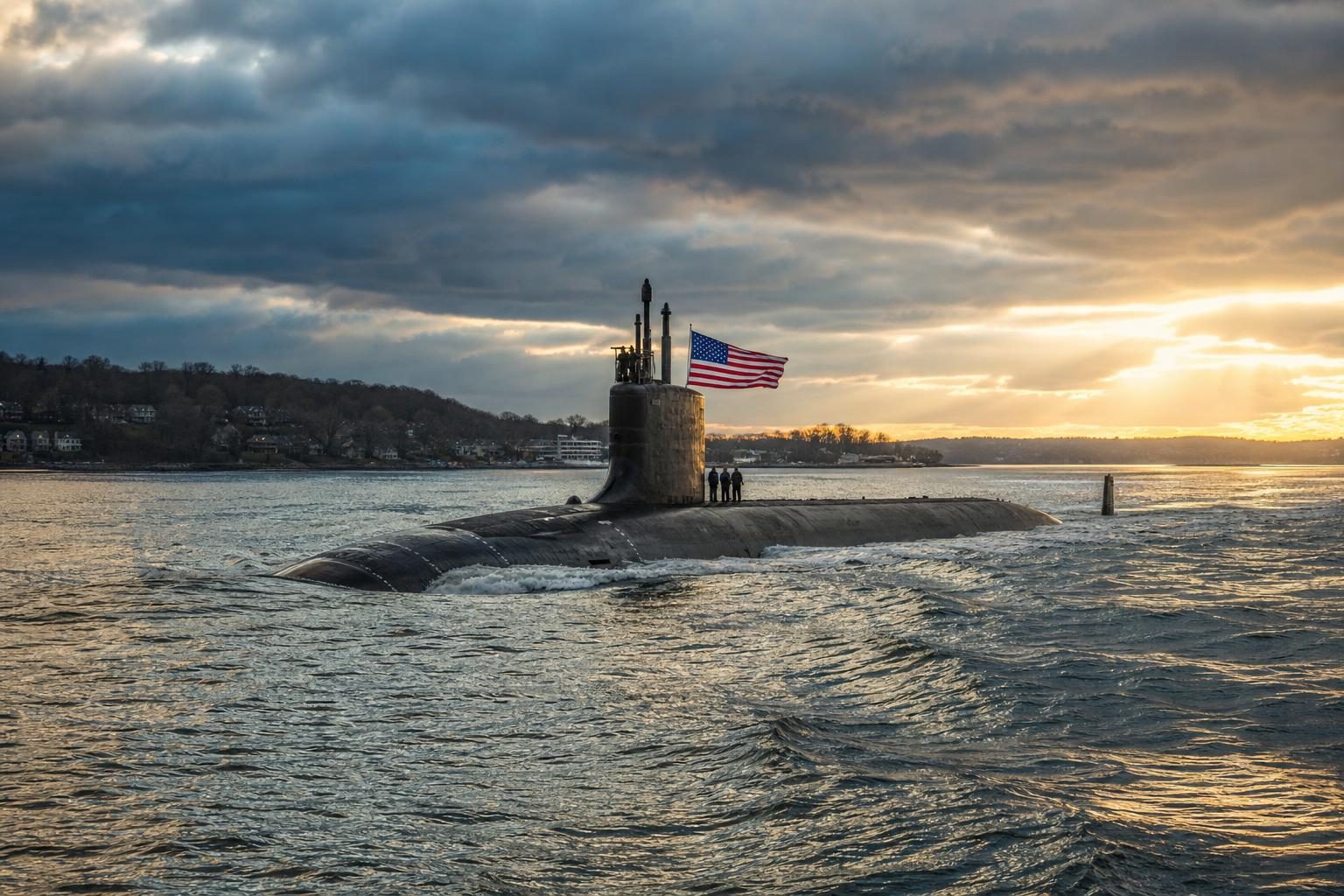
Illustration · Liberty Bell Report
In the United States Navy, the commanding officer answers for everything that happens aboard the ship. That old rule of the sea is the right place to begin with the controversy that broke into the open on Thursday, when The Associated Press reported that the Navy has fired or removed several top officers in recent months without the public announcements it has long made when a commander is relieved. The firings themselves are not what has lawmakers upset. The silence is.
When the Navy relieves a commander, it has traditionally cited the standard it has used for generations: a loss of confidence in an officer's ability to command. That standard is the backbone of naval accountability. The question lawmakers are raising is not whether the Navy may remove a commander. It plainly may. The question is why these decisions stayed out of public view.
What Came to Light
The sharpest case involves the USS South Dakota, a Virginia-class fast-attack submarine based in Groton, Connecticut. USNI News reported Thursday that the boat's entire command triad, the commanding officer, the executive officer and the senior enlisted leader known as the chief of the boat, was relieved after the submarine ran aground in October. The news did not come from a Navy press release. It came from a member of Congress.
That lawmaker was Rep. Joe Courtney of Connecticut, whose district takes in the Groton submarine base and the shipyard that builds much of the fleet. Courtney and Rep. Adam Smith of Washington, the senior Democrat on the House Armed Services Committee, sent the Navy a letter expressing deep frustration that the service did not notify Congress when it relieved the submarine's leadership team. The two lawmakers are seeking answers from the Navy about the dismissal and about why the committees that oversee the fleet were left in the dark.
A second case surfaced the same day. USNI News reported that the Navy quietly removed the commanding officer of the guided-missile destroyer USS Michael Murphy in September. According to that report, the destroyer's commanding officer, Cmdr. Caitlin Cunningham, was relieved in September. Here, too, there was no public announcement of the kind that has traditionally accompanied such a move.
The destroyer carries one of the proudest names in the fleet. It honors Lt. Michael P. Murphy, the Navy SEAL from Long Island who received the Medal of Honor after giving his life while trying to save his teammates in the mountains of Afghanistan in 2005. Every sailor who serves aboard her is reminded daily what the word duty means.
The AP's reporting describes a broader set of removals of commanders and other officials in recent months that the Navy did not publicize. The wire service's account drew attention because it breaks with how the Navy has handled such decisions for years.
Why Accountability at Sea Matters
Command at sea is unlike anything in civilian life. A captain whose ship runs aground is answerable for it whether or not he was standing on the bridge at the moment it happened, because the Navy has always believed that the training, discipline and culture of a crew flow from the top. A submarine is the most unforgiving example of all. A nuclear-powered boat operating hundreds of feet below the surface, in the dark, depends on the judgment of a handful of leaders and on a crew that trusts them completely.
That is why relief for cause is not a punishment the Navy hands out lightly, and why it is not a scandal when the Navy uses it. When the leadership of a warship loses the confidence of the chain of command, removing them protects the sailors, the ship and the mission. Americans who send their sons and daughters to sea should want a Navy that is willing to make that hard call.
The most recent precedent shows how seriously the service treats a grounding. In 2021, after the attack submarine USS Connecticut struck an underwater mountain in the South China Sea, the Navy fired the boat's top officers, a move it announced publicly at the time. The South Dakota relief follows the same principle. The difference this time is that the public, and apparently Congress, learned about it weeks later and secondhand.
The Transparency Problem Is Older Than This Pentagon
Before anyone treats this as a new invention, the record deserves a fair hearing. In 2024, under the previous administration, Military.com reported that the Navy had relieved 12 commanders in six months and that three of those firings had never been publicly announced at all. Unannounced reliefs, in other words, did not begin with the current leadership at the Pentagon. They are a long-running habit inside a service that has sometimes preferred to handle bad news privately.
That matters, because some of the coverage of Thursday's report could leave readers thinking they are looking at a sinister new policy. The facts point to something more ordinary and more fixable: an institution that has never fully settled on a consistent rule for when and how it tells the public that a commander has been relieved.
None of that excuses a failure to keep Congress informed. The Constitution gives Congress the power to provide and maintain a Navy and to make rules for the government and regulation of the naval forces. Lawmakers who pay for the fleet and confirm its leaders have every right to know when a nuclear submarine runs aground and when its leadership is removed. On that point, Courtney and Smith are on solid ground, and conservatives who believe in limited, accountable government should say so plainly.
What Congress Is Asking For
The Courtney-Smith letter is, at bottom, a request for answers about the South Dakota dismissal and about the Navy's failure to tell Congress. The broader AP account of other unannounced removals adds weight to that request, because it suggests the South Dakota case is not an isolated lapse.
Submarines are among the most expensive and closely watched programs in the defense budget, and Groton is at the center of them. Courtney has spent years championing the submarine industrial base, so his frustration is that of an ally of the fleet, not a critic of it. That should make Navy leaders take the letter seriously rather than treat it as partisan noise.
What Comes Next
The Navy will have to answer the letter, and it should do so quickly and in full. A grounding investigation for the South Dakota is the normal next step after an incident of this kind, and its findings will determine whether the boat's leadership made avoidable errors. In the Connecticut case, the Navy said at the time that better judgment and closer adherence to navigation procedures could have prevented the incident. Sailors deserve the same candor here.
With Democrats taking control of the House in January, oversight requests like this one are likely to multiply, and the Armed Services Committee will have more power to compel answers. The Navy can get ahead of that by doing something simple: announce reliefs for cause when they happen, tell the oversight committees first, and explain the reasons as far as privacy and security allow.
Our Take
Accountability and transparency are not rivals. They are partners. A Navy that holds its commanders to the highest standard is doing exactly what the American people should expect from the men and women entrusted with nuclear-powered warships and the lives of their crews. A Navy that tells the public and Congress when it has done so earns even more trust.
The service got the hard part right in these cases. It removed leaders when confidence was lost, including after a submarine grounding that could have been far worse. Now it needs to get the easy part right too. Standards matter on the bridge and in the control room, and they matter in the briefing room as well.
Sources
- The Washington Times: Navy has quietly fired some commanders and other officials, drawing congressional pushback (link)
- USNI News: UPDATED: USS South Dakota Command Triad Relieved After October Grounding, Congressman Says (link)
- Office of Rep. Joe Courtney: In Letter to Navy, Courtney, Smith Express Deep Frustration Over Failure to Notify Congress of USS South Dakota Command Triad Relief (link)
- USNI News: Navy Quietly Removed USS Michael Murphy Commander in September (link)
- Military.com: Navy Relieved 12 Commanders in 6 Months, Including 3 Firings That Were Never Publicly Announced (link)
- CBS News: Navy fires top officers of U.S. nuclear submarine damaged in underwater collision in South China Sea (link)
— 30 —