Pushback
Tax the Oil Companies, and Families Pay at the Pump: The Facts Behind COP31's 'Make Polluters Pay' Push
U.N. leaders and activists in Antalya want new levies on fossil fuel profits. Americans just spent $88 billion extra on gasoline this year, and history shows who really carries a windfall tax.
By SIENNA VANCEStaff Correspondent · WASHINGTON · Nov 18, 7:00 PM · 3 min. read
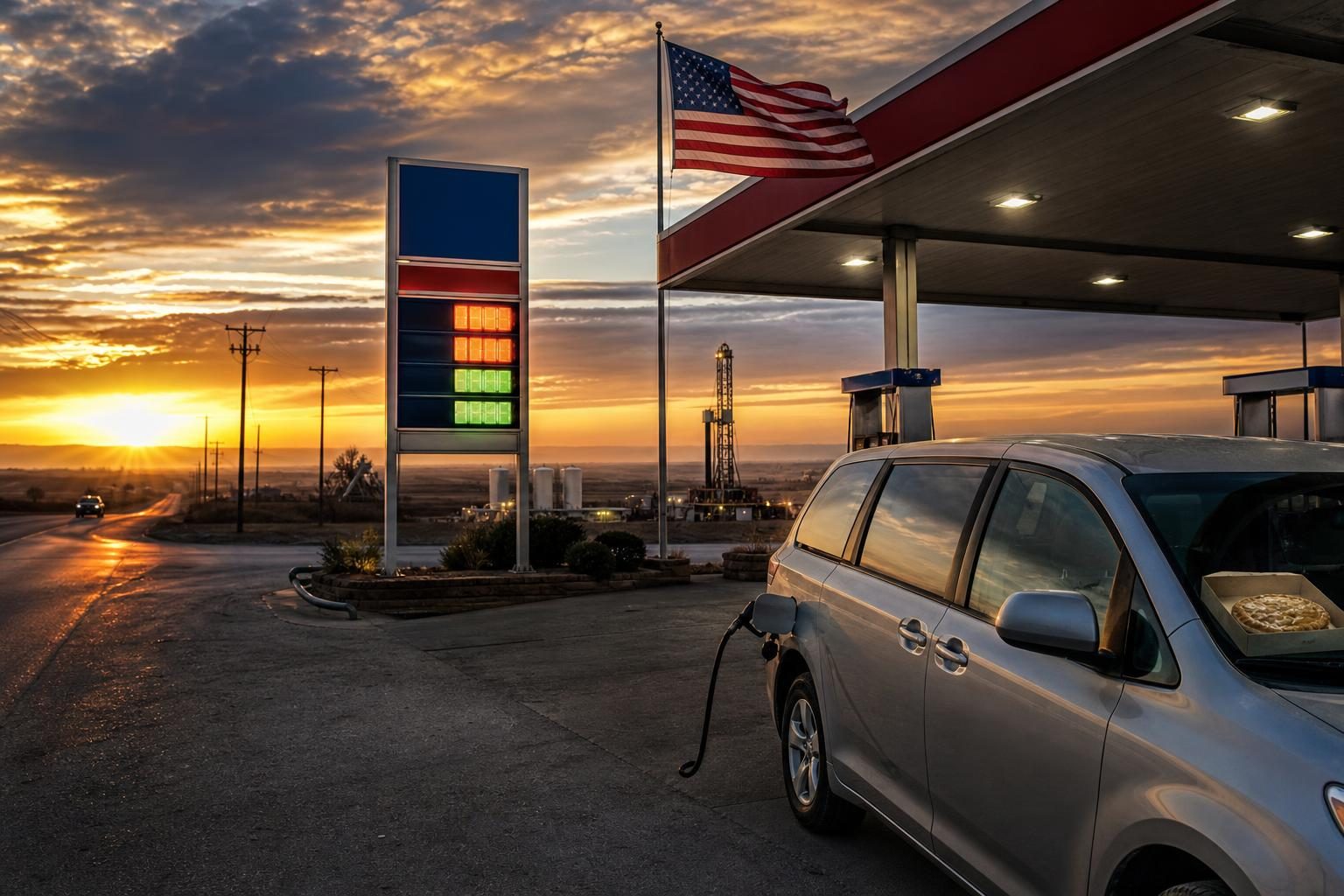
Illustration · Liberty Bell Report
As the United Nations climate summit in Antalya, Turkey, heads into its final days, the loudest slogan in the hall is a simple one. Le Monde reported Wednesday that COP31 is seeing mounting calls to tax fossil fuels to finance climate action, under the banner "Make polluters pay". U.N. Secretary-General António Guterres used his address to urge governments to tax the windfall profits of oil companies and send the money to vulnerable countries, Arise News reported.
The idea sounds like justice. Big companies made big profits; make them pay. But before Washington or any state capital signs on, Americans deserve a hard look at who actually pays a tax on energy, and what happened the last time this country tried one.
What they are proposing
Guterres compared the nine largest oil companies' recent quarterly profits, about $95 billion, with the roughly $600 million that the U.N.'s Loss and Damage Fund has received, according to Arise News. Activists and several governments at the summit want new levies on fossil fuel producers, with the revenue sent to climate programs abroad. Those profits are real, and they come in a year of war, with gasoline prices pushed up for months by the conflict abroad.
Who really pays
Here is the first problem. A tax on oil producers does not stay with oil producers. It moves down the supply chain to the gas station and the grocery store. And American families are already paying plenty. Axios reported this week that Americans have paid an additional $88 billion for gasoline this year compared with a no-war baseline, and that they are absorbing the cost because most driving is not optional. The commute to work, the drive to church and the trip to school do not stop when prices rise.
Relief is just arriving. The national average for regular gasoline fell to $3.781 a gallon on Tuesday, according to AAA figures reported by the Washington Examiner, the lowest in eight months. Families heading out for Thanksgiving are finally catching a break. A new levy on producers is the fastest way to take that break away.
America already tried this
The second problem is history. In 1980, Congress passed the Crude Oil Windfall Profit Tax. The Tax Foundation, citing Congressional Research Service estimates, reported that the tax reduced domestic oil production by 3% to 6% and increased America's dependence on foreign oil by 8% to 16%. Congress repealed it in 1988. In other words, the policy that was supposed to punish Big Oil ended up making the United States more reliant on oil from overseas. In a year when Iran is firing on American bases and tankers in the Gulf, that is the last thing this country needs.
The record Americans can point to
The third problem is the premise that America has done nothing. The U.S. Energy Information Administration estimated that U.S. energy-related carbon dioxide emissions fell 14% from 2005 to 2017, with coal-related emissions down 39%. That drop came largely as power plants switched from coal to cheaper, cleaner-burning natural gas, much of it produced by the American shale revolution. Innovation and abundant domestic energy cut emissions. A punishing tax did not.
That is the lesson the delegates in Antalya keep missing. Affordable energy is not the enemy of a cleaner environment. It is how families, factories and farms afford to modernize. Prosperous nations clean up their air and water; poor ones cannot.
Who is pushing back, and what comes next
The fight over a fossil fuel levy is not settled in Turkey. As this site reported earlier this week, the nations at the table cannot even agree on draft language about fossil fuels, let alone a new global tax. In the United States, any such tax would have to pass Congress, where the cost to working families at the pump would be front and center.
Christians are called to care for creation, and to care for the poor. Those two duties are not in conflict when energy is abundant and affordable. They collide when leaders make fuel more expensive for the families who can least afford it. The faithful answer is stewardship without punishment: keep American energy flowing, keep innovating, and let the results speak for themselves.
Sources
- Le Monde: 'Make polluters pay': COP31 sees mounting calls to tax fossil fuels to finance climate action (link)
- Arise News: COP31: Guterres calls for oil windfall tax to fund climate recovery (link)
- Axios: U.S. drivers are just absorbing high gasoline prices (link)
- Washington Examiner: Gasoline prices fall to lowest level since March (link)
- Tax Foundation: Oil Company Profits and Tax Collections: Does the U.S. Need a New Windfall Profits Tax? (link)
- U.S. Energy Information Administration: U.S. energy-related CO2 emissions expected to rise slightly in 2018, remain flat in 2019 (link)
— 30 —