Pushback
Behind the Drop in Foreign Students: Undergraduates Are Holding Steady, and Tougher Visa Vetting Has a Purpose
A new national report shows fewer students coming from abroad, and coverage is framing it as a crisis caused by the Trump administration. The numbers tell a more careful story about master's programs, work-visa pipelines and national security.
By REBECCA HARTMANStaff Correspondent · CALIFORNIA · Nov 16, 2:03 AM · 3 min. read
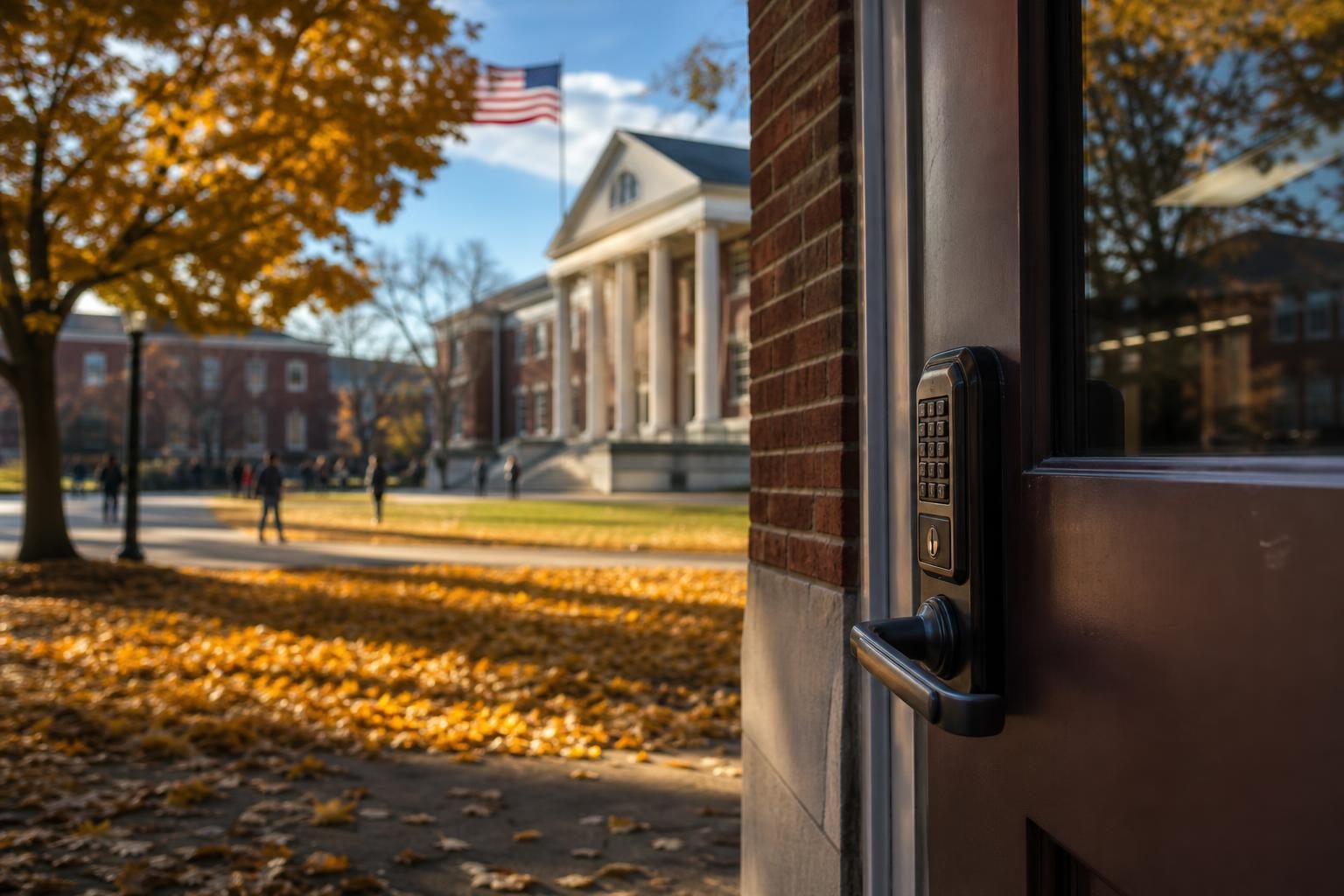
Illustration · Liberty Bell Report
Fewer students are coming from abroad to study at American colleges, according to a new national report released Monday, and much of the coverage is laying the blame squarely on the Trump administration. The Associated Press reported that the decline comes as the administration cracks down on immigration and reshapes higher education. The Los Angeles Times reported that California's international enrollment fell faster than the national rate, and said visa restrictions and proposed fees for international students have added uncertainty for colleges.
The figures are real, and colleges that depend on foreign tuition are feeling it. But the story told about those figures leaves out what the numbers actually show, and why a country has every right to know who is coming to study inside its labs.
What the report actually shows
The Institute of International Education's annual Open Doors report counted 1,146,163 international students at U.S. colleges and universities in the 2025-26 school year, down 3% from the year before. That is still more than a million students. America remains a magnet for the world's best young minds.
The drop is concentrated in one place. According to IIE, graduate enrollment fell 13%, driven mainly by a 22% decline in students pursuing master's degrees, while undergraduate enrollment was essentially flat at 356,165 students, down just 0.3%. New international enrollment fell 18%, WGBH reported, citing IIE.
In other words, foreign students coming to earn a bachelor's degree, live in the dorms and join campus life are still coming in nearly the same numbers. The steepest decline is in master's programs, many of which have become short, expensive degrees that serve as an on-ramp to American work visas.
Higher Ed Dive reported that colleges pointed to the crackdown on student visas and steep new fees sought for the H-1B work visa and the Optional Practical Training program, which lets graduates stay and work after school. That is the heart of it. When the work-visa pipeline gets more expensive and more carefully vetted, the programs built around feeding that pipeline shrink. That is a policy working as designed, not a collapse of American higher education.
Security is not an afterthought
There is also a serious national-security reason for closer vetting, and it is not new. Last year, Secretary of State Marco Rubio announced that the government would begin revoking visas for some Chinese students, including those with connections to the Chinese Communist Party or studying in critical fields, and would tighten scrutiny of future applications from China and Hong Kong, the Associated Press reported. At the time, students from China made up roughly a quarter of all international students in the United States, according to the AP.
Every parent who has watched recent headlines about technology secrets flowing to Beijing understands why that matters. American taxpayers fund an enormous share of university research. They are entitled to expect that the people working in those labs are not reporting back to a hostile government.
Who benefits, and who is pushing back
The colleges reporting the sharpest pain are often the ones that came to rely most on full-paying foreign graduate students to balance their books. That is a business-model problem, and the answer is not to loosen national-security screening. It is for schools to compete harder for American students, rein in costs and offer degrees that are worth what they charge.
Families have a stake here too. Seats in competitive programs are not unlimited. When schools treat foreign enrollment as a revenue stream, American students, especially from middle-class families who cannot pay full freight, can be the ones squeezed out.
The administration's approach is not anti-student. India remained the top source of international students for the third straight year, with 339,435 students, according to IIE. Talented young people from allied nations are still welcome and still coming. What has changed is that the United States is asking harder questions about who enters, what they study and whether the visa system is being used as intended.
What comes next
The early numbers for this fall point to another decline, with IIE's snapshot of more than 800 schools showing international enrollment down 9% and first-time students down 15%. Expect colleges and their allies to keep pressing for looser rules. Expect lawmakers who care about research security to press back.
The better debate is not whether America welcomes the world's students. It does, by the million. It is whether America's universities serve American families and American security first. On that question, the new numbers are not a crisis. They are a correction.
Sources
- AP via WTOP: Fewer students are traveling from abroad to study at US universities, report shows (link)
- Los Angeles Times: California loses international students at twice the U.S. rate (link)
- WGBH: International student enrollment at US colleges falls 3% (link)
- Higher Ed Dive: Colleges report declines in international enrollment amid federal restrictions (link)
- AP via WJLA: Rubio revokes visas for Chinese students in 'critical fields' over security concerns (link)
- Institute of International Education via PR Newswire: U.S. Colleges and Universities Host 1.1M International Students in 2025-2026 School Year (link)
— 30 —