Pushback
A Crucifix in a Teacher's Corner Is Not a State Religion: Why 19 States and the Justice Department Are Backing a Connecticut Teacher
A New Britain school district says a seventh-grade teacher's crucifix is government speech. The Supreme Court's Kennedy ruling, the Justice Department and a coalition of states say the First Amendment protects her.
By ETHAN CALLOWAYStaff Correspondent · WASHINGTON · Nov 16, 11:31 AM · 3 min. read

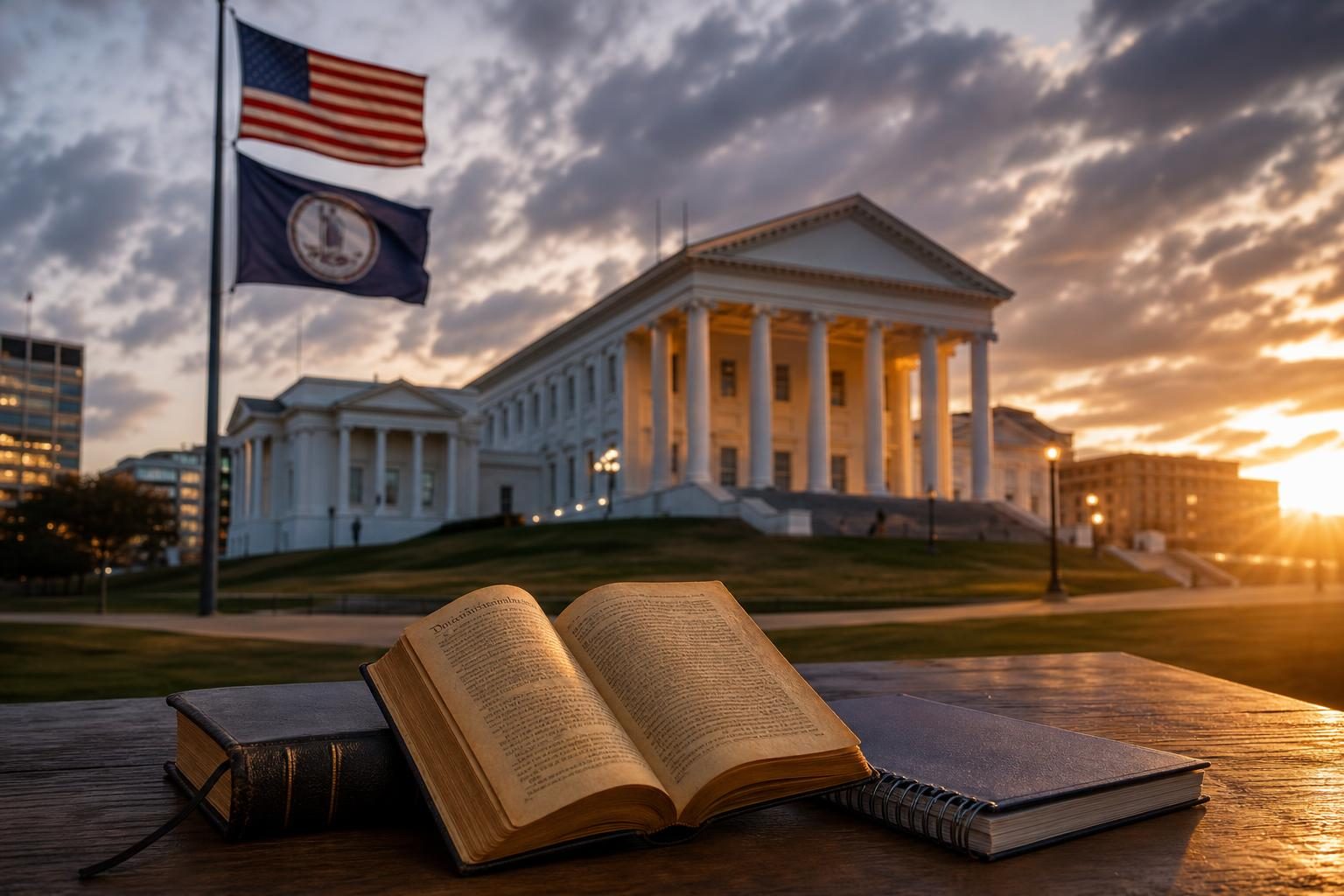
Illustration · Liberty Bell Report
A seventh-grade teacher in New Britain, Connecticut, kept a crucifix in her classroom for years. Her school district decided it had to go, she refused, and the fight is now headed to a federal appeals court. The question it raises reaches every public school in America: does a teacher give up her faith at the classroom door?
What the District and Its Allies Say
Marisol Arroyo-Castro says she was escorted out of her public school after she refused to remove a crucifix she had displayed for about a decade, Fox News reported. The district says the story is more complicated, according to the same report, and her case is now on its way to the U.S. Court of Appeals for the Second Circuit.
The two sides do not even describe the crucifix the same way. Her side describes a crucifix kept near her desk, while court papers describe a foot-high crucifix on a classroom wall. A federal district judge sided with the district last fall and denied her request for an injunction, the Volokh Conspiracy at Reason reported. The court treated the display as part of her official duties as a teacher, which made it the district's speech rather than her own.
The Freedom From Religion Foundation is backing the district. In a brief filed in June, the group argued that the lower court was right to apply the official-duties test from the Supreme Court's 2006 Garcetti v. Ceballos ruling, and it warned that a win for the teacher would let public employees press their own religious views on the job.
That is the case for removal, stated fairly. It rests on one idea: that anything a teacher places in her classroom speaks for the government.
What the Constitution Says
The Supreme Court rejected a version of that idea four years ago. In Kennedy v. Bremerton School District, decided in June 2022, the justices ruled 6-3 for a high school football coach who was disciplined for praying quietly on the field after games. The Court held that the First Amendment's Free Exercise and Free Speech Clauses protect a person's private religious observance from government punishment.
The Court also refused to let schools stretch the government-speech label to cover everything an employee does at work. Justice Neil Gorsuch's majority opinion warned that such a rule would let a school fire a Muslim teacher for wearing a headscarf in class, or stop a Christian aide from praying quietly over lunch. And the Court set aside the old Lemon test, directing judges to read the Establishment Clause in light of the nation's historical practices and understandings.
History and common sense point the same way. Teachers across the country decorate their own corners of the classroom with family photos, college pennants and favorite sports teams. No student thinks the school board picked the teacher's alma mater. A cross or crucifix near a teacher's desk tells children something about the woman who teaches them. It does not announce a state religion, and the Kennedy Court said plainly that the Constitution does not require schools to scrub religious expression from public life to avoid the appearance of endorsing it.
There is room for honest debate about where in a room a display goes and how large it is. That is a question of reasonable limits, applied evenly to every teacher's personal items. It is not a reason to treat a single religious symbol as the one item that must vanish.
Who Is Standing With Her, and What Comes Next
She is not standing alone. The U.S. Justice Department has filed a brief in the appeal arguing that the crucifix was the teacher's personal speech, not the government's, and that the district court got that question wrong. Iowa, Alaska and 17 other states have filed their own brief in her support, pressing the court on whether a teacher's personal crucifix can fairly be attributed to the state at all. Her lawyers at First Liberty Institute and the law firm WilmerHale are leading the appeal, Fox News reported.
The Second Circuit will now decide whether Kennedy's protection reaches a teacher's own corner of the classroom. Whichever way it rules, the case could become one of the first big tests of how far that 2022 decision extends inside the classroom itself.
For Christian teachers, and for teachers of every faith, the stakes are simple. Kennedy taught that learning to tolerate the faith of others is part of growing up in a free and diverse country. Students who see a crucifix in their teacher's corner of the room are not being made to believe anything. They are seeing what a free country looks like.
Sources
- Fox News: Connecticut teacher escorted out of school over classroom crucifix heads to federal appeals court (link)
- Freedom From Religion Foundation: FFRF appeals court brief backs religious classroom display restrictions (link)
- Reason (The Volokh Conspiracy): Public School Teacher Lacks First Amendment Right to Put Foot-High Crucifix on Classroom Wall (link)
- Supreme Court of the United States: Kennedy v. Bremerton School District (2022) (link)
- U.S. Department of Justice: Brief for the United States, Arroyo-Castro v. Gasper, No. 25-3047 (2d Cir.) (link)
- Louisiana Attorney General: Amicus Brief of Iowa, Alaska and 17 Other States, Arroyo-Castro v. Gasper, No. 25-3047 (link)
— 30 —