Politics
White House Tells Agencies to Clear Congressional Testimony First as Democrats Ready a Wave of Investigations
A one-page memo from White House counsel Will Scharf routes every appearance before a committee through his office and legislative affairs. Critics call it a stonewall; the administration calls it the established process.
By AVA STERLINGStaff Correspondent · WASHINGTON · Nov 17, 2:03 AM · 3 min. read
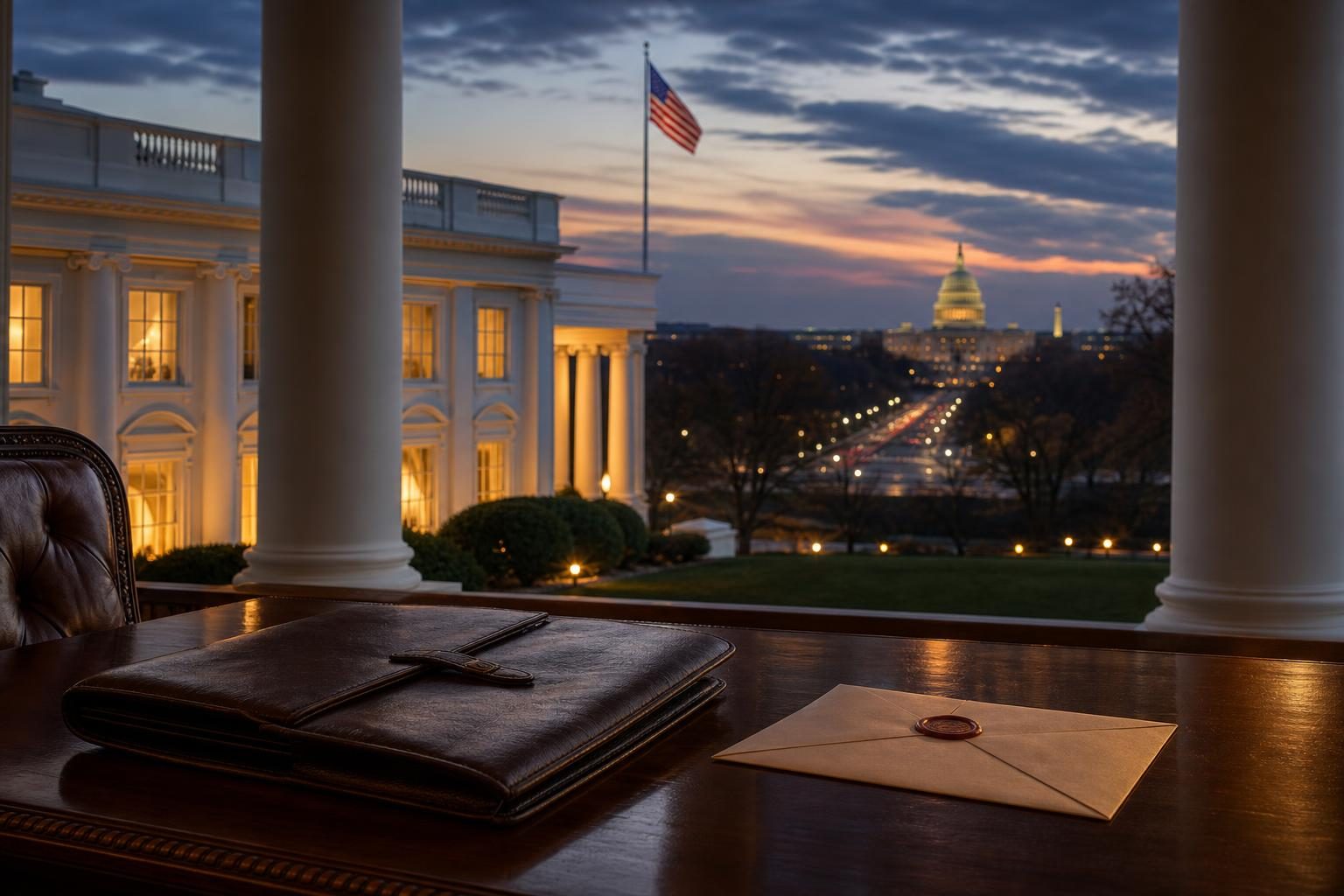
Illustration · Liberty Bell Report
The White House has directed every federal agency and executive department to get its approval before agreeing to testify before congressional committees, according to a memorandum from White House counsel Will Scharf first obtained by PBS News on Monday. The memo requires sign-off from both the White House counsel's office and the White House Office of Legislative Affairs.
Axios, which also obtained the memo, reported that it applies to any executive branch employee asked to testify before Congress. The Washington Times also reported the new requirement, describing it as applying to agency officials asked to appear before lawmakers.
What the Memo Says
The memo is brief, a single page addressed to agency general counsels, according to PBS. Scharf describes the approval step as part of the "established White House consultation process," and tells agencies that further guidance about other contacts with Congress is coming, PBS reported.
The timing is no accident. Just the News reported that the memo is a sign the administration is preparing for Democrats to launch investigations next year, when they take control of both the House and the Senate. Last week, Scharf sent a letter to Rep. Robert Garcia of California, the incoming chairman of the House Oversight Committee, warning that congressional investigations must serve a legitimate legislative purpose, as we reported at the time.
The White House Case
The administration says it is not shutting the door. A White House official told Axios that the administration is ready to work with Congress. Another official said the White House "will not be extorted, intimidated, or threatened" by what the official called politically motivated, baseless investigations, according to Axios.
There is also a long paper trail behind the idea that the executive branch speaks to Congress with one voice. The Office of Management and Budget's Circular A-19, in effect in its current form since 1979, has long required executive agencies to submit testimony on legislation for review and clearance before it is delivered to Congress, with exceptions only for agencies that the law specifically exempts. Presidents of both parties have relied on that process to keep agencies from contradicting the administration's positions in public.
What the Scharf memo adds is a legal check. By routing testimony through the counsel's office, the White House can review in advance whether a request touches on matters protected by executive privilege, attorney-client confidences or ongoing law enforcement work, questions that have produced court fights under past administrations of both parties.
The Critics' Case
Critics see something else. Some on the left cast the memo as an attempt to block cooperation with Democratic investigations; the progressive site Alternet framed it as the White House blocking employees from complying with subpoenas. That framing goes further than the text reported by PBS and Axios, which addresses approval for agreeing to testify rather than any blanket refusal to comply with subpoenas. Democrats are expected to test the policy as soon as they hold the gavels.
Why It Matters
The Constitution gives Congress broad power to investigate in aid of lawmaking, and it gives the president the executive power and the duty to run the branch Congress oversees. The friction between the two is as old as the republic, and it is usually settled through negotiation rather than confrontation.
For voters, the question is which side uses its power for legitimate ends. A Congress that investigates to write better laws deserves cooperation. A Congress that uses subpoenas to run a two-year campaign against the president does not, and the White House is signaling it will insist on that line.
What Comes Next
The new Congress convenes in January. Expect early requests for testimony from agency officials, followed by negotiations, and possibly subpoenas and court fights if talks break down. The White House says more guidance is coming. Garcia and other incoming Democratic chairs will decide quickly whether to test the new process or work within it.
Sources
- PBS News: Read the full White House memo requiring agencies to get approval before testifying in front of Congress (link)
- Axios: Exclusive: White House requires signoff before staffers testify to Congress (link)
- The Washington Times: White House says agency officials now must get approval before testifying before Congress (link)
- Just the News: White House directs all executive branch agencies to get approval to testify in front of Congress (link)
- The White House (OMB): Circular No. A-19: Legislative Coordination and Clearance (link)
- Alternet: White House blocks all employees from complying with subpoenas (link)
— 30 —