Politics
One Word Could Decide the Coming Subpoena Wars: What Peter Navarro's Supreme Court Petition Means for Trump Officials
As Democrats prepare to investigate the administration, Navarro is asking the justices to rethink what 'willfully' means in the contempt-of-Congress law. A response is due Dec. 9.
By LAUREN PIERCEStaff Correspondent · WASHINGTON · Nov 13, 3:30 PM · 3 min. read
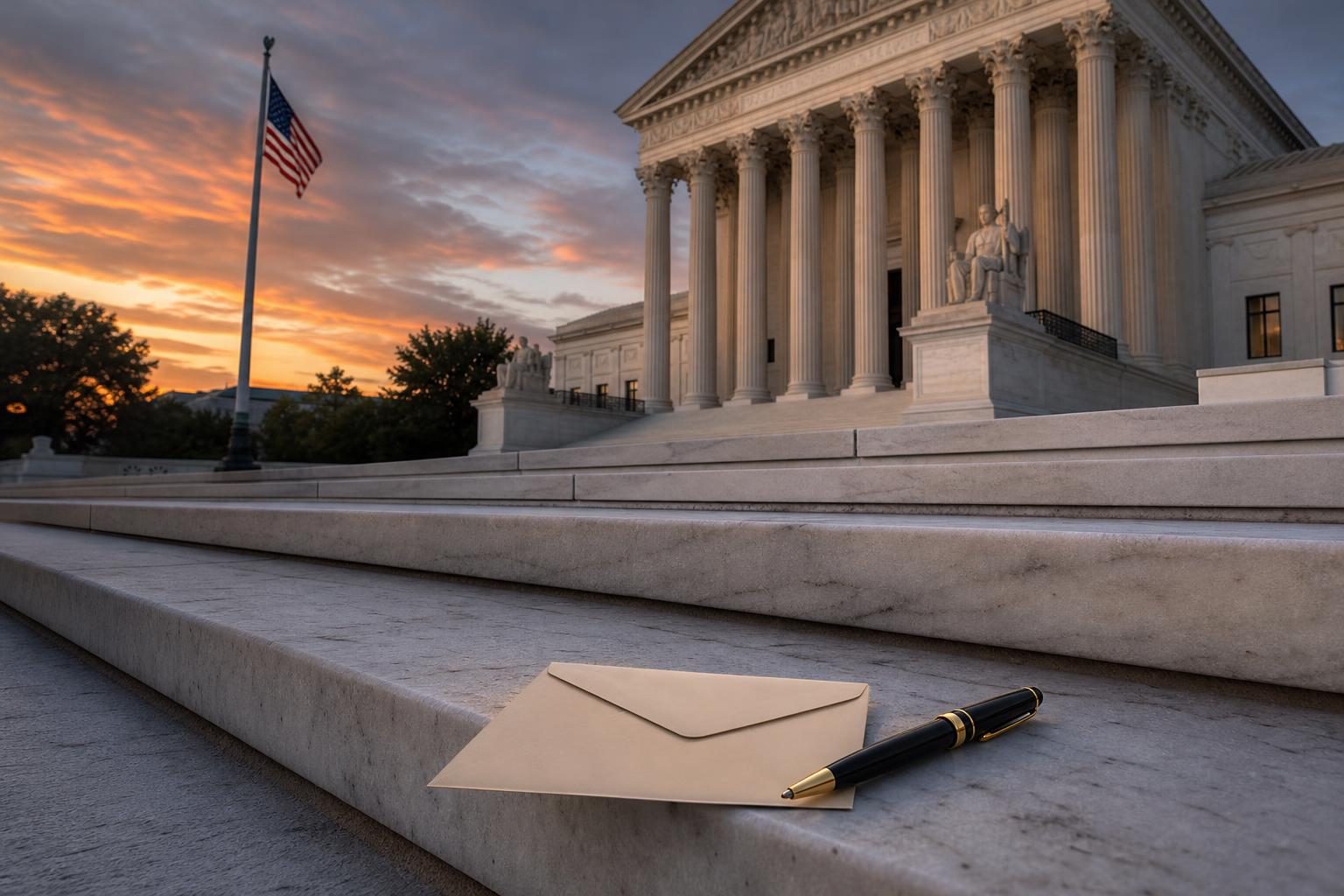
Illustration · Liberty Bell Report
When Democrats take control of both chambers of Congress in January, they have promised a wave of subpoenas aimed at President Trump's administration. A case already waiting at the Supreme Court could help decide how much legal danger those subpoenas really carry for the officials who receive them.
The case belongs to Peter Navarro, the former White House trade adviser who was prosecuted for defying a subpoena from the House committee that investigated Jan. 6. His petition asks the justices to change the standard used to convict him, and the Washington Examiner reported that a ruling in his favor could give Trump officials a stronger defense against criminal contempt charges in the oversight fights ahead. A response to the petition is due Dec. 9, according to that report.
How Navarro got here
Navarro was charged and convicted of contempt of Congress after refusing to turn over documents and testify before the Jan. 6 committee, arguing that the former President had asserted executive privilege over his work. When he asked the Supreme Court in 2024 to keep him out of prison while he appealed, NBC News reported, his lawyers argued that a prosecution could not go forward when a claim of executive privilege was in play. The Court turned down that emergency request, and Navarro reported to prison to serve his four-month sentence, The Post Millennial reported.
He kept fighting after his release. A panel of the U.S. Court of Appeals for the D.C. Circuit upheld the conviction, and the full court later declined to rehear the case, leaving the Supreme Court as his last stop, the Washington Examiner reported. Along the way, the Justice Department, now under Trump appointees, walked away from defending the prosecution, Bloomberg Law reported, but Navarro has pressed on with his appeal.
The one word at the center of the case
The fight turns on a single word in the federal contempt statute: willfully. Navarro's petition challenges the criminal-intent standard that prosecutors used against him, according to the Washington Examiner. In his rehearing request this summer, his lawyers argued that the meaning of "willfully" is central to the case, and they pointed to a similar question raised in former Trump strategist Steve Bannon's own Supreme Court petition.
Here is why that matters. Under the standard the D.C. courts have applied for decades, prosecutors need show only that a witness deliberately refused to comply with a subpoena. Navarro argues that a criminal conviction should require more, such as proof that the witness knew the refusal was unlawful, especially when the witness was following a claim of executive privilege. Navarro's side has argued that even if Bannon's separate conviction were wiped away, future officials would still face the same standard unless the Court takes up the question directly.
Why it matters for the next two years
The timing is hard to miss. White House counsel Will Scharf has already warned congressional Democrats against what he called "abusive and capricious threats" against the administration, The Daily Signal reported, after Democrats promised to issue subpoenas generously once they hold the majority.
If the Supreme Court leaves the current standard in place, any official who resists a congressional subpoena on the President's instructions could face the same path Navarro walked: a referral, a prosecution and possibly prison. If the Court sides with Navarro, prosecutors would have to show more about what a witness knew and intended before a refusal could be treated as a crime.
Lauren Pierce's take
The power to investigate is real, and Congress has every right to use it. But criminal law is supposed to punish people who knowingly break it, not officials caught between two branches of government arguing in good faith about where executive privilege begins and ends. A standard that turns a constitutional dispute into a jail sentence, without asking what the official believed, should trouble anyone who cares about fair process, no matter which party holds the gavel.
The justices may or may not take the case. Either way, the answer will shape every subpoena battle of the next two years, and the first deadline arrives Dec. 9.
Sources
- Colorado Politics (Washington Examiner): Supreme Court could hand lifeline to Trump officials facing subpoenas (link)
- Bloomberg Law: Trump Trade Adviser Navarro Presses Contempt Fight DOJ Dropped (link)
- Washington Examiner: Appeals court denies Peter Navarro bid to rehear contempt challenge: 'Always headed to Supreme Court' (link)
- NBC News: Trump adviser Peter Navarro asks Supreme Court to keep him out of prison (link)
- The Post Millennial: SCOTUS denies Peter Navarro's bid to stay out of prison pending appeal (link)
- The Daily Signal: Top Trump Official Warns Democrats Against 'Abusive and Capricious' Threats (link)
— 30 —