Politics
Alito's Warning on the Power of the Purse: What He Said and Why It Matters as Democrats Take Congress
At the Federalist Society's Scalia dinner, Justice Samuel Alito reminded Washington that Congress controls the money that keeps the Supreme Court's lights on. Here is the constitutional backdrop, the history and what comes next.
By HAROLD WHITMOREStaff Correspondent · WASHINGTON · Nov 13, 3:30 PM · 6 min. read
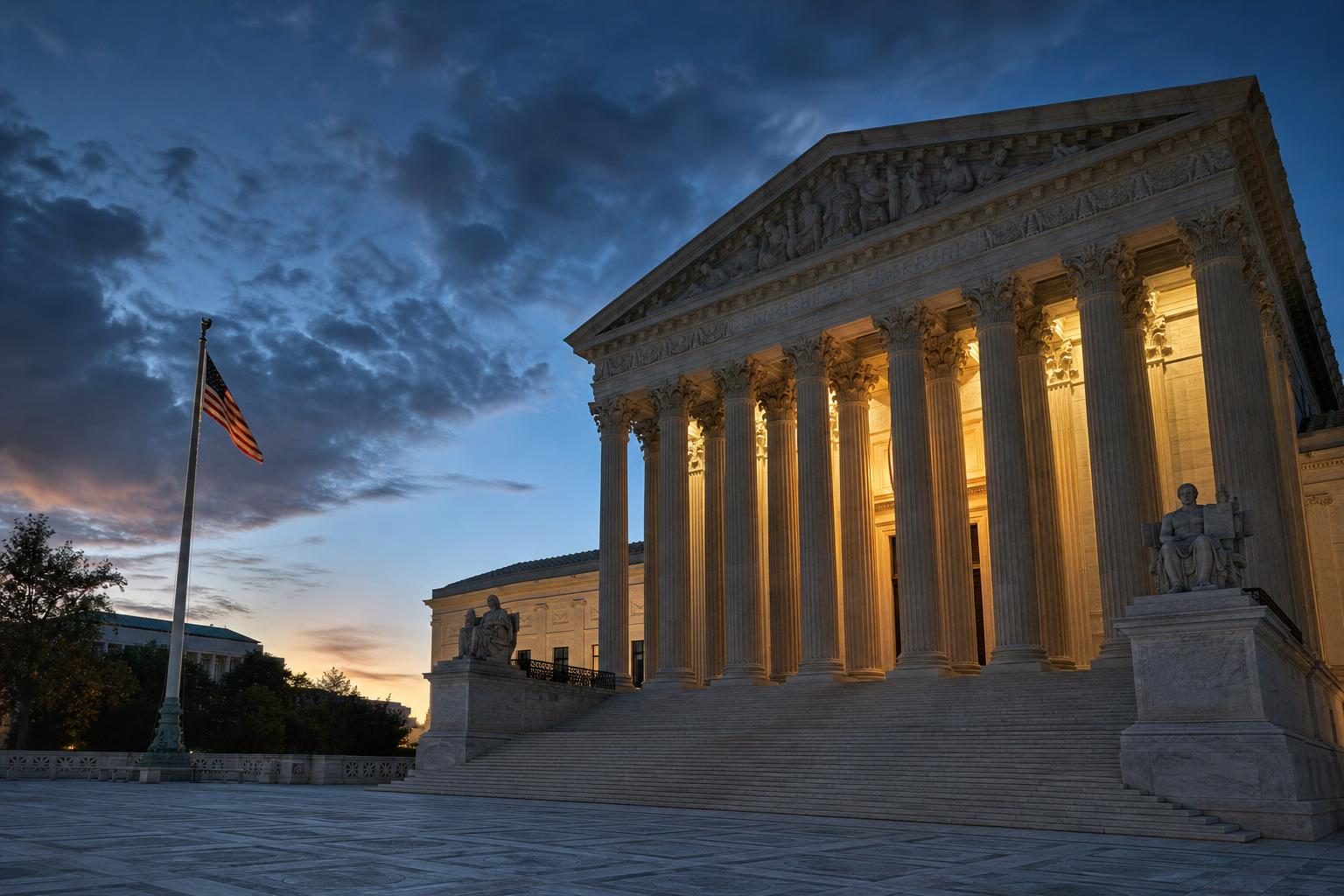
Illustration · Liberty Bell Report
Justice Samuel Alito chose one of the conservative legal movement's biggest evenings to deliver a sober lesson in constitutional arithmetic. Speaking Thursday night at the Federalist Society's Antonin Scalia Memorial Dinner in Washington, the justice reminded his audience that the Supreme Court cannot pay its own bills. Congress, he warned, could "turn off the lights at the Supreme Court" by refusing to fund its work, The Hill reported.
The remark came one week after Democrats won control of both the House and the Senate by margins larger than many expected, NBC News reported. Alito did not mention the election or the coming change in power. He did not need to. Here is what he said, where the power he described comes from, and why it matters for the Court and for the Congress that takes office in January.
What Alito Said
Alito spoke in an onstage conversation with author Mollie Hemingway. He built his remarks on a familiar idea from the founding era. Alexander Hamilton was right, he said, to describe the judiciary as the least dangerous branch of government, and its limited power leaves it especially exposed to Congress and the president, the Washington Examiner reported. "We are the least dangerous branch," Alito said, before adding that this does not mean the federal courts cannot do damage when they stray.
He reached for a military comparison to make the point. If the branches were weapons, Alito suggested, the judiciary would be a hand grenade rather than a nuclear weapon: the least destructive of the arsenal, but still dangerous when it goes off.
Then he turned to money. Because the courts depend on the other two branches, he said, Congress could bring everything at the Supreme Court to a stop if it declined to fund the justices' activities. He tied that vulnerability directly to the importance of preserving an independent judiciary.
Lower Courts and the Emergency Docket
Alito also had pointed words for his own branch. He said some federal judges have gone "far astray" in recent orders he considers unjustified, pointing to very broad orders from district judges that block a president's policies as an example of how courts can still cause harm.
He also explained why so many of those fights now reach the justices on an emergency basis. Presidents who cannot move their agendas through Congress increasingly act on their own, NBC reported, and an ordinary appeal can take two or three years. That can leave a president unable to carry out a policy for much of a four-year term even if the administration wins in the end, which Alito cited as a reason more disputes have arrived on the Court's emergency docket over the past decade or so.
NBC noted that Alito did not address direct pressure on the courts from the White House, including President Trump's calls to impeach judges who have ruled against him.
The Constitution's Purse Strings
Alito's warning rests on firm constitutional ground. The Appropriations Clause of Article I bars any money from leaving the Treasury unless Congress appropriates it by law, and that rule anchors Congress's authority over every federal office, the courts included. Hamilton's description of the judiciary as the least dangerous branch, the line Alito endorsed, comes from Federalist No. 78, where Hamilton observed that the courts control neither the sword nor the purse and must rely on the force of their judgment alone.
The Constitution does shield judges personally: Article III forbids Congress from reducing a sitting judge's pay. That protection does not reach everything else a court needs to function, from police officers and law clerks to the electric bill. Those depend on the yearly decisions of the House and Senate.
Alito has pressed the importance of the purse before, even when it cut against a federal agency. In May 2024, the Supreme Court ruled 7-2 that Congress could let the Consumer Financial Protection Bureau draw its funding from the Federal Reserve without violating the Appropriations Clause, with Justice Clarence Thomas writing for the majority. Alito dissented, joined by Justice Neil Gorsuch, arguing that centuries of practice show the clause requires Congress to control both the source of government money and how it is spent. In his view, the majority's reading left one of the Constitution's central safeguards with little practical force.
That record gives Thursday's warning a certain consistency. The justice who insisted that Congress keep a firm grip on federal spending is now reminding Washington that the same grip reaches the courts, and asking lawmakers to use it responsibly.
The Court's Budget, Up Close
The Supreme Court's dependence on Congress was on public display this summer. On July 14, Justices Elena Kagan and Amy Coney Barrett testified before a House Appropriations subcommittee and then a Senate panel in support of the Court's budget request for fiscal 2027, the first time justices had testified to Congress since 2019, the Deseret News reported. The Hill described it as a rare trip to Capitol Hill to argue for the judiciary's budget and for added security money.
The Congressional Research Service put the Court's fiscal 2027 request at about $225.1 million. Security dominated the hearings. Barrett told lawmakers that a sharp rise in threats increasingly intrudes on the justices' personal and family lives, and Kagan said threats grew after the leak of the draft opinion in the Dobbs abortion case and have kept climbing. Rep. David Joyce, the subcommittee's chairman, said the justices must be able to work without fearing for their own or their families' safety; his panel's bill provided $207 million for the Court, including a $28.9 million increase for security, though it had not yet reached the House floor at the time.
Lawmakers also used the hearings to press the justices on the Court's ethics policy and its emergency docket, while the justices' rulings themselves stayed off limits. That is what legitimate oversight looks like: hard questions about how public money is spent, asked in public.
What It Means for the New Congress
Starting in January, a Democratic House and Senate will write the bills that fund the federal judiciary. The Hill noted that Democrats have eyed the power of the purse as leverage against the Court's conservative majority before.
Alito, for his part, is not going anywhere. In an October interview with Bloomberg Law, he said he intends to remain through the current term and would not step down even if Democrats won back the Senate, The Daily Signal reported. The Court's current lineup will therefore face a Congress controlled by the party that has criticized it most sharply.
None of this means the lights are about to go dark at the Court's marble home on First Street. Spending bills still require the president's signature or a veto override, and a move to starve the Court would provoke a constitutional confrontation few lawmakers would want to own. But the line between oversight and coercion is real, and Alito's remarks were a reminder of where it runs. Congress may question the Court's budget, its security needs and its procedures. Using the budget to punish rulings lawmakers dislike would be something else entirely.
For conservatives who defended Congress's control of spending in the CFPB case, the principle cuts both ways. The purse belongs to Congress, and so does the duty to wield it without bullying a coequal branch. The Founders gave the courts no army and no treasury, only judgment, and trusted the other branches not to exploit that weakness. Alito's message to the incoming majority was polite but unmistakable: keep that trust.
What to watch next: the judiciary's funding for the current fiscal year, the first oversight hearings of the new Congress, and the steady stream of emergency applications over presidential policies that Alito described. Each will test whether Washington still honors the design Hamilton defended more than two centuries ago.
Sources
- NBC News: Alito says Supreme Court is caught between the president and a Congress that can 'turn off the lights' (link)
- The Hill: Justice Samuel Alito warns Congress could 'turn off the lights' on Supreme Court (link)
- Washington Examiner: Samuel Alito calls judiciary the 'least dangerous' branch of government (link)
- Deseret News: Supreme Court justices Elena Kagan, Amy Coney Barrett testify before Congress (link)
- SCOTUSblog: Supreme Court lets CFPB funding stand (link)
- The Daily Signal: Alito Makes Announcement About His Future (link)
— 30 —