Pushback
Texas Democrats Filed Their Wish List. The Numbers and the State Senate Stand in the Way.
From $1,500 household checks drawn on the rainy day fund to $15 and $17 minimum wages and an assault-weapons ban, here is what Democrats filed for the 2027 session and why it faces a steep climb.
By JACK HOLLISTERStaff Correspondent · TEXAS · Nov 13, 4:15 PM · 4 min. read
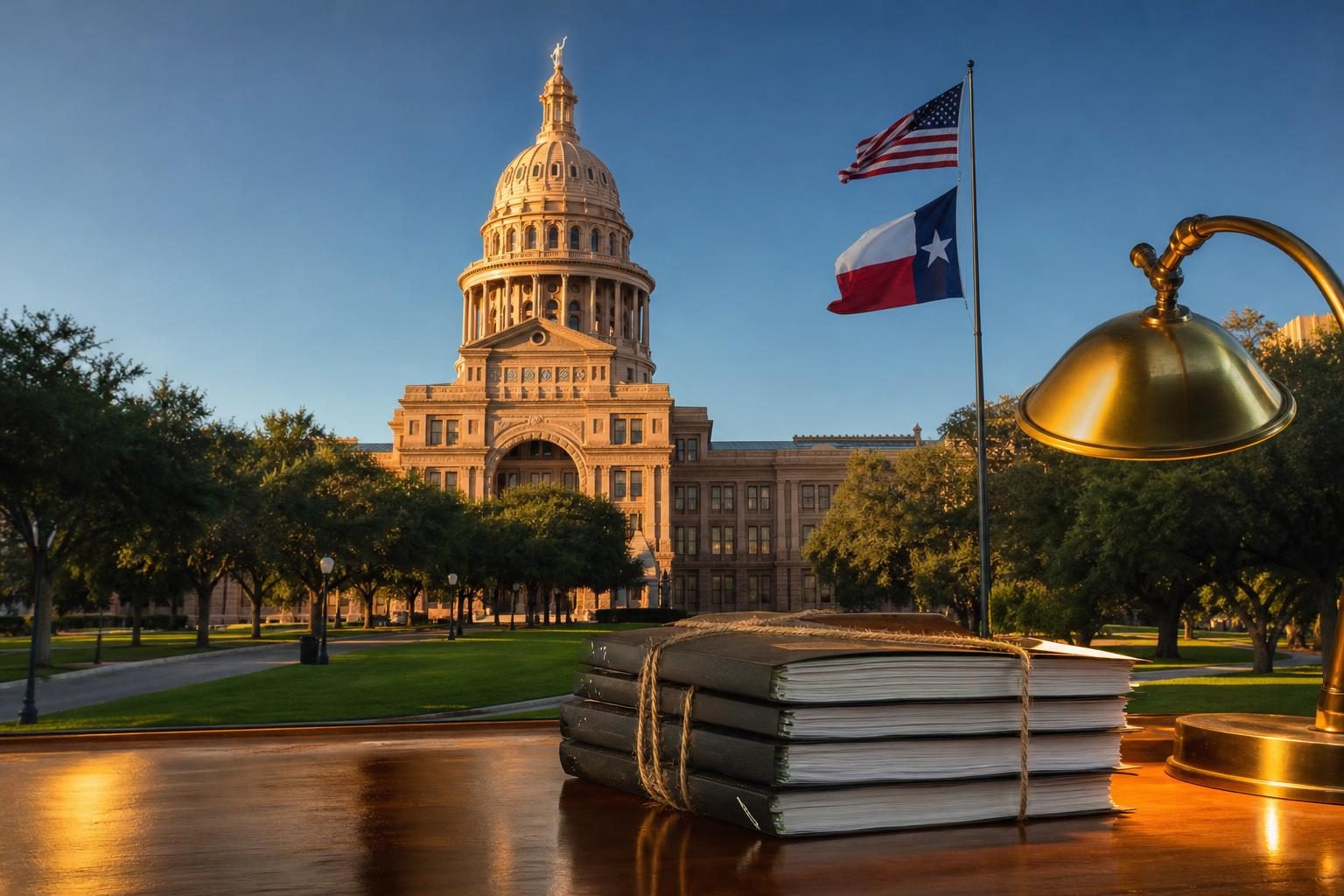
Illustration · Liberty Bell Report
When bill filing for the 90th Legislature opened on Monday, Nov. 9, lawmakers filed more than 1,260 bills by 5 p.m., and Democrats unveiled an agenda built around expanding Medicaid, raising the minimum wage and ending tax breaks for data centers, The Texas Tribune reported. The Federalist, a conservative outlet, described the opening wave as a flood of hard-left bills, adding wryly that Texas Democrats "were common-sense centrists right up until the morning of November 4".
The political backdrop matters. According to the Tribune, the session convenes Jan. 12 under a Democratic governor and a divided Legislature: Democrats won control of the Texas House on Nov. 3, while Republicans kept the state Senate. Every bill still needs approval from both chambers and the governor's signature to become law.
What Democrats Actually Filed
The headline item is money. State Sen. Roland Gutierrez filed Senate Bill 297 on Monday to send a $1,500 check to every Texas household, following through on a campaign promise by Gov.-elect Gina Hinojosa, The Hill reported; the bill would appropriate $17 billion.
On health care, Rep. John Bucy of Austin prefiled House Bills 101 and 102 to expand Medicaid, the Dallas Express reported. HB 101 depends on voters approving a constitutional amendment, while HB 102 does not, and HB 101 is a companion to Senate Bill 31 from Sen. Judith Zaffirini of Laredo. Bucy's office estimated the expansion would cover about 1.4 million more Texans by drawing on federal matching funds.
On wages, the Tribune reported that Rep. Ana-Maria Rodriguez Ramos filed HB 110 to set a $15 minimum wage starting Sept. 1, 2027, while Rep. Trey Martinez Fischer proposed going to $17 an hour. The federal floor that Texas follows today, $7.25, has been in place since 2009. Other Democratic bills would require free full-day pre-K for every 4-year-old and change the state's death penalty, according to the Tribune.
The Federalist also pointed to Senate Bill 80, Zaffirini's proposal to ban so-called assault weapons statewide, and to a Democratic effort to repeal the state law requiring sheriffs to cooperate with federal immigration authorities.
To be fair, not everything filed is partisan. The Tribune found signs of common ground on reining in data centers, cutting property taxes and enacting term limits for statewide officials. It noted that the state's sales tax exemption for data centers has grown to more than $1 billion a year in forgone revenue. Conservatives can work with that.
What the Numbers Say
Start with the checks. The $1,500 payments would come out of the Economic Stabilization Fund, the state's rainy day account, which had grown to about $27 billion, KPRC Click2Houston reported. Withdrawing $17 billion would leave roughly $10 billion in reserve. That is close to two-thirds of the state's emergency savings spent on a one-time payment, in a state that knows hurricanes, floods and oil busts can arrive with little warning. The station also reported the plan would need a two-thirds vote in both the House and the Senate. With Republicans holding the Senate majority, that bar cannot be cleared without Republican votes.
On wages, the best-known estimate cuts against the promise. When the Congressional Budget Office studied a $15 federal minimum wage in 2019, it projected higher pay for 17 million workers but a median loss of 1.3 million jobs, within a range from about zero to 3.7 million, NPR reported. Jobs that never get created never show up in a paycheck.
On Medicaid, both of Bucy's bills would direct the state health agency to extend eligibility wherever federal matching funds are available. Federal money is still taxpayer money, and tying a permanent entitlement to Washington's willingness to keep paying is a risk Texas lawmakers have rejected before. Bucy's attempt to add Medicaid expansion to the 2025 state budget was defeated, the Dallas Express reported.
On guns, the Second Amendment says the people's right to keep and bear arms shall not be infringed, and the Texas Constitution guarantees every citizen the right to keep and bear arms in lawful defense of himself or the state. A statewide ban on common rifles would run straight into both.
Who Is Pushing Back, and What Comes Next
The first line of defense is the Texas Senate. Even Bucy acknowledged that any move to expand Medicaid would face pushback there, the Dallas Express reported. The two-thirds requirement on the rainy day fund gives Senate Republicans a direct say over the $17 billion check plan, and bills that cannot pass both chambers do not reach the governor's desk.
Bill filing continues until March 12, so the list will grow, the Tribune reported. The real test begins when the Legislature convenes on Jan. 12.
Elections have consequences, and Democrats earned a seat at the table in Austin. But a seat at the table is not a blank check. Texans built a rainy day fund, a low-tax economy and a strong tradition of self-defense over decades. Texans should read these bills closely, call their senators, and make sure the Lone Star State's next chapter keeps faith with what made it work.
Sources
- The Federalist: Texas Democrats Pre-File A Flood Of Hard-Left Bills For The Upcoming Session (link)
- The Hill: Texas Democrat files bill to follow through on Hinojosa's $1.5K check promise (link)
- The Texas Tribune: Bill filing begins for the 90th Texas Legislature (link)
- The Dallas Express: Texas Democrats file two Medicaid expansion bills, one tied to voter approval (link)
- KPRC Click2Houston: $1,500 checks for Texans: Breaking down Gina Hinojosa's proposal (link)
- NPR: $15 Minimum Wage Would Boost 17 Million Workers, Cut 1.3 Million Jobs, CBO Says (link)
— 30 —