History & Culture
Beneath Hagia Sophia: Roman-Era Tunnels Emerge as Crews Clear 3,000 Tons of Debris
Archaeologists are exploring a hidden network of passages, water channels and burial chambers under Istanbul's former cathedral, a project that reconnects Christians worldwide with the great church of Orthodox history.
By MARGARET CALLAHANStaff Correspondent · WASHINGTON · Nov 13, 3:30 PM · 5 min. read
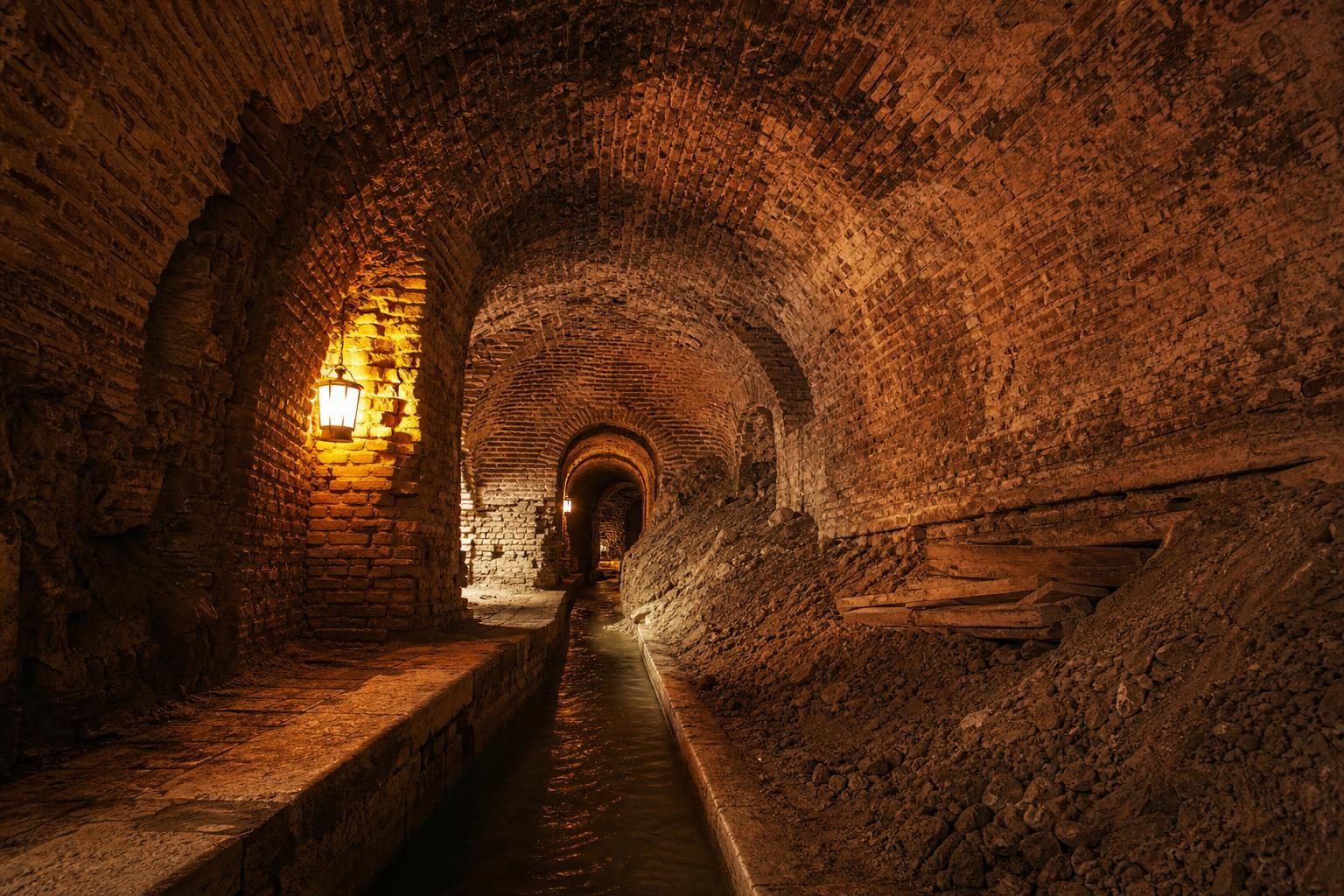
Illustration · Liberty Bell Report
For nearly 1,500 years, visitors to Istanbul have craned their necks to take in the great dome of Hagia Sophia. Now some of the most intriguing discoveries at the site are being made beneath their feet. Archaeologists have cleared roughly 3,000 tons of debris from tunnels under the landmark, exposing Roman-era passages estimated to be about 1,600 years old, Fox News reported.
The underground work is part of a restoration that covers the entire structure, from the dome to the tunnels, where crews are cleaning, documenting and preserving spaces that were long closed off, according to Hürriyet Daily News. Turkey's culture and tourism minister, Mehmet Nuri Ersoy, has said the aim is to open suitable parts of those tunnels, chambers and burial structures to visitors once they are safe.
What Lies Below
The roughly 3,000 tons of mud and rubble have been hauled out since February 2025, allowing experts to examine areas that had been off limits for generations. Daily Sabah reported that nearly 9 kilometers of hidden passages, about 5.6 miles, are being uncovered beneath what is now officially the Hagia Sophia Grand Mosque. That figure describes a network still being explored; much of it has yet to be cleared and documented.
Historian Hasan Fırat Diker, whose team has worked in the passages, has said they were part of a Roman water and drainage system built to carry rainwater from the surrounding streets down to the sea, Fox News reported. His team has cleared about 170 meters, roughly 558 feet, of an underground route tied to a fifth-century Roman street running from Sarayburnu, the point where the old city meets the Bosphorus, toward the church known as Little Hagia Sophia. According to the report, clearing work on that scale had never before been attempted there.
The team also dug about 1.5 meters deeper beneath a hypogeum, an underground burial complex first found in 1946, which had been packed with mud, and those chambers predate the present church, according to the report. Crews are concentrating on the sections they can reach, removing mud, controlling moisture and making the structures safe.
Ersoy has described what investigators are finding as underground systems that served purposes such as draining rainwater and distributing water. In other words, the tunnels are not a secret labyrinth so much as the working plumbing of an imperial capital, engineering that kept one of the ancient world's great cities supplied and dry.
A Cathedral Built to Astonish
The building above those tunnels was completed in 537 under the Byzantine emperor Justinian as the cathedral of Constantinople, the Associated Press has reported. For nearly a thousand years it stood as the great church of Eastern Christianity, the setting for coronations, councils and the liturgy of the Orthodox world.
That changed in 1453, when the Ottoman Turks conquered Constantinople and the cathedral was converted into a mosque. Nearly five centuries later, in 1934, the government of the young Turkish republic turned it into a museum, opening it to visitors of every faith and none. In July 2020, a Turkish high court annulled that 1934 decision, and President Recep Tayyip Erdoğan formally converted Hagia Sophia back into a mosque. Erdoğan said at the time that it would remain open to Muslims, Christians and foreign visitors.
The newly cleared passages carry that layered story further down. Some of what lies below predates the present church altogether, a reminder that Hagia Sophia rose on ground already shaped by Roman builders.
Why It Matters to Christians
For many believers around the world, Hagia Sophia is not simply an architectural marvel. It is the church whose very name means Holy Wisdom, a place where the faith was worshipped publicly for most of a millennium, and its fate has never been a matter of indifference. For American believers who may never travel to Istanbul, these discoveries are a reminder that the faith they practice has deep roots in places far from home, and that those roots are still being uncovered.
When the 2020 conversion was announced, Pope Francis said he was deeply pained, and the World Council of Churches, which represents some 350 Christian churches, voiced grief and dismay. Its interim general secretary, the Rev. Ioan Sauca, wrote to Erdoğan urging him to reconsider, and Orthodox church leaders also lamented the decision.
Those concerns have not faded, and they explain why Christians will watch the restoration closely. A careful excavation that documents the site's earliest layers, including spaces older than Justinian's church, serves the cause of history, and history is where Hagia Sophia's Christian story is written in stone. Opening more of the building to visitors, as officials say they intend to do, could let pilgrims and scholars alike see more of that story firsthand.
There is also a religious-liberty dimension that should not be lost. How the building is owned and used is for Turkey to decide, but the freedom of Christians, and of every visitor, to enter, learn and pray quietly in a place so central to their heritage still matters. Erdoğan pledged in 2020 that its doors would stay open to people of all faiths. Keeping that promise as the restoration moves forward, and as new underground spaces open, would be a welcome sign of good faith toward the many Christians who regard Hagia Sophia as part of their own story.
Preservation Concerns
Any work on a structure this old and this precious carries risk, and the restoration has not been free of controversy. In late 2025, Türkiye Today reported concern after a heavy crane truck was driven onto Hagia Sophia's historic floor during the work. The culture ministry responded that tests carried out before the vehicle entered included static load calculations, georadar scanning, ground classification analysis and load-bearing capacity tests.
The larger worry is the earth itself. Istanbul sits in earthquake country, and in April 2025 the AP reported that work had begun to renovate Hagia Sophia's historic domes to protect the landmark from quakes, with Ersoy calling it the largest restoration in the dome's history. Daily Sabah has noted that the underground project is one part of that wider effort, which also reaches the dome.
Underground, the dangers are quieter but real. Mud left behind by earlier collapses still blocks parts of the network, and moisture threatens masonry that has survived for centuries precisely because it was sealed away. Ersoy has said that only sections judged suitable will be opened, and only after conservation and safety measures are complete, with scientific assessments and safety requirements deciding which ones qualify. That caution is warranted. Archaeology done in a hurry can destroy the very evidence it uncovers, which is why the slow work of clearing, recording and stabilizing matters as much as any single discovery.
What Comes Next
No opening date has been announced. Officials say they hope to let the public into parts of the underground spaces, but which areas, and when, will depend on the findings of the scientists and engineers now at work. Researchers also hope to present the archaeological remains in an exhibition, according to Fox News, and the mapping of the wider tunnel network continues.
For Christians, the hope is simple and reasonable: that this extraordinary building, a gift of the early church to the whole world, will be studied honestly, preserved carefully and kept open to all who want to stand under its dome. The work now under way beneath Istanbul is a chance to honor every chapter of that story, beginning with the first.
Sources
- Fox News: Ancient tunnels beneath famous Hagia Sophia explored after 3,000 tons of debris cleared (link)
- Daily Sabah: Hidden world beneath Istanbul's Hagia Sophia emerges in restoration (link)
- Hürriyet Daily News: Restoration continues to open Hagia Sophia's underground chambers to visitors (link)
- Türkiye Today: Heavy crane truck driven onto Hagia Sophia floor during restoration sparks concern (link)
- Religion News Service (Associated Press): Historic domes of Hagia Sophia are renovated to protect the landmark from earthquakes (link)
- The Irish News: Hagia Sophia mosque decision pains Pope, Protestant and Orthodox Church leaders (link)
— 30 —